

Think of championship teams like Ocean’s 11. The stars get all the glory, but the real heroes are the sixth men. They are the ones who bring the game-winning shots and the strategy.
While we all know about LeBron and Steph, the stats show that bench players have made 20% of the game-winning shots. This is where the real magic happens.
Manu Ginobili was a key player for the Spurs, not just because of his skills but also because of his ability to disrupt the opposing team. Gregg Popovich knew that having Ginobili on the bench was a game-changer.
Jamal Crawford’s 4-point plays for the Warriors were not just showmanship. They were carefully timed to disrupt the opponent’s momentum. These players are not just benchwarmers; they are game-changers.
So, why do we overlook the sixth men? Maybe it’s because we focus too much on the stars and forget about the unsung heroes. Michael Jordan’s Bulls, for example, relied heavily on Toni Kukoc’s skills to win championships.
This is not just about adding energy off the bench. It’s about the players who create chaos and turn the game around. From Havlicek’s steals to Cam Johnson’s corner threes, these players are the ones who make the difference.
Ready to see how these players make a difference in the game? Let’s dive into the world of the sixth men and discover their impact on NBA championships.
What is a Sixth Man?
Imagine a Swiss Army knife disguised as a basketball player—that’s your sixth man. The sixth man award has been around officially for 1983. This role is all about adding chaos strategically, not just starting games.
Think of them as the tech sales “closer.” They seal the deal when the CEO’s presentation fails. Or, they’re the grinders who dive for loose balls while stars adjust their headbands.
The concept of the sixth man has grown fast, like LeBron’s hairline. In the 1960s, Boston’s John Havlicek was the first to show what this role could do. He was a non-stop energy source.
Today, players like Lou Williams can score fast, like a microwave. The role has changed, much like jazz music. Your sixth man is not just the saxophonist; they can switch to drums when needed.
Modern key reserves face three big challenges:
- Be ready instantly, but patient enough to sit
- Score explosively, but share the ball
- Outwork starters, but never outshine them
Shaq showed how to be a sixth man during his time with the Celtics. He was a walking Hall of Fame exhibit, turning himself into a bench anchor. He delivered 12-minute bursts of controlled chaos.
Is the sixth man basketball’s ultimate utility player? Or just a glorified substitute? Ask any coach during playoff overtime. Their answer is in sweat stains and +/- stats.
Mindset and Skillset
Ever tried microwaving a gourmet meal during a blackout? That’s the sixth man’s reality. They’re expected to make clutch contributions while thawing out from bench-induced cryosleep. It’s a psychological tightrope walk, balancing emotional coldness with competitive fire.
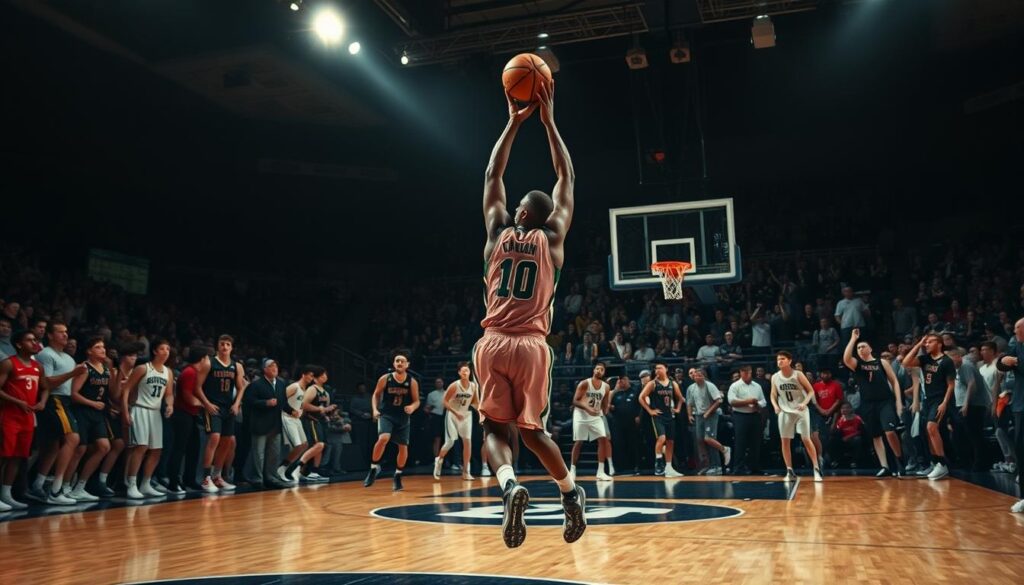
Manu Ginobili’s career is a perfect example of this balance. He treated games like jazz improvisations, blending chaos with ruthless efficiency. Kevin McHale, on the other hand, focused on methodical post play, solving geometry with elbow grease. Both were masters of using warm-up pants as weapons.
The real challenge is mastering the “hed game”. It’s about staying mentally sharp when your body’s been idle. Andre Iguodala’s 2015 Finals MVP win was the result of 76 games of preparation. His pre-game routine included reading Sun Tzu while icing knees, embodying warrior-poet energy.
Darko Milicic’s career is a reminder that draft position doesn’t guarantee success. Sixth man legends like Jason Terry, on the other hand, used bench time for tactical reconnaissance. They studied opponents’ tells like poker pros.
So, how do you prepare for constant uncertainty? Jamal Crawford, the human heat check, had a simple rule. He always dressed like he was starting, even if he was sitting. In the NBA, sixth men are not understudies. They’re stealth bombers, waiting for the right moment to change the game.
Historic Sixth Man Performances
Some bench players bring snacks. But these guys brought scalpels. Let’s look at three NBA Finals classics where sixth men were game-changers.
In 2005, the Pistons were like Fort Knox. But Manu Ginobili brought the dynamite. His 23 points in Game 7 for the San Antonio Spurs dynasty was more than scoring. It was like a jazz solo, slicing through Detroit’s defense.
Fast forward to 1984’s “Heat Game.” Kevin McHale became a Celtic hero. His clothesline on Kurt Rambis was brutal. His 25 points on 11 shots were surgical. The Lakers learned two things that night: Never block a Boston parquet, and never underestimate a redhead.
| Player | Series | Impact Stat | Legacy Move |
|---|---|---|---|
| Manu Ginobili | 2005 Finals | 60% shooting in closeout game | Broke Detroit’s defensive code |
| Kevin McHale | 1984 Finals | +18 in 31 bench minutes | Redefined physicality standards |
| Andre Iguodala | 2015 Finals | LeBron held to 39% FG | Blueprint for Warrior small-ball |
In 2015, Andre Iguodala became Golden State’s secret weapon. He became LeBron James’ human mute button. His Finals MVP performance showed defense can be sexy, with chasedown blocks and funny faces.
These weren’t just bench players. They were assassins in warmup jackets. Their performances changed how teams value their bench players. Ginobili’s flair started the Euro-stash trend. McHale’s toughness inspired the “enforcer” role. Iguodala’s versatility led to the death lineup era.
Notable Winners and Their Teams
The Sixth Man Award is more than a trophy; it’s a key to winning championships. Kevin McHale set the standard in 1984 with the Celtics. He scored 19.1 points per game, helping the team win while Bird and Parish rested.
Red Auerbach’s 60s Celtics team didn’t just play on parquet floors. They also showed the power of strategic bench players. This idea came before baseball even thought of it.

In the 90s, the Bulls dynasty used Toni Kukoc like a Swiss Army knife. He scored 17 points and made 6 assists, all while Jordan seemed to ignore him. But did Gregg Popovich accidentally start positionless basketball in 2003?
Manu Ginobili’s 9.4 PPG for the Spurs in 2003 was groundbreaking. It showed the Sixth Man could be a game-changer. This idea came before soccer even used the term.
Lou Williams’ 2019 season with the Clippers showed the power of bench scorers. He won two Sixth Man Awards and played for three teams. His philosophy was simple: bench players can lead the team to victory.
James Harden’s 2012 season with the Thunder showed even MVPs can shine off the bench. Great teams don’t just draft stars. They create chaos with their bench players.
So, what connects McHale’s Celtics to today’s teams? It’s their ability to adapt. Sixth men are like chess pieces in a game of checkers. If you don’t get this, maybe fantasy leagues aren’t for you.
Game-Changing Moments
While starters get the glory, bench players often make history quietly. Let’s look at three moments where bench players didn’t just affect games. They rewrote entire playoff narratives with bold moves.
The 1984 Celtics-Lakers rivalry was like a basketball mob movie. Kevin McHale’s clothesline tackle on Kurt Rambis was more than a foul. It was a psychological blow. This moment (Game 4, Finals) changed Boston’s game from “gentleman’s sweep candidates” to “we’ll die on this parquet.” Lakers coach Pat Riley called it “the day soft basketball died.”
Then there’s Bobby Jones’ 1983 performance. While Dr. J dazzled, Jones delivered 14 blocks in 7 playoff games. His Game 4 against Milwaukee? Four steals, three blocks, zero fouls. He was the human definition of controlled chaos.
In 2023’s Eastern Conference Finals, Derrick White made a buzzer-beating putback (Game 6). It didn’t just save Boston’s season. It created a new rule: White’s Law of Inexorable Hustle. This play showed what sixth men are all about: awareness, positioning, and the courage to attempt a 0.1-second tip-in.
| Play | Player | Impact | Style |
|---|---|---|---|
| 1984 Clothesline | Kevin McHale | Shifted Finals momentum | Controversial physicality |
| 2023 Putback | Derrick White | Forced Game 7 | Fundamental excellence |
| 1983 Defensive Clinic | Bobby Jones | Sealed 76ers’ title | Clean precision |
| 2010 Microwave Game | Jamal Crawford | 41 pts off bench | Offensive explosion |
| 1988 Dunk Heard | Dominique Wilkins | Revived Hawks | Highlight-reel energy |
These moments show a truth NBA coaches whisper: clutch contributions aren’t about minutes played. They’re about moments seized. Whether it’s McHale’s borderline assault or White’s geometry-defying tip, bench players win championships in the margins.
The Celtics-Lakers rivalry is a study in sixth-man psychology. While Magic and Bird traded iconic shots, their bench players fought shadow wars. They set screens half a second earlier, tipped rebounds to specific spots, and made defensive rotations that seemed telepathic. We call this poetry.
Rethinking Starter/Bench Value
Imagine if Apple sold iPhones without charging cables – that’s the 1980s Lakers’ blueprint. Magic Johnson’s “Showtime” starters got the glory, but Kurt Rambis’ bench mob handled the messy wiring. Fast-forward four decades, and the Warriors’ three-point revolution turned sixth men like Jordan Poole into human USB-C ports: versatile, high-speed connectors enabling championship hardware.
Front offices now face a salary cap paradox: Should teams pay $30 million annually for a microwave scorer who plays 28 minutes a night? Consider these 2023 figures:
| Role | Avg Salary | Win Shares/48 |
|---|---|---|
| Traditional Starter | $34M | .125 |
| Elite Sixth Man | $22M | .148 |
The numbers whisper what Moreyball mathematicians shout: key reserves deliver playoff leverage that stat sheets undersell. Boston’s 2022 Finals run wasn’t powered by Tatum’s isolation heroics alone – Derrick White’s +12.3 net rating off the bench was the stealth engine.
Modern team-building resembles tech startups pivoting during a funding winter. Why overpay for brand-name starters when adaptable reserves offer better ROI? The evolution of NBA team building now values Swiss Army knives over ceremonial sabers – a shift that’s making sixth men the new market inefficiency goldmine.
Legacy and Influence
Imagine NBA history as a blockbuster franchise. Sixth men are like the rogue screenwriters, always changing the story. They leave a lasting mark on how teams draft, strategize, and market themselves worldwide. Let’s explore the fascinating legacy of basketball’s most influential architects.
The 2004 Pistons didn’t just win a title; they created a defensive dynasty. They turned role players into cultural icons. Their “Goin’ to Work” ethos inspired players like Shane Battier, who became a key player for Miami’s Big Three.
Battier’s 2013 Finals performance was a testament to Detroit’s legacy. It showed how the Pistons’ DNA could thrive in new settings.
Manu Ginóbili’s impact was huge. His 2004 Olympic gold made FIBA scouts look for left-handed players in Argentine leagues. This led to the Spurs’ international pipeline, from Parker to Mills.
| Player | Strategic Innovation | Teams Influenced |
|---|---|---|
| Andre Iguodala | Small-ball defensive anchor | Warriors, Heat |
| Hedo Türkoğlu | Point-forward bench units | Magic, Kings |
| Manu Ginóbili | International scouting paradigm | Spurs, FIBA teams |
| Devin Vassell | 3&D wing as primary creator | Spurs, Team USA |
Jamal Crawford taught Lou Williams and Montrezl Harrell how to be the Clippers’ bench stars. It’s a cycle where today’s sparkplug becomes tomorrow’s mentor.
The Spurs are quietly building a bench-centric offense, inspired by Ginóbili’s days. Popovich’s latest move could make sixth men the primary scorers, a concept unheard of in the 1990s.
The ultimate legacy of sixth men is their versatility. They’re expected to defend like Pippen, create like Nash, and be ready to play in 30 seconds. That’s real cultural impact.
Conclusion
Legends like John Havlicek and Kevin McHale didn’t just fill minutes. They changed how teams value bench players. Their impact is seen in today’s NBA team rebuilding stories.
Front offices now see sixth men as key players, not just extras. Sam Presti and Danny Ainge are examples of this. They built successful teams by focusing on bench players.
Darko Milicic’s story shows even unexpected players can make a difference. The right system can turn anyone into a star. Players like Bobby Jones and Manu Ginobili became key parts of their teams.
Today, load management makes every player a situational hero. Use your scorers when needed, and your defenders in crunch time. It’s a new era of basketball, where everyone has a specific role.
It’s not about who sits first. It’s about who fits the team’s strategy best. In this age of specialization, we’re all like sixth men now.
