

Have you seen a play popping up everywhere in basketball? It looks like a standard pick-and-roll at first. But then, something unexpected happens. The screener disappears before touching the defender!
This is called the ghost screen. Analyst Fran Fraschilla even joked it might become “America’s Play.” It’s a move from a Horns-like set where the screener “ghosts” or slips away. Then, they sprint off a Flare screen from the opposite side.
The magic lies in the confusion it causes. The defense expects a hit that never comes. This brief moment of indecision—often just half a second—is the key advantage. It’s like a perfect magic trick on the court.
Welcome! In this guide, we’re pulling back the curtain on this brilliant offensive weapon. We’ll explore why it’s so effective at punishing defensive switches and disrupting pre-help before defenders can get set.
Get ready to see the game in a completely new light.
Mechanics: two-step sell without contact, spacing to pop, slip angle to rim, timing cues with handler eyes
Let’s explore the ghost screen’s core mechanics. Selling a fake is key, not making contact. It’s a precise sequence that creates a half-second of indecision in the defense. We’ll break down each part so you can add this to your game.
The magic begins with the two-step sell. You approach the ballhandler’s defender with purpose. Your body language says, “I’m setting a solid screen!” The defender then opens their hips and feet, ready for contact.
But instead, you slip past them. You “ghost” the defender and sprint away. Often, you head to the perimeter for a “pop.” This is where spacing is key. The court must set up so your pop to the three-point line is a real threat. Your defender is now in a tough spot: stay with you or help on the drive?
Your sprint is not just any run. The slip angle—the direction you explode into—is what maximizes the chaos. You don’t just drift; you cut with urgency toward the rim or into the open space the defender just vacated. This sharp angle turns their momentary readiness into a major gap. It’s the difference between a good idea and an unguardable play.
All of this hinges on perfect timing. The entire action is a silent conversation between you and the ballhandler. The “go” cue is often in the eyes. You both read the defender’s stance and each other’s movement. That synchronized moment, when you slip as your teammate attacks the space you created, is the payoff. It’s a coordinated feint that punishes defensive awareness.
Mastering these mechanics turns a simple action into a powerful tool. It requires practice and trust, but the reward is a reliable way to generate high-quality shots. For more ideas on how to integrate this and other effective basketball plays into your team’s offense, exploring structured playbooks can provide a great foundation.
Beating Coverages: The Ghost Screen as Your Swiss Army Knife
Think of the ghost screen as your Swiss Army knife—a single tool with different applications for different defensive problems. Its magic isn’t in the action itself, but in how you adapt it based on what the defense gives you. Let’s game-plan against the three most common coverages you’ll face.
Against a Switch Defense: This is where the ghost screen truly shines and creates chaos. The defense relies on a verbal “Switch!” call to trade assignments. Your job is to beat that call. The screener must initiate their slip the moment they see the switch setup, often before the defender finishes yelling. This timing creates massive indecision. Who picks up the slipping player? The result is often an auto-switch—a defensive swap that happens too late, leaving someone wide open for a pop-out jumper or a drive. The key is ‘slip before the call’ to force this costly hesitation.
Against a Drop Coverage: Here, the defending big man sags back into the paint to protect the rim. A direct slip might just run into him. The counter is a “fake ghost into hit.” The screener starts their slip motion, which pulls the drop defender’s attention. Then, in a quick pivot, they plant and set a solid, physical screen on the ballhandler’s defender. Now, your ballhandler has a clear runway because the big was fooled by the initial fake slip. It turns a finesse move into a power play.
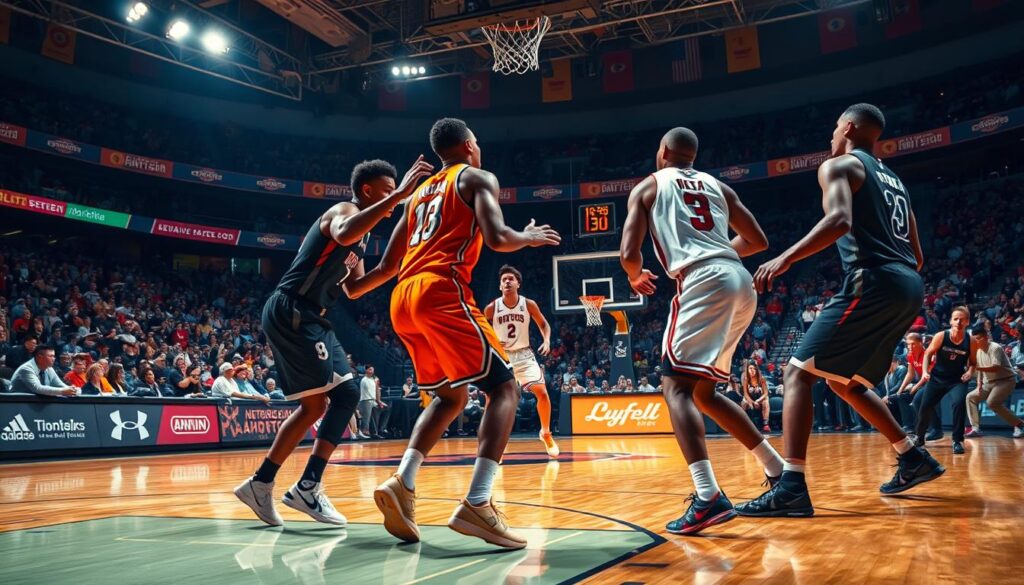
Against a Hedge (or Blitz): When the big defender aggressively jumps out to trap the ballhandler, the ghost screen morphs into a short roll opportunity. The screener slips into the open space near the free-throw line. With the hedging big now out of position, a quick pass turns the screener into a playmaker. They catch the ball with a 4-on-3 advantage, able to hit a rolling teammate, kick to a shooter, or take the open jumper. It’s a beautiful read that punishes over-aggressive defense.
The beauty of this action is its flexibility. You’re not running one play; you’re reading the defense and choosing the right path. Against switches, you hunt that auto-switch mismatch. Against drops, you sell the fake. Against hedges, you become a playmaker. Master these reads, and you turn a simple decoy into an unstoppable offensive weapon.
Pre-switch and auto-switch counters: sprint-in ghost, stack ghost, deep pop, smash seal after ghost
If the defense is reading your ghost screen like an open book, it’s time to add some plot twists. Smart teams will try to anticipate your move by calling for a pre-switch or an automatic switch as soon as they see the setup. But we can turn their anticipation against them with creative counters that force defenders into tough, reactive decisions.
These actions are all about speed and surprise. The goal is to make the screener’s defender chase the play from behind, creating a “trailing defender” situation. When that happens, the defense scrambles, and easy scoring opportunities open up.
Let’s break down four powerful counters to pre-switches and auto-switches. Each one solves a different defensive problem.
The Sprint-In Ghost
Imagine your would-be screener is standing in the corner. Instead of slowly walking up to set the screen, they suddenly sprint into the action. This explosive movement makes it impossible for their defender to get attached and communicate.
By the time the defender reacts, the screener is already slipping to the basket. This is a classic “flare action” like a deep sweep or pin down, but done at full speed. The defender is now trailing, and the help defense is unprepared.
The Stack Ghost
This counter uses a “stack” or “Spain” alignment, where two offensive players line up vertically. The first player in the stack sets the ghost screen and immediately slips.
The second player’s defender now has to navigate through a traffic jam. This often forces a chaotic peel switch, where a helper must unexpectedly leave their man to stop the ball handler. That creates an open teammate somewhere else on the floor.
Don’t just slip to the nearby wing. Stretch the defense to its limit by having the screener sprint all the way to the opposite corner or wing after the ghost action. This “deep pop” turns a simple slip into a long-range relocation.
The defender, expecting a short roll, now has to sprint across the entire court. If they get caught trailing, it leads to a wide-open three-pointer or a driving lane for the ball handler.
Smash Seal After Ghost
This is a devastating move for your big men. After slipping the ghost screen, the screener doesn’t just float to the perimeter. They immediately pivot and “seal” their defender on their back in the paint.
It’s a powerful post-up position that demands an entry pass for an easy bucket. The defender, who was preparing to switch out on the perimeter, is now pinned under the basket. It’s a complete change of attack that exploits a size mismatch instantly.
Mastering these counters keeps the defense honest. They can’t just yell “switch!” and relax. You force them to process multiple threats at high speed, which is where mistakes and high-percentage shots are born. Remember, the best offense is always one step ahead.
Mismatch creation: empty-side ghost, invert with guard screener, slip-to-seal on smalls
The magic of a ghost screen isn’t just the open shot. It’s the defensive chaos that lets you pick the perfect matchup. In today’s game, isolating your best scorer on a weaker defender is a huge win. Let’s explore how ghost actions are used for this purpose.
Think of it as a tactical hunt. You’re not waiting for a mismatch to happen. You’re forcing the defense into a bad choice and then punishing it. This is key in late-game situations where you need a sure bucket.
The empty-side ghost is a classic setup. You run the action toward the side of the court with no other players. This isolates the play. Any defensive switch becomes obvious because there are no helpers nearby.
If they switch, you instantly have a guard on a big man out in space, or a big on a guard. Both are advantages you can attack immediately.
Next, we have the invert action. This is a favorite modern tactic. Here, a guard is the ghost screener for your team’s big man or wing. The goal is to target the opponent’s slower big man.
Your shifty guard sets the ghost screen, then quickly pops out to the three-point line. If the defender switches, that slower big is now trying to guard your guard 25 feet from the basket. That’s a nightmare for the defense!
The guard can drive past them or shoot over them. This action directly creates the mismatch you designed.
Lastly, there’s the slip-to-seal. This move targets smaller defenders. Your big man starts the ghost screen action. But instead of popping out for a shot, they “slip” the screen early and immediately “seal” their defender in the post.
Who is that defender? Often, it’s a smaller guard who switched onto them. Now your big has deep post position on a much smaller player. A simple entry pass leads to an easy basket. It’s a powerful way to use deception to get a high-percentage look inside.
| Action | How It Works | Target Mismatch |
|---|---|---|
| Empty-Side Ghost | Ghost screen set toward the vacant side of the court, isolating the defense. | Forces a clear switch, creating a guard-on-big or big-on-guard isolation on the wing. |
| Invert Action | A guard sets the ghost screen for a big, then pops out to the perimeter. | Lures a slow big man into switching onto a shifty guard far from the basket. |
| Slip-to-Seal | The screener slips to the post before contact, sealing their defender inside. | Traps a smaller guard who switched onto your big man in deep post position. |
Mastering these three methods turns your offense into a mismatch machine. You move from just running a play to actively engineering the advantage you want on every possession. Remember, the defense reacts to what they see. A ghost screen makes them see one thing, while you’re already attacking the weakness it creates.
Second-side flow: ghost into Spain/Chicago, re-ghost after swing, quick DHO keep
When the first ghost screen doesn’t work, your team should keep going. This is where second-side flow comes in. It’s like a backup plan in your playbook, keeping the pressure on.
Great offenses are like rivers, not puddles. They keep moving. The first ghost action might make the defense switch or hesitate. Then, you attack their new, weak spot right away. This is the key to a successful mismatch hunt.
We have three tools for this flow: Ghost into Spain/Chicago, Re-Ghost After Swing, and Quick DHO Keep. Each one uses a different defensive reaction, turning one move into many chances to score.
The Ghost into Spain (or Chicago) is a two-man play. The screener ghosts, then turns to set a backscreen for the player who just ghosted. If the defense focuses on the ball, the backscreen is open for a lob or layup.
The Re-Ghost After Swing quickly moves the ball to the other side. Just when the defense thinks they’ve reset, the original screener ghosts again. This punishes a defense that relaxes and starts the mismatch hunt again.
The Quick DHO Keep is a sneaky trick. The ballhandler drives toward the screener as if for a dribble hand-off. The screener’s defender jumps out, expecting the handoff. But the ballhandler keeps the ball and drives past, using the defender’s momentum against them.
| Second-Side Action | How It Works | Best Used When… | Mismatch Created |
|---|---|---|---|
| Ghost into Spain | Screener ghosts, then immediately sets a backscreen for the roller. | The tag defender is over-helping on the initial ghost action. | Roller vs. a smaller or slower defender on the lob. |
| Re-Ghost After Swing | Ball is swung; original screener ghosts for the new ballhandler on the weak side. | The defense relaxes after a pass or believes the action is over. | Ballhandler vs. a tired or unprepared defender in space. |
| Quick DHO Keep | Ballhandler fakes the hand-off to the ghost screener and drives past. | The screener’s defender is aggressively jumping out to deny the hand-off. | Ballhandler vs. a defender leaning the wrong way with no help. |
Learning these flows makes your offense hard to guard. You’re not just running plays; you’re connecting actions that force the defense to make many correct decisions. This keeps the defense on their toes and breaks down even the best schemes.
Analytics: switch rate vs ghost PPP, 3PA quality, turnover avoidance
Why do smart offenses use ghost screens? The numbers tell a great story. It’s not just a trick to confuse defenders. It’s a way to score efficiently and gain advantages.
A successful ghost screen can make a defense hesitant. This hesitation can lead to less switching. As a result, your team gets more chances to score.
Ghost screens are great for making high-quality three-point shots. The “pop” from the screen gives shooters plenty of space. This leads to shots that are more likely to go in.
Another benefit is avoiding turnovers. Ghost screens are less likely to result in offensive fouls. They also make it hard for defenses to double-team the ballhandler.
This play pressures defenses and creates great scoring chances. It’s a pre-switch nightmare for them. It attacks their rules before they can apply them.
Studying film helps understand how this works against organized defenses. You can learn a lot by scouting an NBA offense from TV. Look for these subtle, efficient actions.
Drills: 2v2 timing ladders, “no-contact slip” rule, read-and-react small-group film
Let’s move from the whiteboard to the hardwood with drills designed to build instinctive ghost screen reactions. Knowledge is power, but execution wins games. We’ll break down the skill into manageable parts you can practice right away.
Start with the 2v2 Timing Ladder. This simple setup requires a ballhandler, a screener, and their two defenders. The goal isn’t to score, but to perfect the sequence. The handler uses a live dribble, the screener approaches, and both must read the defender’s position to decide: slip or pop?
Focus intensely on the screener’s speed and foot angle. A slow, flat-footed approach screams “screen!” to the defense. Instead, we want a sharp, angled cut that sells the possibility of contact before swiftly changing direction. This footwork is the foundation of a convincing ghost.
Enforce a strict “no-contact slip” rule. If the screener makes any significant contact with the defender, it’s an immediate turnover. This might feel harsh at first, but it’s brilliant for training. It ingrains the proper, contact-free technique that defines a true ghost screen and prevents offensive fouls.
Next, elevate your team’s IQ with read-and-react small-group film sessions. Gather your guards and bigs. Show them short clips of different defensive coverages: a hard switch, a soft drop, an aggressive hedge.
Pause the film and ask, “What’s the right reaction here?” Should the screener pop for a three, slip into a short roll, or seal a smaller defender inside? This exercise connects film study directly to on-court decision-making. Players start to see the game one step ahead.
To really tie your offense together, practice the veer back action. Here’s how it flows: after the screener ghosts and slips toward the basket, they immediately pivot and set a solid pindown screen for a teammate on the wing. It turns a decoy action into a direct scoring chance in one fluid motion.
Think of the veer back as a one-two punch. The first action (the ghost) stresses the defense and creates movement. The second action (the pindown) attacks them before they can recover. It’s an advanced way to keep defenders constantly guessing and reacting.
Drill these scenarios in 3-on-3 or 4-on-4 half-court settings. Let players make reads and mistakes in a controlled environment. The combination of isolated skill drills, film study, and small-sided games builds the complete package: the muscle memory *and* the basketball intelligence to execute under pressure.
Remember, great ghost screens aren’t tricks. They are well-practiced skills. By dedicating time to these drills, you transform a clever concept into a reliable, game-changing weapon for your team.
Errors and scouting checklist
Let’s fix your ghost screen issues. Common mistakes can ruin a good play. If the screener moves too early, it alerts the defense. Moving too late might lead to an offensive foul.
The ballhandler needs to be patient. Rushing before the screen can cause a collision. Good spacing is key for a smooth play.
Spacing is your silent partner. Poor spacing blocks the lane, ruining the play’s purpose. Your screener needs space to slip, and the handler needs room to drive. Practice helps avoid these mistakes.
Now, think like the defense. Scouting a team that uses ghost screens starts with some questions. Who’s their main ghost screener? Do they shoot or roll to the rim? How does their ballhandler react to screens?
Watching how they use the nail stunt is important. This is the defender at the free-throw line, helping on drives. A well-timed ghost screen can freeze this helper, making them late on every rotation.
Learning these points does more than teach a play. It sharpens your strategic thinking. You start to see the game as a chessboard, not just pieces. Keep practicing, watching film, and asking “why.” That’s how you master the game’s layers.
