

Ever faced an opponent with one player who just can’t be stopped? They score at will, and your usual defensive plan falls apart.
What if you had a secret weapon? A clever scheme that lets you shut down that superstar without leaving your team exposed. That’s the power of a special strategy we’re going to explore.
Coaches call this a “junk defense” for a reason. It’s a hybrid, mixing man-to-man and zone principles. You use it in specific scenarios, like when a single-dominant scorer is carrying the other team.
It’s also a smart move for foul protection late in a game. This tactic requires everyone on the floor to be locked in and communicating.
Executing it well demands supreme confidence. That confidence comes from preparation. Think of Larry Bird’s legendary work ethic. His relentless practice made him a nightmare for defenders. He knew his success was built on hard work.
By the end of this guide, you’ll understand the core why behind this game-changing approach. You’ll be ready to learn the how and add a powerful tool to your basketball IQ.
Roles: chaser rules, box responsibilities, matchups by position
The box-and-one defense is like a five-player unit with two main jobs: a shadow and a support net. Each player must know their role well. Let’s explore these roles in detail.
The chaser is your defensive ace. Their job is to follow the opponent’s star player closely. From the start, they aim to mirror every move the star makes.
They face-guard, block passes, and push through screens. The chaser’s main rule is to make sure the star doesn’t get easy shots. This player focuses solely on this task, like a football cornerback.
The other four players form the box. They act as the support net. The box is set up around the key or paint area.
They protect the defense’s heart and block passing lanes. Think of them as football “robber” defenders, sitting in zones to intercept passes.
Each box defender guards a specific area. They must talk a lot and help the chaser if needed. Their main goal is to make the other four players work hard, not just the star.
Choosing the right matchups in the box is key. You want your best defenders here. Usually, you match by size and position, like your tallest player in the post.
The chaser puts pressure, and the box provides backup. This isn’t just a man-to-man defense; it’s a focused shadow with a smart zone. It’s unique compared to other junk defenses, and understanding these roles is essential.
Now that we know who does what, let’s see how the box helps when the chaser is in trouble.
Help and recovery when the chaser is screened or backdoored
Even the best plans can go wrong. Your star chaser might get caught in a screen or lose their man on a backdoor cut. But don’t worry, this is where your team defense really shows its strength.
When the chaser is picked off, the other defenders must quickly talk and move. It’s like a defensive “spy” in football, adjusting to a QB’s move. Your help boxes do the same in basketball.
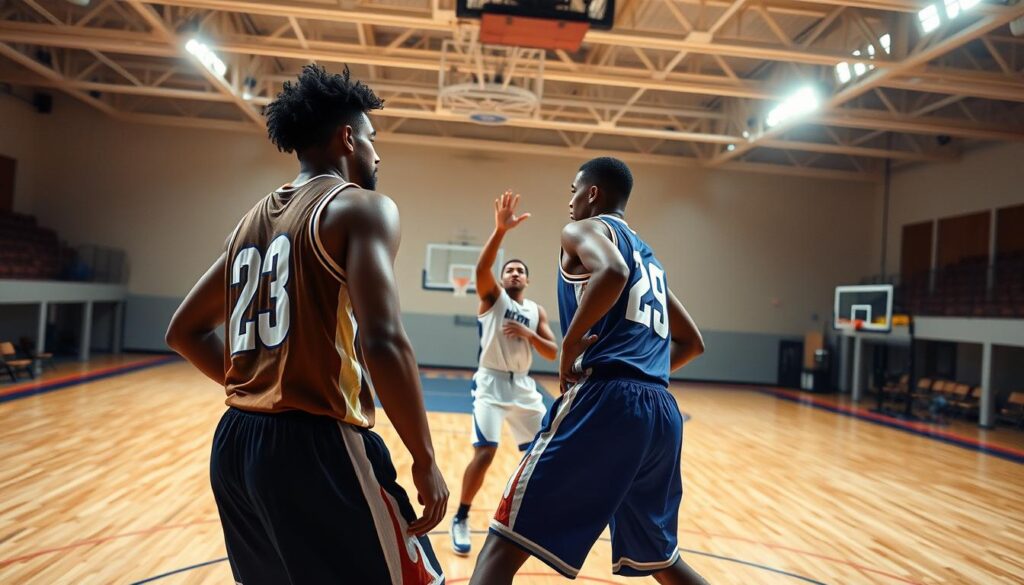
The players in the help boxes cover the star player for a bit. This lets your chaser get back into position. It’s a great example of teamwork, turning a problem into a defensive strength.
The main idea is: the man coverage underneath stays tight, while one player acts as the primary helper. This makes it hard for the offense to pass easily and forces them to make a tough play.
Key Communication and Footwork Patterns
Good help needs clear words and good footwork. Everyone must be in sync.
- “Help Left!” or “Help Right!”: The chaser yells this when they are screened, signaling which side the help should come from.
- “I’ve Got Star!”: The closest player in the help boxes calls this, taking temporary responsibility.
- “Recovering!”: The chaser announces when they are back in the play, allowing the helper to rotate back to their original assignment.
Footwork is key. The helping defender uses a quick slide-and-contain step. They don’t overcommit. They just contain the star player long enough for the chaser to fight through the screen or recover on the backdoor cut.
The table below breaks down the specific actions for different situations. Use it as a quick reference for your team.
| Situation | Immediate Action | Primary Verbal Cue | Footwork Focus |
|---|---|---|---|
| Chaser Screened (Ball Side) | Nearest help defender jumps to the star; others shift to cover open players. | “Help Right!” / “I’ve Got Star!” | Quick closeout, hands up to contest pass. |
| Chaser Backdoored (Baseline) | Weak-side defender drops into the lane to cut off the pass. | “Backdoor! Help!” | Drop-step, seal the lane, force a lob. |
| Ball Reversed After Help | Helper recovers to original man; chaser re-locates the star. | “Recovering!” / “Switching Back!” | Explosive sprint to close out to your own assignment. |
Practice these rotations until they become second nature. Start in a half-court walk-through, calling out the cues. Then, add live action with the offense trying to screen the chaser.
Remember, the goal isn’t perfection on the first try. It’s building the habit of instant, communicative help. When your team masters this, you’ll handle these stressful moments with smooth, confident teamwork instead of chaotic breakdowns.
Offense counters and your counters: slips, flares, slips-to-lobs, stacks
The chess match starts when the offense sees your box-and-one defense. They then call plays to break it. But, you have defensive answers for every offensive counter.
Common counters include slip screens, flare cuts, and stack actions. A slip screen is when a screener cuts to the basket instead of setting a solid pick. A flare cut sends the star player to the perimeter for a catch-and-shoot chance. Stack actions bunch players together to create confusion and rubs.
Your box defenders need to read these actions well. The goal is to force low-percentage passes and rushed decisions. This is where a temporary switch-to-man coverage becomes your secret weapon.
When a dangerous cutter comes through, the nearest defender can step up and guard them one-on-one. This “tag” or “bump” stops the immediate threat. Then, as the play develops, that defender snaps back into their zone responsibility. It’s adaptive and disruptive.
This defensive look is highly repeatable. You can flip it based on who the offense highlights. If they start running actions for a different player, your box adjusts its focus. The core principle remains: protect the paint, contest every pass, and be ready to switch when needed.
The decision to switch-to-man is quick and communicative. It’s not a full defensive change. It’s a brief, aggressive reaction to take away an offense’s first option. This often forces the ball-handler to look for a second or third read, leading to those risky, low-percentage throws we want.
| Offensive Counter | How It Works | Defensive Counter | Key Communication |
|---|---|---|---|
| Slip Screen | Screener cuts to basket early, looking for a quick pass. | Low defender shows hard, can switch-to-man on the slicer. Top defenders pinch passing lanes. | “Slip! Slip!” – “I’ve got ball!” |
| Flare Cut | Star player curls out to wing/corner for a three-point attempt. | Top-side defender jumps out to contest, then recovers. Chaser fights over top to deny. | “Flare! Flare!” – “Show him high!” |
| Slip-to-Lob | Slip action is a decoy, followed by a lob pass to a different cutter. | Defender on the lob threat must stay home. Help defender shouts “Lob!” to alert team. | “Watch the lob!” – “Stay home!” |
| Stack Action | Players line up stacked, then break in different directions. | Box defenders “pass off” cutters verbally. Chaser stays glued to the star through the traffic. | “You take left!” – “I’ve got right!” – “Through! Through!” |
By practicing these responses, your defense becomes a dynamic puzzle for the offense. They might beat you with a great shot once, but your system will force them into tough situations all game long. Remember, your counters are about controlled aggression and smart help—not chaos.
You’re not just running a play. You’re engaging in a strategic battle where every move has a countermove. Embrace that challenge, communicate constantly, and watch your defensive confidence soar.
Practice install with communication and sub patterns
Let’s turn your whiteboard strategy into real action on the court. We’ll follow a step-by-step plan that focuses on teamwork. This plan will help you master the “deny” technique and improve your team’s communication.
We’ll start with simple drills and add more complexity as we go. Our goal is to make your team’s reactions automatic. This way, they can focus on outsmarting their opponents, not just remembering their roles.
Mastering the Fundamental “Deny”
The chaser’s job is to deny the star player easy touches. This starts with the right stance and footwork.
Teach the deny stance: knees bent, feet wide, body low. The chaser’s chest should face the star, with one arm extended into the passing lane. Their eyes must see both the ball and their man. This stance is active and tiring. Drills should focus on maintaining this stance while moving laterally for 20-30 second bursts.
Start with 1-on-1 deny drills. Have the chaser practice mirroring the star’s movements without a ball. Then, add a passer. The chaser’s goal is to prevent the catch for 5 seconds. Reward deflections and forced bad passes.
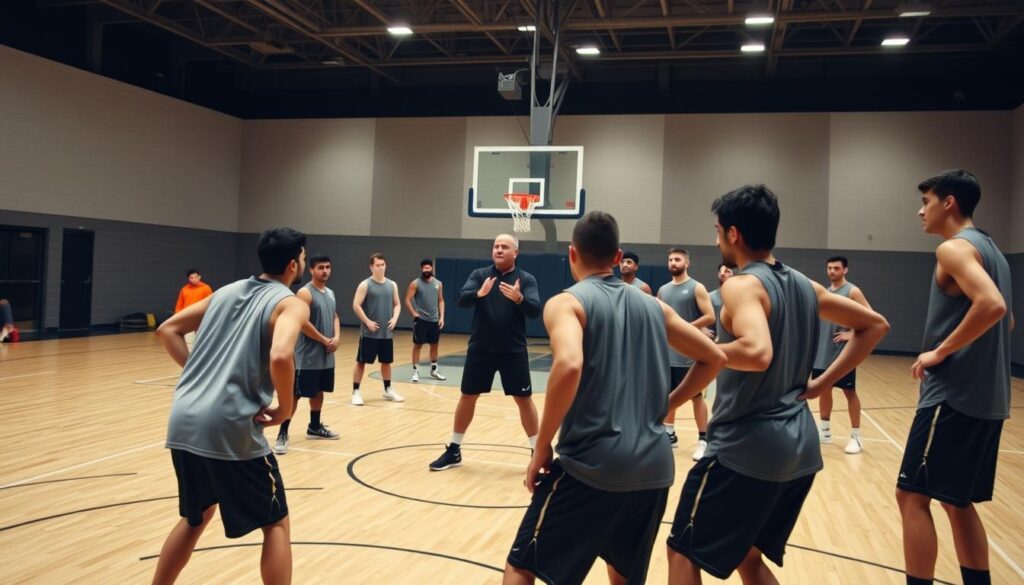
Once the chaser is comfortable, add the box. Run 3-on-3 drills with a chaser, two offensive players (the star and a passer), and two defensive box players. This teaches the box to rotate while the chaser fights over screens.
Next, move to 4-on-4 and then 5-on-5 half-court scrimmages. Use a quick whistle to stop play and correct positioning. The offense should run common sets you expect to face. This is where theory meets reality.
The Communication Symphony: Exact Verbal Calls
A silent box-and-one is a broken one. Your defense must hum with clear, concise communication. Drill these calls until they are shouts:
- “Star!” – The chaser announces they are locked on the star player.
- “Ball!” – A box player calls out when they are the primary on-ball defender.
- “Help!” – A box player signals they are providing weak-side help.
- “Switch!” or “Through!” – Called when navigating screens; “switch” tells the box to take the star, “through” means the chaser is fighting over.
- “Shot!” – Everyone boxes out on a shot attempt.
Run drills where the only way to succeed is by making these calls. It turns individual effort into a coordinated team defense.
Sustaining Energy with Smart Sub Patterns
The chaser’s role is exhausting. You cannot expect one player to maintain high-level deny pressure for 40 minutes. Smart substitution patterns are your secret weapon for sustainability.
Plan your subs around opponent formations and timeouts. Have two or three players capable of chasing. Rotate them every 3-4 minutes of game time, or during every dead ball after a made basket. This keeps legs fresh and defensive intensity high.
Consider the opponent’s lineup. Use this table as a guide for your substitution strategy:
| Opponent Formation | Sub Trigger | Fresh Player Role | Coaching Point |
|---|---|---|---|
| Star + Four Shooters | TV Timeout (4-min mark) | Insert your best on-ball defender with stamina. | Fresh chaser must deny hard; box must close out on shooters. |
| Star + Two Bigs in Paint | After opponent makes 2 FTs | Insert a stronger, physical player to fight through post screens. | Chaser must go “through” screens; box collapses to protect rim. |
| Frequent Ball Screens for Star | Your team’s offensive possession > 15 sec | Insert your smartest defensive communicator. | Pre-switch calls are key; box must show hard on screens. |
Coaching Points for Long-Term Success
Install this defense over a two-week practice period. Day one is stance and 1-on-1 deny. Day three add the box. By week two, you should be running full 5-on-5 sets.
Always end practice with a “box-and-one only” scrimmage segment. Reward defensive stops with points. This builds pride in the system.
Remember, sustainability beats a short burst of energy. By drilling communication and rotating your chasers, you ensure your box-and-one is a weapon you can use all game long.
Transitioning in/out of junk defense during runs
Your defensive strategy should have different levels, like a box-and-one for quick, intense moments. It’s used to stop an opponent’s momentum, like hitting the brakes. But, your team can’t stay in this high gear all game.
Staying too long in this defense lets smart offenses find new ways to beat you. The surprise is your best weapon. Aim to disrupt their flow, get turnovers, and then switch back to your usual defense.
You need clear signs to go into and out of the box-and-one. Let’s look at how you make these changes.
| Transition Type | When It Happens | Common Triggers & Signals | Team Action |
|---|---|---|---|
| Dead-Ball Signal | During any stoppage: after a made basket, timeout, free throw, or out-of-bounds. | Coach calls a specific play name or hand signal. Point guard shouts “Junk!” or “Box!”. A visual cue like tapping the head. | Full reset. All five players hear the call, confirm assignments, and set up in the new defense from a stand. |
| Live-Play Trigger | While the opponent’s offense is actively running their set. | The star player catches the ball in a “hot spot”. Your team forces a specific offensive action (e.g., a dribble hand-off). A pre-determined pass is made. | Instantaneous shift. The chaser locks on. The four other players instantly collapse into the box formation without stopping play. |
Executing a live-play transition is advanced but incredibly powerful. It feels like a trap springing shut mid-possession. Practice is key here—every player must recognize the trigger and move as one unit. Communication is non-negotiable; a quick “Go!” or “Switch!” from your leader can initiate the chaos.
This philosophy of flipping your look isn’t unique to the box-and-one. It applies to all junk defenses. For example, you might run a few possessions of a triangle-and-two to confuse an offense with two primary scorers. The principle is identical: surprise, disrupt, and revert before comfort sets in.
Understanding these connections makes you a versatile strategist. You’re not just learning one defense; you’re learning a system of defensive change-ups. You can flow from a standard man-to-man, into a box-and-one to cool off a hot shooter, and then into a triangle-and-two if another player gets going.
This ability to morph your defense during the game is a ultimate rhythm-breaker. It takes the opponent out of their automated sets and forces them to think on the fly. That moment of hesitation is often all the advantage you need to regain control of the game.
KPIs: target player usage/efficiency, others’ 3PA, foul rate
How can you tell if your box-and-one defense is truly effective? The proof is in the data. Tracking specific Key Performance Indicators (KPIs) gives you objective evidence of success. It also shows you what needs adjusting.
Focus on three main pillars: Target Player Impact, Perimeter Defense Trade-off, and Foul Management. Let’s break down what each one tells you.
Your primary goal is to neutralize the opponent’s star. Did you succeed? Track two stats:
- Usage Rate: How often does the star actually shoot or turn the ball over? A significant drop means you’re limiting their touches.
- Shooting Efficiency: Are their field goal and three-point percentages below their season average? Forcing tough, contested shots is a win.
The ultimate victory? Making them a passer. If their assist numbers rise but their scoring plummets, your defense is working perfectly.
2. Perimeter Defense Trade-off
The box-and-one has a known risk: leaving other players open. You must measure this trade-off.
Count the number of three-point attempts (3PA) you give up to the other four players. Compare this to your team’s average against normal defenses. A slight increase might be acceptable. A massive spike means your box defenders need to recover faster on closeouts.
This KPI helps you balance shutting down one star versus giving up a barrage of team threes.
3. Foul Management
This is often the difference between a good and great box-and-one. Smart foul management keeps you in control. Track two aspects:
First, is your chaser drawing offensive fouls? Aggressive, smart pursuit can lead to charges. This is a huge momentum swing and counts as a defensive stop.
Second, is your team in the box avoiding cheap fouls? Reaching, over-the-back, and shooting fouls on role players are costly. They stop the clock and give easy points. Good box defenders use verticality and position without hacking.
Keeping total team fouls low, specially in the bonus, is critical for foul management success.
By tracking these KPIs, you move from guessing to knowing. You’ll have clear data to prove your strategy works or to pinpoint exactly what needs fixing. That’s how you coach with confidence!
Film study and troubleshooting
Mastering the box-and-one isn’t just about practice; it’s about review. Let’s put on our coaching hats and dive into film study. This is where we close the loop on our defensive strategy.
Think of it like a football coach breaking down game tape. We can learn from a successful rep, like a clip of a team shutting down a star like Tyreke Evans on a pick-and-slant action. Watch how the deep “umbrella” player, often called the “cap” defender, reads the play. Their job is to cut off any lob pass over the top, sealing the back line of our box.
Now, let’s troubleshoot common failures. Is your chaser constantly getting caught on screens? The issue might be in their face-guard technique. An overly aggressive face-guard can make a defender vulnerable to being rubbed off. Sometimes, playing a step off with active hands is smarter.
Are you giving up open corner threes? That’s a box rotation problem. The four defenders in the zone must move as one unit. If one player is late to rotate, it creates a passing lane. Film reveals who is out of position.
This process of learn, practice, execute, and review turns knowledge into instinct. You now have the tools to be your own analyst. Watch the film, diagnose the issues, and make the adjustments. Your box-and-one defense will grow stronger every game.
