

The San Antonio Spurs hosted the Sacramento Kings on October 16, 2026, for a high-profile preseason exhibition at the Frost Bank Center. This matchup served as the final dress rehearsal before the regular season tips off. The game carried significant weight beyond a standard exhibition. De’Aaron Fox faced his former franchise. Zach LaVine lined up against the team that facilitated his move to California. The Spurs established absolute dominance early in the contest, building a 46-21 lead and controlling every aspect of the basketball court.
We will break down the box score, evaluate the tactical adjustments from both coaching staffs, and analyze the individual performances that shaped this lopsided affair.
De’Aaron Fox Controls The Tempo Against His Former Team
The massive three-team trade at the 2025 deadline completely altered the trajectory of both franchises. San Antonio acquired De’Aaron Fox to pair with their generational center. Sacramento brought in Zach LaVine to inject immediate scoring production. Fox thrived in Gregg Popovich’s system, leading the Spurs to the 2026 NBA Finals and securing a $229 million maximum contract extension.
Fox set the tone immediately in this preseason clash. He scored 10 points in just 15 minutes of action. He shot an incredibly efficient 3-of-4 from the field and connected on 2-of-3 attempts from beyond the arc. The Spurs offense flowed seamlessly through his hands. He pushed the pace in transition and collapsed the Sacramento defense on basic pick-and-roll sets. Fox recorded three rebounds and one assist, dictating the spacing on the floor. His speed remains unparalleled. Sacramento defenders struggled to keep him out of the paint. The gravity Fox commands on his drives creates wide-open perimeter looks for his teammates.
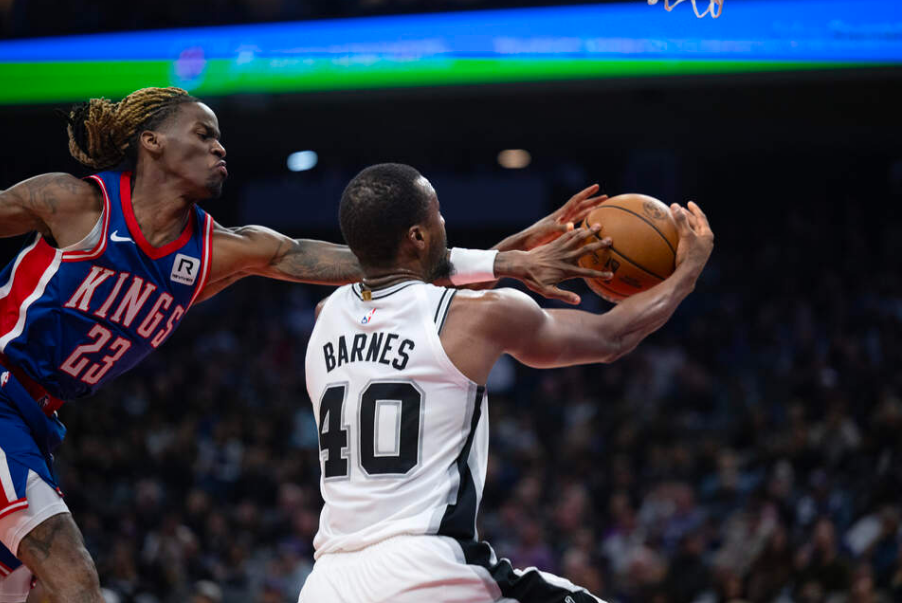
The pairing of Fox and rookie guard Stephon Castle in the backcourt presents a daunting challenge for opposing defenses. Castle logged 15 minutes, scoring six points and dishing out a team-high four assists. Castle operates as a secondary playmaker. Fox attacks the primary gaps. The dual point guard system keeps the ball moving constantly. San Antonio registered 11 team assists on 16 made field goals during the early segments of the game.
Victor Wembanyama Anchors The Interior
Victor Wembanyama requires zero introduction. The reigning franchise cornerstone anchored the San Antonio defense with his standard terrifying efficiency. He played 16 minutes, producing eight points, four rebounds, and two blocked shots. He shot 3-of-5 from the floor and 2-of-2 from the free-throw line.
Wembanyama alters the geometry of the basketball court. Sacramento players hesitated every single time they entered the painted area. The Kings shot an abysmal 25.9 percent from the field. Wembanyama’s 8-foot wingspan forces opposing guards into unnatural shooting arcs. He contested shots on the perimeter and recovered fast enough to block attempts at the rim.
The Spurs defensive scheme relies entirely on Wembanyama’s unique physical dimensions. Perimeter defenders pressure the ball handlers aggressively. They funnel the offensive players directly toward the basket. Wembanyama cleans up the mistakes. San Antonio recorded five total blocked shots as a team. The interior intimidation factored heavily into Sacramento’s offensive collapse.
On the offensive end, Wembanyama operates from the high post. He sets screens for Fox and rolls to the basket. He pops out for perimeter jumpers. The Kings deployed Domantas Sabonis to guard him. Sabonis lacks the lateral quickness to stay in front of Wembanyama on the perimeter and lacks the sheer length to contest his jump shots in the post. Wembanyama exploited this mismatch repeatedly before heading to the bench for rest.
Sacramento Kings Suffer A Severe Offensive Drought
The Sacramento Kings looked entirely disjointed on the offensive end. Scoring 21 points deep into the game highlights a massive structural failure. The starting unit failed to generate clean looks. The spacing looked cramped. The ball movement stalled out against the San Antonio defensive rotations.
Domantas Sabonis serves as the primary offensive hub for Sacramento. The offensive system runs through his dribble hand-offs at the top of the key. Sabonis struggled massively against the size of the Spurs frontcourt. He missed all four of his field-goal attempts, scoring just one point from the free-throw line in eight minutes of action. He recorded three rebounds, one assist, and committed two costly turnovers. The Spurs denied the passing lanes, forcing Sabonis into difficult decisions.
Zach LaVine attempted to provide a spark. LaVine scored eight points in 10 minutes, shooting 2-of-4 from the field and hitting one three-pointer. He earned three trips to the free-throw line, converting all three attempts. LaVine remains an elite isolation scorer. The Kings needed him to break down the defense off the dribble. The Spurs immediately sent help defenders whenever LaVine gained an advantage.
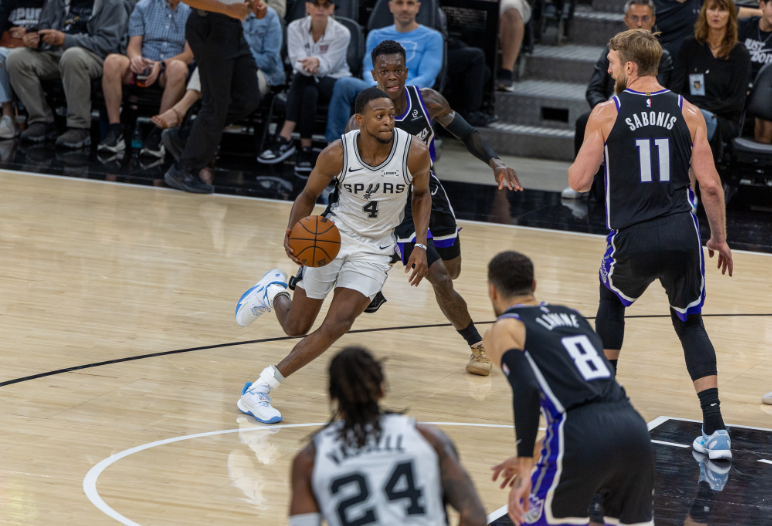
Ben Simmons started for the Kings and played a team-high 17 minutes. He finished with two points, two rebounds, and two assists. Simmons shot 1-of-4 from the field. Sacramento relies on Simmons to push the ball in transition and find shooters on the wings. The Spurs neutralized the fast break. San Antonio dominated the glass, pulling down 16 defensive rebounds and limiting Sacramento to just two offensive boards. Simmons was forced into half-court sets. The lack of a perimeter jump shot allowed his defender to sag off and clog the driving lanes for LaVine and Sabonis.
Evaluating The Supporting Casts
Preseason games offer coaching staffs a prolonged look at their bench rotations. The depth pieces determine the ceiling of a roster during a grueling 82-game campaign. San Antonio showcased a balanced and highly efficient second unit.
Devin Vassell provided an immediate scoring punch. He scored eight points in eight minutes, shooting 3-of-4 from the field. Vassell spaces the floor perfectly for Fox and Wembanyama. Julian Champagnie added six points and two rebounds, connecting on two three-pointers. The Spurs shot 40 percent from beyond the arc as a team. The ball rarely stuck in one place. Players made quick decisions. They passed up good shots for great shots.
Sacramento struggled to find any consistent bench production. Darius Acuff Jr. scored seven points in 10 minutes but required nine shot attempts to reach that mark. The Kings missed 20 of their first 27 field-goal attempts. Keegan Murray started and played 10 minutes. He scored three points on 1-of-4 shooting. The Kings depend heavily on Murray’s floor spacing. The San Antonio defenders stayed attached to his hip, denying him clean catch-and-shoot opportunities.
You can find more historical data regarding these rosters by checking out the Sacramento Kings team statistics on external platforms. For fans wanting to review our own breakdown of upcoming schedules, visit our 2026-2027 NBA Season Preview hub.
Statistical Disparities Tell The Story
The box score reveals exactly how San Antonio built their massive lead. The shooting percentages paint a stark picture. San Antonio shot 55.2 percent from the field. Sacramento shot 25.9 percent. The Spurs executed their offensive sets with precision. The Kings settled for contested jumpers late in the shot clock.
Rebounding dictated the tempo. San Antonio secured 18 total rebounds compared to Sacramento’s 10. The Spurs controlled the defensive glass. Controlling the defensive glass allows a team to dictate the pace of the game in transition. San Antonio recorded 16 fast-break points. Fox and Castle pushed the ball down the floor before the Kings could organize their defensive shell. Sacramento scored just four fast-break points.
The interior battle belonged entirely to the Spurs. San Antonio scored 20 points in the paint. Sacramento managed a mere four points in the restricted area. Wembanyama’s presence simply erased the middle of the floor. The Kings settled for long-range attempts, shooting 3-of-8 from beyond the arc. The lack of paint touches prevents an offense from establishing a rhythm. It stops players from getting to the free-throw line. Sacramento attempted only seven free throws.
San Antonio shared the basketball effectively. They recorded 11 assists on 16 made field goals. The unselfish play forces the defense to chase the ball rather than the man. Sacramento managed only four team assists. Isolation basketball rarely succeeds against elite defensive units. The Kings must correct their ball-movement issues before the regular season begins.
Looking Ahead To The Regular Season
The regular season matchups between these two franchises will carry heavy implications in the Western Conference playoff race. They are scheduled to face off on October 27 at the Frost Bank Center, and again on November 6 and November 23 in Sacramento.
San Antonio enters the season with massive expectations. Reaching the NBA Finals elevated the standard for the entire organization. Fox provides the veteran leadership and scoring punch required to navigate the regular season. Wembanyama projects as a perennial Defensive Player of the Year candidate. The supporting cast features a perfect blend of shooting and perimeter defense.
Sacramento faces serious questions. Trading Fox for LaVine changed the entire dynamic of their offense. LaVine brings elite scoring ability. The team lost their primary engine and floor general. Sabonis must shoulder a heavier playmaking burden. Simmons must remain healthy and productive to keep the offense flowing in transition. The Kings operate in a highly competitive Pacific Division. They cannot afford prolonged offensive droughts against elite competition.
This preseason game provided a clear look at the current state of both rosters. San Antonio looks organized, efficient, and physically imposing. Sacramento looks disjointed and heavily reliant on individual shot-making. The coaching staffs will review the film and make necessary adjustments. The exhibition season ends soon. The games will count in the standings very shortly.
