

The Washington Wizards and the New Orleans Pelicans faced off in their final preseason exhibition on October 16. The matchup provided a clear look at two franchises operating with completely different structural blueprints. The Wizards recently completed a massive roster overhaul, assembling a collection of established superstars and elite draft prospects. The Pelicans continue to refine a core group centered around extreme physical traits and perimeter length. Both coaching staffs utilized this contest to finalize rotation patterns and test defensive coverages before the regular season begins.
The preseason environment allows for heavy experimentation. Coaches run complex offensive sets to evaluate timing. They test multiple defensive concepts against specific player archetypes. This specific game presented a fascinating clash of styles. Washington deployed immense size in the frontcourt. New Orleans countered with relentless perimeter speed and interior force.
The Reconstructed Washington Starting Unit
Washington introduced a terrifying starting five. Trae Young initiated the offense at point guard. Kyshawn George provided secondary ball-handling and floor spacing on the wing. Rookie AJ Dybantsa started at small forward. The frontcourt featured the imposing duo of Anthony Davis and Alex Sarr. This lineup combination represents a massive shift in organizational philosophy. The front office prioritized size, rim protection, and elite pick-and-roll execution.
The sheer length of this group creates immediate problems for opponents. Davis and Sarr cover massive amounts of ground defensively. George and Dybantsa offer switchability on the perimeter. Young commands the entire offensive structure. The coaching staff expects this unit to dominate the paint and generate open perimeter shots through continuous motion. The exhibition against New Orleans served as a critical stress test for their spacing and communication.
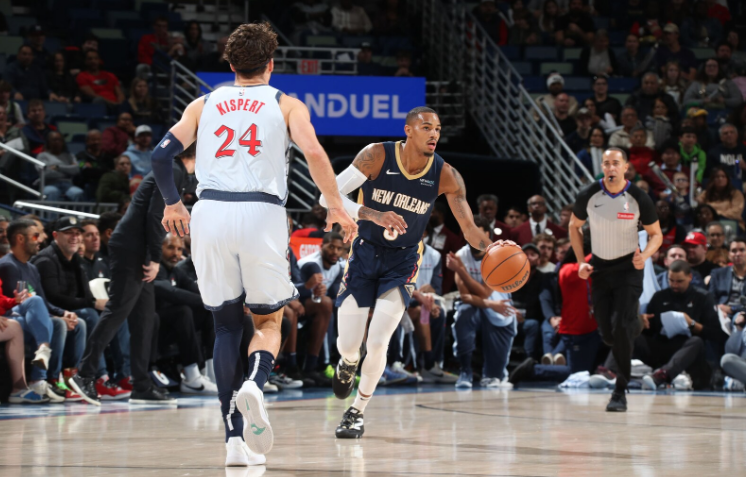
Frontcourt Battles: Davis And Sarr Defending Zion
The most compelling tactical element involved the interior matchup. Zion Williamson operates as an unstoppable physical force near the rim. He uses unmatched leverage and acceleration to dislodge defenders. The Wizards deployed Sarr as the primary defender on Williamson. Sarr possesses the lateral quickness to stay in front of drives and the wingspan to contest shots at the apex.
Davis functioned as a free safety on the weak side. The moment Williamson initiated his drive, Davis abandoned his assignment and rotated directly into the restricted area. The strategy forced Williamson to finish over two seven-footers. The Pelicans adjusted by placing shooters in the corners. The success of this defensive alignment depends entirely on the speed of the defensive closeouts. If Davis rotates to stop Williamson, a guard must immediately sprint to the open shooter. The Wizards displayed excellent defensive rotation speed during the early segments of the game.
Williamson attempted to counter the massive size by attacking in transition. He secured defensive rebounds and immediately pushed the tempo. He forced Sarr and Davis to backpedal. This strategy generated several transition fouls. The physical toll of battling multiple elite big men limits a player’s efficiency over four quarters. The Washington frontcourt intends to wear down opposing stars through sheer size and relentless shot-blocking.
Trae Young Orchestrating The Offense
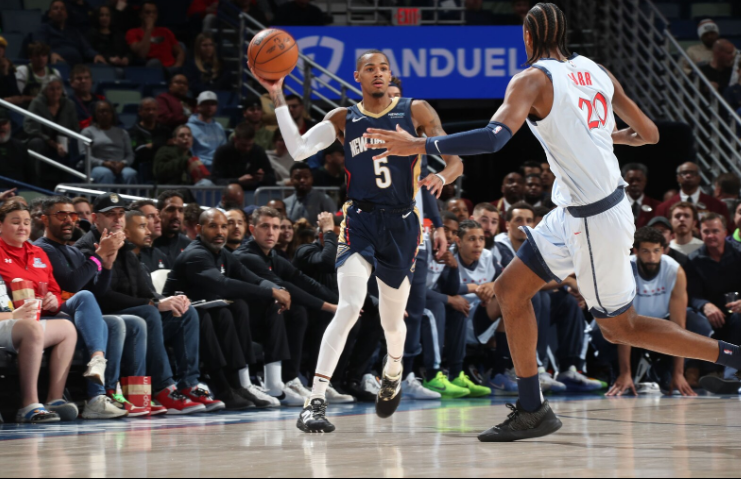
Trae Young dictates the pace of the game. He reads defensive coverages before the ball crosses half-court. The New Orleans defense attempted to pressure him far beyond the three-point line. Dejounte Murray chased Young over every screen. The Pelicans wanted to deny Young the space required to shoot his signature deep pull-up jumper.
Young simply adjusted his angles. He utilized Davis as a primary screener. The pick-and-roll combination of Young and Davis looks entirely unguardable on paper. The defense faces a brutal choice. Trapping Young leaves Davis rolling unimpeded to the rim. Dropping the big man leaves Young with enough space to hit a floater. Young repeatedly collapsed the defense and found open shooters on the weak side.
The chemistry between the new point guard and his massive frontcourt requires live repetitions. The timing of the lob passes must be exact. The spacing of the shooters must keep the defense stretched. The preseason setting allows Young to test the limits of his passing windows. He threw several risky interior passes to evaluate exactly where Davis and Sarr prefer to catch the ball. The offensive ceiling of this team directly mirrors Young’s processing speed.
AJ Dybantsa Adjusting To The Professional Game
The presence of AJ Dybantsa adds a fascinating layer to the Washington offense. The top overall pick in the 2026 draft carries immense expectations. He possesses elite scoring instincts and a projectable frame. The coaching staff placed him in the starting lineup immediately. They want him to learn through live action against high-level competition.
Dybantsa operated primarily as a spot-up shooter and secondary slasher. He allowed Young to dominate the ball. When the ball swung to his side of the floor, Dybantsa attacked shifting defensive rotations. He utilized a quick first step to blow past Herb Jones. He finished plays through contact at the rim. The professional game requires faster decision-making than the amateur levels. Dybantsa showed flashes of brilliance, making instantaneous reads and finding open teammates when the defense collapsed on his drives.
He faced a difficult defensive assignment. The Pelicans feature multiple explosive wings. Dybantsa navigated ball screens and fought through physical contact. He learned exactly how referees whistle the professional game. The coaching staff accepted his mistakes. They evaluated his response to adversity. His physical tools allow him to recover quickly when beaten off the dribble.
The New Orleans Perimeter Dynamic
The Pelicans offense relies heavily on their backcourt. Dejounte Murray provides steady point guard play and aggressive point-of-attack defense. Jordan Poole offers explosive, unpredictable scoring outbursts from the shooting guard position. The pairing forces opposing defenses to guard multiple actions simultaneously.
Poole hunted his shot early in the shot clock. He attacked Kyshawn George off the dribble. The Pelicans ran multiple flare screens to free Poole for catch-and-shoot opportunities. When Poole hits outside shots, the interior opens up completely for Williamson. The Washington defense struggled to contain Poole in isolation situations during the middle quarters.
Murray controlled the half-court tempo. He executed fundamental pick-and-roll sets. He located Trey Murphy III spacing the floor. The Pelicans hit several timely three-pointers to keep the score close. Their offense functions efficiently when they avoid unforced turnovers and execute their secondary fast-break actions. The spacing looked vastly improved from previous seasons.
Roster Depth And Preseason Rotations
The starting units played heavily in the first half. The coaching staffs turned to their benches in the third quarter. The evaluation of depth pieces carries massive importance. The regular season demands reliable production from the second unit.
Washington introduced Deandre Ayton off the bench. Ayton provides starting-caliber production against backup centers. He dominated the interior scoring against the Pelicans’ reserve big men. He established deep post position and finished with soft touch around the basket. The combination of Davis, Sarr, and Ayton guarantees elite rim protection for 48 minutes a night.
New Orleans relied on young wings and defensive specialists. The Pelicans coaching staff evaluated their rotation patterns. They mixed and matched different lineup combinations. They tested a small-ball unit featuring Zion Williamson at the center position. This lineup maximizes floor spacing but sacrifices rim protection. The Wizards punished the smaller lineup by feeding the ball directly into the post.
Evaluating these NBA preseason statistics provides insight into specific player development. Front offices monitor the minute distributions to finalize their opening night rosters. Players on non-guaranteed contracts fight for the final remaining spots. The intensity level of the reserves often surpasses the starters during these exhibition matches.
Defensive Schemes And Switching
The modern NBA requires tactical flexibility. Defenses must switch across multiple positions to neutralize the pick-and-roll. Washington displayed a unique defensive scheme. They allowed their guards to switch onto larger forwards. They rarely asked Davis or Sarr to switch onto smaller guards on the perimeter.
The Wizards utilized a drop coverage system. Sarr retreated into the paint to protect the rim. The guards fought over the top of the screens to pressure the ball handler from behind. This strategy forces offensive players to shoot mid-range floaters over the outstretched arms of a seven-footer. It mathematically limits high-value corner three-pointers and easy layups.
The Pelicans countered by setting screens higher up the floor. They forced the Washington big men to step out of their comfort zones. They isolated Sarr in space. Sarr responded by moving his feet and containing the dribble penetration. His defensive versatility validates his draft position. The ability of a massive center to guard on the perimeter completely alters the geometric possibilities for an opposing offense. For an expanded look at defensive concepts, review our Wizards defensive system breakdown.
Measuring Transition Efficiency
Fast-break points often dictate the outcome of a basketball game. Both teams attempted to push the pace. Washington secured defensive rebounds and immediately threw outlet passes to Trae Young. Young advanced the ball quickly, forcing the New Orleans defense into scramble situations.
The Pelicans excelled at creating live-ball turnovers. Herb Jones anticipated passing lanes and secured multiple steals. He initiated the fast break, leading to spectacular finishing sequences from Williamson. The Pelicans score efficiently when the defense remains unsettled. They struggle against set half-court defenses featuring elite rim protection.
The transition numbers highlight areas for improvement. Washington committed several sloppy turnovers while attempting complex passes in traffic. Young forces the issue occasionally. The coaching staff will review the film and emphasize ball security. The Pelicans missed several open trailers on the fast break. They must convert those high-percentage opportunities to maximize their offensive output.
Regular Season Implications
The preseason concludes shortly. The results of the exhibitions hold zero historical weight. The process of building habits remains the sole objective. The Washington Wizards possess the raw talent to challenge the elite teams in the Eastern Conference. The integration of Trae Young, Anthony Davis, and AJ Dybantsa requires patience. The individual pieces fit together logically. The execution will improve with time.
The New Orleans Pelicans face a demanding Western Conference schedule. The health of Zion Williamson remains the defining variable for their franchise. The supporting cast provides adequate spacing and defensive grit. The front office expects a deep playoff run.
The final buzzer of this exhibition signals a shift in intensity. The training camp battles end. The focus turns entirely to the regular season opener. The Washington roster looks unrecognizable compared to the previous campaign. The expectations have shifted massively. The fans demand success. The coaching staff must deliver a cohesive unit. The preseason provided the foundation. The real test begins next week.
