

MLB Expansion Planning has moved beyond market size and television geography. As of October 15, 2026, the clearest pattern is infrastructure first: secure a ballpark, show a finance plan, define public and private obligations, and prove that the site can support modern baseball operations. Recent facility decisions in Tampa, Baltimore, Jupiter, Sacramento, Salt Lake City, Orlando, Phoenix, and Kansas City point to the same standard. MLB is not only judging whether a city wants baseball. It is judging whether a city can carry the full venue burden that comes with a long-term franchise.
MLB Expansion Planning Starts With Stadium Certainty
Tampa Changed The Baseline
On August 28, 2026, Hillsborough County approved the Rays’ long-awaited fixed-roof stadium deal on the Dale Mabry campus in Tampa. The project was priced at $2.36 billion, with the Rays investing about $1.37 billion plus cost overruns, Hillsborough County contributing about $796 million, and the City of Tampa contributing $80 million. The plan included a minimum of 28,000 seats and a 35-year use agreement with a non-relocation clause, according to the MLB.com report.
That approval mattered because the Rays had long sat at the center of MLB’s expansion delay. League leaders and stakeholders had indicated that expansion to 32 teams likely would not be considered until the Rays and Athletics stadium situations were resolved. Tampa’s deal did not create an expansion team by itself, but it removed one of the largest venue questions attached to the existing 30-team structure. A deeper local funding view is available in our related analysis of the Rays ballpark impact.
How MLB Expansion Planning Values Control
The documents released on August 22, 2026, framed the Rays project as more than a stadium. The new ballpark and accompanying mixed-use neighborhood would be owned by Hillsborough County, with the Rays paying $4 million annually in rent. Construction was required to begin in the fall of 2026, with the stadium ready by March 31, 2029, matching the Opening Day 2029 target.
Those terms show why MLB Expansion Planning now rewards control as much as ambition. A site plan without a lease structure leaves the league exposed. A finance plan without construction deadlines raises timing risk. A stadium commitment without a non-relocation clause may not satisfy public partners. Tampa’s deal placed those elements into a defined framework, giving MLB a clearer view of one incumbent club’s future before any 32-team model can be tested.
Modernization Is No Longer Cosmetic
Camden Yards As A Signal
Facility upgrades at Oriole Park at Camden Yards also fit this discussion, even though Baltimore is not an expansion market. In May 2025, upgrades were approved for the 2026 season, including a center-field videoboard roughly 2.5 times the size of the previous display. The board was described as the 12th largest in MLB. Ribbon boards around the club level and upper deck were also part of the work.
The analytical point is direct: historic value does not replace modern revenue tools. Camden Yards remains one of the sport’s most influential ballparks, yet it still needed fan-facing technology upgrades. For an expansion candidate, that raises the entry standard. A new facility cannot simply offer seats and a field. It must account for premium spaces, digital presentation, in-game advertising inventory, circulation, concessions, and the type of event-day experience teams use to compete for discretionary spending.
Player Facilities Matter Too
Roger Dean Chevrolet Stadium, used for Spring Training, offered another infrastructure lesson by Spring Training 2026. Its renovation included refurbished clubhouses, weight rooms, meeting spaces, new batting tunnels, and improved player facilities. Several project components were scheduled for substantial completion in February 2026.
This type of work does not carry the public visibility of a new big-league ballpark, but it matters to baseball strategy. Evaluation sites, training spaces, and player-development facilities are part of a club’s operating platform. For cities trying to show MLB readiness, the lesson is that baseball infrastructure extends well past the major-league seating bowl. A credible expansion case has to address where players train, recover, meet, develop, and move through the organization’s daily workflow.
Candidate Cities Are Building Stadium Cases
Sacramento’s Land And Funding Argument
Sacramento’s expansion bid, as described in 2026 reporting, tied about $800 million in private investment to land around Sutter Health Park and included access to roughly $1 billion in public funding. The proposal involved either constructing a new stadium in West Sacramento near the existing Triple-A facility or replacing the current facility, according to MLB Trade Rumors stadium notes.
For MLB Expansion Planning, candidate cities are being measured by how much uncertainty they can remove before the league formally awards anything. Sacramento’s case, based on the research available, leaned on land control, private capital, public funding access, and an existing baseball site. That does not guarantee selection. It does show why facility planning has become a central expansion currency.
Salt Lake City And Orlando Show Mixed-Use Scale
Salt Lake City’s Big League Utah group prepared a stadium-anchored mixed-use development on a 100-acre west-side site. Its land acquisition, zoning, and infrastructure planning were viewed in the research as among the strongest readiness markers for candidate cities aiming at a possible 2031 or 2032 window. That type of preparation gives MLB more than a rendering. It offers a development map.
Orlando’s effort took a different public-facing form. In August 2026, the Orlando Dreamers unveiled updated renderings for a proposed complex priced at more than $2 billion, including a stadium, three hotel towers, and entertainment elements. The group sought up to $975 million from Tourist Development Tax funds to help finance part of the project. Because that funding request was not described as final approval in the research, the safer reading is that Orlando had an ambitious proposal, not a completed stadium path.
These cases also show why cross-sport venue analysis has become useful. Baseball is not copying arena strategy, but stadium districts now compete with broader sports and entertainment developments. For readers interested in comparing iconic teams and venue decisions across different sports, you can find a similar perspective at My All-Time Best.
Incumbent Stadium Problems Shape Expansion Timing
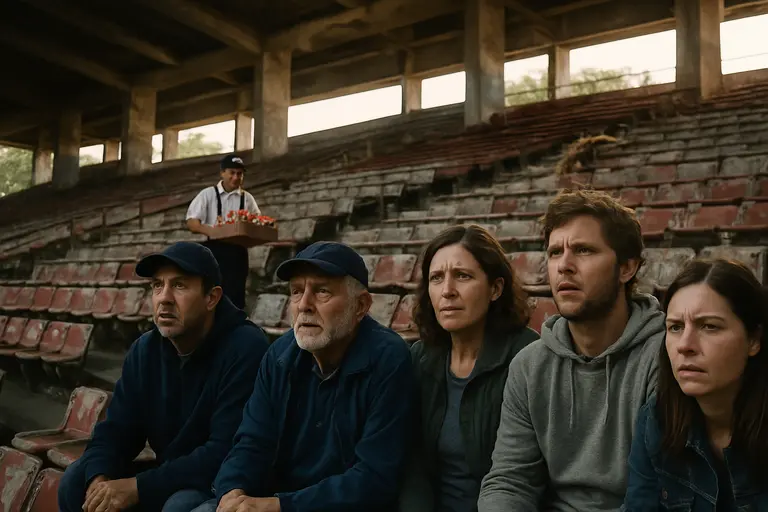
Expansion is not happening in isolation. A report in October 2026 highlighted five MLB teams facing major stadium decisions: the White Sox, Rays, Royals, Angels, and Diamondbacks. The list included aging venues, unresolved lease questions, replacement discussions, and renovation plans. Kauffman Stadium, opened in 1973, was under serious consideration for replacement because of condition and facility concerns. Chase Field in Arizona was tied to proposed renovations estimated at around $500 million, with the Diamondbacks’ arrangement running through 2027.
That backlog matters. MLB has to stabilize its existing clubs before creating two more. New franchises would require ownership groups, stadiums, media plans, player pipelines, and balanced league scheduling. If several current teams still face venue uncertainty, expansion becomes harder to stage cleanly.
| Facility Case | Strategic Signal |
|---|---|
| Rays fixed-roof stadium | Long-term use agreement, non-relocation protection, and defined public-private funding |
| Camden Yards upgrades | Historic parks still need modern video, ribbon-board, and revenue tools |
| Roger Dean renovation | Training and evaluation spaces are part of franchise infrastructure |
| Sacramento proposal | Land, public funding access, and a stadium site strengthen a bid |
| Salt Lake City plan | Mixed-use land preparation can improve expansion readiness |
| Orlando proposal | Large entertainment districts still need secure public finance decisions |
The pattern is not that MLB will choose the city with the most expensive renderings. The pattern is that bids with fewer unresolved questions should be easier to evaluate. Stadium ownership, lease length, roof strategy, construction deadlines, public contribution, cost-overrun responsibility, and surrounding development all affect the league’s risk assessment.
MLB Expansion Planning After 2026 Facility Decisions
The practical lesson for MLB Expansion Planning after the 2026 facility decisions is that expansion has become an infrastructure competition before it becomes a branding exercise. Tampa’s approval helped clear one major incumbent obstacle. Sacramento, Salt Lake City, and Orlando showed different versions of candidate-city ambition. Baltimore and Jupiter showed that existing facilities must keep upgrading even without relocation pressure. Phoenix and Kansas City showed that older venues can quickly become strategic questions for established clubs.
MLB can still weigh geography, ownership strength, media reach, and league balance. Those factors remain central. Yet recent facility activity suggests that any serious expansion bid must arrive with a credible stadium answer, not just a market argument. The next phase of the 32-team discussion will likely favor cities that can prove site control, funding credibility, construction timing, and baseball operations capacity before the league has to ask for them.
