

Welcome! Let’s change how we think about setting picks. Instead of just setting a pick, see it as your primary offensive weapon. This mindset shift changes everything.
The key is to create an advantage through legal contact. That moment of connection is not by chance. It’s a move you control.
Those first seconds after a good screen are magical. They set up both you and your teammate for success. Think of a great screen as the first domino you tip over.
It starts the whole chain reaction for a positive possession. We’ll dive into mastering that initial contact and what comes next. Get ready to unlock a new level of offensive impact!
Approach and footwork: sprint-in vs walk-in, stance, shoulder/hip targets, legal contact cues
Mastering the screen starts with your feet. How you get to your spot is key. Get it right, and you gain a big edge. Get it wrong, and you’re just a distraction.
We have two main ways to get to a screen: the sprint-in and the walk-in. Each has its own purpose and effect.
The sprint-in is fast and sudden. You rush to the spot, often from far away. It’s great for quick, jarring contact. It works best when the ball handler is also moving fast.
The walk-in is more about being quiet and precise. You move slowly into position, watching the defender. It’s best for plays that are slower and for finding the right screen angle. It’s about control, not surprise.
Your stance is important once you’re in place. Don’t stand straight. Instead, be ready with your feet apart, knees bent, and back straight. This stance helps you absorb contact and hold the right screen angle.
When setting a screen, aim for specific spots on the defender. The best spot is their back hip. If you hit this spot, you block their path. Your shoulder is also key for certain screens.
Legal contact is critical. Stay stationary, keep your arms in, and let the defender move. This way, you avoid fouls and create a real advantage.
Think of it as being a solid post. Contact should be with your body, not your arms. If you move or lean, you’ll get called for a foul. By following these rules, you screen effectively and with confidence.
Before you even think about contact, focus on your approach. Choose wisely between sprint-in and walk-in. Get your stance right. Pick your target on the defender. And always check your legal contact rules. This is how you make screens that are truly effective.
Angles and flips: finding the defender’s back hip, inside/outside step-up, flat-to-angle flips
The secret to an unguardable screen is simple: attack the defender’s blind spot. A “flat” screen is easy to see and avoid. But an angle screen forces the defender into a tough choice. This makes screening an art.
Your main goal is to target the defender’s back hip. Align your shoulder with their hip to trap them. They can’t go over or under without getting into trouble. Finding this hip is all about reading the defender’s stance.
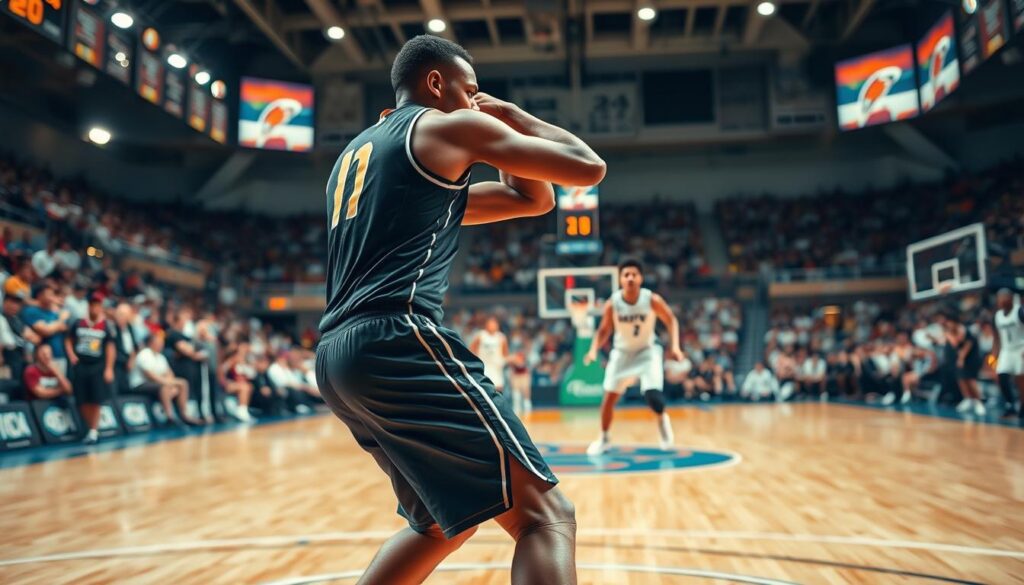
After finding the target, you need the right footwork. The inside/outside step-up is your last-second move. If the defender leans left, step in with your left foot. If they lean right, step out with your right foot. This small adjustment can make a big difference.
The flat-to-angle flip is a pro-level move. Start with a flat screen, then quickly pivot your hips and shoulders. This turns you from a wall to an angled barrier, blocking their path.
Mastering this flip requires timing and deception. You show one picture, then change it instantly. It’s like closing a door right as someone tries to walk through. The defender’s momentum carries them into your perfect angle.
This works because you’re outsmarting your opponent with your feet. You’re not just standing there; you’re creating a disadvantage. The inside/outside step-up and the flat-to-angle flip make any screen dynamic and unpredictable.
Start with slow, deliberate practice. Focus on finding that back hip first. Then, add the step-up adjustment. Finish with the pivot flip. Soon, you’ll set screens that create major problems for any defense.
Re-screens and keeps: hostage dribble timing, veer back, smash-and-seal after slip, short roll footwork
Elite big men know screens are not just one-time plays. They’re always ready to re-engage with a well-timed re-screen. This skill makes them game-changers. When the first screen fails, your quick reaction decides what happens next.
Let’s break down the four key moves that make your second effort more dangerous than your first.
The hostage dribble is like your point guard doing you a huge favor. It works by having your ball-handler control the dribble to “hold” the defender. This gives you the extra second needed to reposition and set the second screen.
The timing is everything. You must read your teammate’s body language. When they slow their dribble and lower their shoulder, that’s your cue. You don’t wait for a verbal signal. You explode into your veer back footwork to get back into the action.
The Veer Back: Your Quick Reset Button
The veer back is a specific footwork pattern for a fast reset. After your initial screen, you quickly open your hips and take a sharp, retreating step away from the play. This isn’t a lazy jog. It’s a purposeful, explosive move to create a new angle.
Why does this matter? It prevents you from getting called for a moving screen. More importantly, it surprises the defender. They think they’ve beaten you, but you’re already setting up again from a different spot. This is the core footwork for any effective re-screen.
The Devastating Smash-and-Seal
This is your counterpunch. Use it when a defender tries to “slip” over the top of your screen to avoid contact. As they jump out to recover, you “smash” them with a legal, wide-bodied seal. Then, you immediately “pin” them on your back.
The smash-and-seal turns their defensive adjustment into your advantage. You’re no longer just a screener. You’ve now become a post-up threat. It’s a physical and mental win that often leads to an easy bucket inside.
Short Roll Footwork: Becoming a Scoring Threat
After a successful screen—-especialy on a slip or a switch—you often find yourself in the “short roll.” This is the area between the free-throw line and the basket. Your footwork here is critical for scoring.
Catch the ball with two feet in the air, land in a “jump stop.” This keeps your options open. You can now face up, take a dribble, or make a quick pass. This footwork transforms you from a helper into a direct scoring threat every time you set a pick.
| Technique | Primary Action | Ideal Scenario | Big Man’s Next Move |
|---|---|---|---|
| Hostage Dribble Timing | Read teammate’s controlled dribble to reset. | First screen is navigated; defender is held. | Initiate veer back for a second screen. |
| Veer Back | Explosive retreat step to create a new angle. | You need to reposition quickly and legally. | Set a more effective angle on the re-screen. |
| Smash-and-Seal | Seal defender trying to slip over the screen. | Defender avoids contact by going over the top. | Establish deep post position for a catch. |
| Short Roll Footwork | Catch with a jump stop in the lane. | Screen forces a switch or a defensive slip. | Face up, score, or make a playmaking pass. |
Putting it all together, a re-screen is a sequence, not a single act. It starts with reading the play, resets with the veer back, and finishes with either a crushing second screen or a quick seal. By mastering these connected skills, you ensure your screening work is never wasted. You turn every defensive adjustment into your next opportunity.
Screen to seal and duck-ins: post seals after switch, roll-and-pin, burying smalls legally
When a defender switches onto you after a screen, it’s time to change your game. You’ve forced a mismatch. Now, it’s your turn to score.
Learn how to punish switches with the post seal, roll-and-pin, and duck-in. These moves turn your size into an advantage, making scoring easy.
Post Seals After a Switch: Claim Your Real Estate
Don’t just stand there when a smaller defender switches onto you. You must “seal” them. This means getting your body between them and the basket.
Start by pivoting into a strong stance. Drop your hips low and get wide. Use your butt and back to feel where the defender is. Then, wedge yourself into that space.
Legal contact is key. You can use your torso and your established position. But, you cannot push with your arms or extend your elbows. It’s like holding your ground in a crowded elevator.
When a direct seal isn’t possible, try the roll-and-pin technique. It combines your roll to the basket with an instant seal.
As you roll off the screen, stay connected to your defender’s hip. The second you feel them on your side, take a strong pivot step. This “pins” them to your back hip. Now, they’re stuck. You have a clear path to catch a lob or a bounce pass for a layup.
Your footwork is everything. Your inside foot plants hard. Your outside leg swings through to seal the defender. It’s a fluid, powerful motion. Practice it slowly at first to get the timing right.
Burying Smalls Legally: The Art of the Duck-In
The duck-in is a quick, explosive move. It’s not about brute force. It’s about superior footwork and angles.
You see the mismatch. You give a quick target hand to your guard. Then, you “duck” inside with a forceful first step. Your lead shoulder protects the ball. Your body seals the defender behind you in one motion.
How do you do this without fouling? Lead with your shoulder, not your elbow. Keep your arms tight and your movement vertical. You’re using your body’s momentum to create space, not your limbs to clear out. It’s the difference between a legal box-out and an offensive push-off.
Mastering these seals transforms your entire pick-and-roll game. It makes you a dual threat. Defenses can’t just switch everything. They’ll pay for it at the rim. For more ways to exploit switches, check out these advanced Spain pick-and-roll counters.
| Technique | Primary Action | Key Footwork | Legal Contact Cue |
|---|---|---|---|
| Post Seal | Establish deep post position | Drop step, wide base, feel defender | Contact with torso and back; no arm extension |
| Roll-and-Pin | Seal defender during the roll to the basket | Pivot on inside foot, swing outside leg to pin | Maintain verticality; use hip and leg to shield |
| Duck-In | Explosive drop-step into the lane | Forceful first step, lead shoulder down | Lead with shoulder; keep arms in and elbows down |
Remember, the best screeners are also dangerous scorers. By adding these seal and duck-in moves to your game, you force the defense to respect you every single time. You’re not just setting a pick; you’re starting your own scoring play.
DHOs into PnR: drag DHO, delay to handback, keep reads, big-as-hub sequencing
Imagine turning a simple handoff into a two-part attack that leaves defenders scrambling. That’s the magic of a DHO-to-PnR sequence. It transforms you from a stationary screener into the engine of your offense.
We call this connective playmaking. Your goal is to make two actions feel like one fluid motion. This confuses the defense and creates easy scoring chances.
Let’s start with the drag DHO. This isn’t a standard handoff where you stand completely stationary. Instead, you “drag” your defender across the floor by moving parallel with the ball handler.
You create a moving wall of space. The handler uses you as a shield to turn the corner. The moment you make contact, you’re already thinking about the next step.
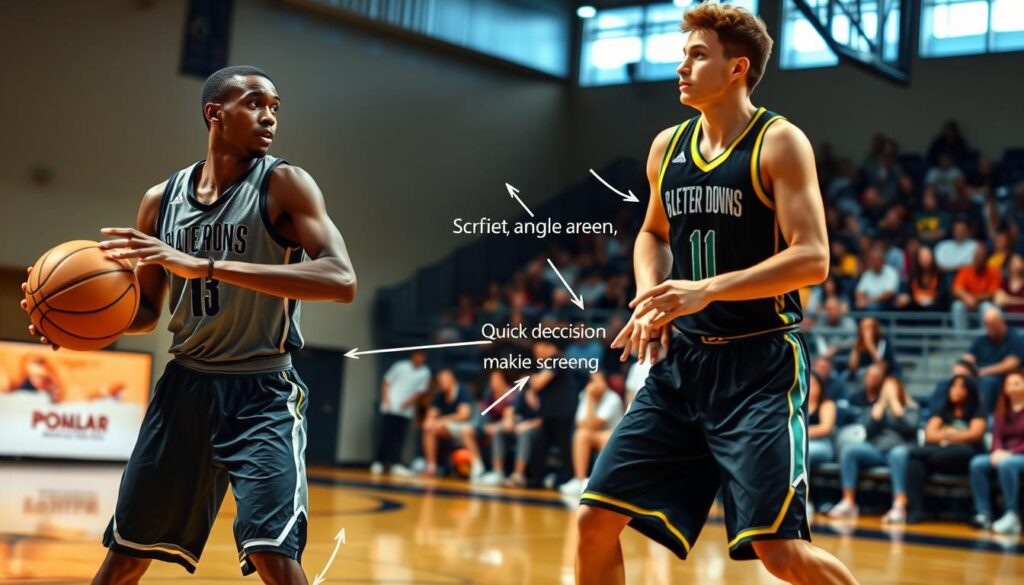
Next is the delay to handback. Sometimes, the best move is to hesitate. You set up for the handoff, but you pause for a split-second before giving the ball.
This messes up the defender’s timing. They might jump toward the handler, expecting an immediate pass. Your brief delay opens a lane for you to roll hard to the basket or pop out for a shot.
Now, the most critical skill: keep reads. This is your decision point. Do you hand the ball off, or do you keep it yourself?
Read the defender on your hip. If they’re trailing behind you, hand it off and roll. If they jump out aggressively to stop the handoff, you keep the ball and attack immediately. Your handler becomes your screener in a sudden role reversal!
This brings us to the ultimate concept: big-as-hub sequencing. You are no longer just a screener. You are the decision-maker in the middle of the play.
Think of it like a quarterback in football. You receive the ball in the handoff area. From there, you can pass, drive, or re-screen. You dictate the tempo and direction of the attack.
A great DHO-to-PnR sequence flows like this: Drag to create space, read the defender’s move, then either finish the handoff or keep it and go. This constant threat makes you unpredictable and incredibly valuable.
Mastering this turns every dribble handoff into a possible scoring explosion. You become the hub that makes your entire offense dynamic and hard to stop.
Avoiding offensive fouls: torso vs extension, re-positioning, timing with handler pace
Getting called for an offensive foul can really hurt your team’s chances. It’s like all your hard work to get open is undone by one whistle. But, knowing the rules can actually help you play better and more aggressively, legally.
The main rule to get is the “torso vs extension” principle. Your torso, or your chest and core, is where you can legally make contact. But, if you extend your arms, legs, or hips to push or lean into the defender, that’s a foul.
Often, an illegal screen happens when you push with your hands too late. Keep your arms in to protect yourself, not to push away. It’s like being a solid doorframe (legal) versus a swinging door (illegal).
Another important thing is re-positioning. Make sure your feet are set before the defender touches you. You can’t move your feet laterally or shuffle into the defender. Remember, “Feet set, then brace.” Adjust your angle early, while the defender is far away.
Timing your screen with your handler’s pace is also key. It’s like a dance! If your handler is running, you need to sprint into position. If they’re walking, don’t suddenly move. Mistiming can lead to moving screens.
When you get this timing right, you become a smooth part of the play. The defender hits a stationary, legal screen—you—and your teammate gets the open shot. It’s very empowering to know where the line is and play right up to it without worry.
By focusing on torso contact, early foot re-positioning, and timing with your handler, you turn a illegal screen into a powerful tool. Now, you can screen with strength, purpose, and legality.
Personnel development: rim runner vs pop 5, connectors; role-specific drills and film packs
Improving your screening skills is about finding what works for you, not copying others. Every player is different, and your best screen is one that matches your game. Let’s find the right fit for you and create a plan to make your natural talents a challenge for defenses.
First, figure out your main role. Are you a:
- Rim Runner: You screen and then quickly move to the basket for lobs, dunks, and easy shots. Your main threat is your vertical movement.
- Pop 5: You use screens to get open for your jump shot. You move to the three-point line or mid-range, stretching the defense.
- Connector: You’re a playmaker. You screen and then pass the ball, often through dribble hand-offs or short rolls, keeping the offense moving.
Knowing your role, your practice should be specific to it. General drills won’t help. You need to practice the exact moves and decisions you’ll make in games.
For the Rim Runner, focus on sprinting and finishing. Practice “screen-and-sprint” drills to improve your timing. Work on catching passes while moving. Watch players like Clint Capela or Jarrett Allen to see how they time their runs and keep their shoulders square for finishes.
If you’re a Pop 5, focus on footwork and shot preparation. Practice moving quickly to your spots. Work on catching and shooting off the hop. Study players like Karl-Anthony Towns or Brook Lopez to see how they use screens to create space and keep their hands ready to shoot.
Connectors need to practice reading the defense after the screen. Work on passing in short rolls, hitting corner shooters or cutters. Watch Draymond Green or Bam Adebayo to see how they make smart passes. Keep your drills focused on vision and quick decisions.
Your film study should be active, not just watching. For each archetype, create a “pack” of 10-15 clips. Analyze how these pros set their screens, their first step, and their final action. Ask yourself, “Why did this work?” This targeted analysis builds a mental library of solutions.
The goal is to keep your development focused. By tailoring your work to your archetype, you build confidence in your role. You stop trying to do everything and start mastering what you do best. This clarity makes you and your team more dangerous.
Analytics: screen assist rate, contact quality proxies, foul drawn on screens, advantage duration
Think data is just for front offices? These four key metrics will change how you practice and evaluate your screens. It’s not just about “setting a good pick.” Now, you can measure your direct impact with tools pros use. This isn’t about complex math; it’s about getting clear, actionable feedback on your most important job.
Let’s break down your personal analytics toolkit. We’ll focus on four powerful concepts: screen assist rate, contact quality proxies, fouls drawn, and advantage duration. Understanding these turns you from a guesser into a scientist of the screen.
First up is the screen assist. This is your most direct stat of success. It counts any basket your teammate makes directly after using your screen. It’s the ultimate proof that your action created an open look. Tracking this in your own game film shows you which angles and timings are most lethal.
Next, we have contact quality proxies. We can’t measure force on the court, so we look for visual clues. The big one is defender displacement. Did your screen physically move the defender? Other proxies include the defender needing two hands to fight over the screen, or them getting completely tangled up. Reviewing film for these moments tells you if your contact is effective.
Tracking fouls drawn on your screens is a brilliant measure of your physicality and technique. If defenders are constantly crashing into you illegally, it means you’re establishing position firmly and legally. It shows you’re a problem they can’t solve cleanly. More fouls mean more free throws for your team!
Lastly, advantage duration is a game-changer. This measures how long your screen disrupts the defense. A great screen doesn’t just create a momentary opening; it can confuse defenders for several seconds. Watch the film: does your action cause a lasting scramble, or does the defense recover immediately? Longer advantage means more time for your team to attack.
How do you use this? You don’t need a stats team. After a game or practice, watch your screening clips with these four questions in mind. Did my screen lead directly to a score (screen assist)? Did I make solid, displacing contact (contact quality)? Did I draw a foul? How long was the defense in chaos?
This data is your personal coaching report. It tells you exactly what to work on. If your screen assist rate is low, focus on timing with your ball handler. If your contact quality is weak, drill your footwork and angles. If you’re not drawing fouls, practice being more assertive with your seals. This feedback loop makes every rep smarter and more productive.
Embrace the numbers. They’re not cold statistics; they’re the clear, unbiased truth about your impact. Start measuring, and watch your value soar.
Progressive drills: 2v2 into 3v3 constraints, timer-based reps, angle call language; troubleshooting
Now we move from analysis to action. Let’s build your game with drills that progress in complexity.
Start with 2v2 scenarios. Focus on one skill at a time, like setting a solid angle or sealing after a roll. This isolates the fundamentals.
Next, add a constraint in 3v3 play. Force a specific read, like always screening for the player who just gave up the ball. This builds decision-making under pressure.
Use a shot clock or a simple countdown. Timer-based reps teach you to make your move without a delay. Game speed doesn’t allow for a long pause.
Create a shared language with your teammates. Call out “flat” for a straight screen or “angle” for a step-up. Clear communication removes guesswork.
What if the defender goes under your screen? Your handler can use a slight delay, then attack the space you created. Troubleshooting these moments is key.
Missed the seal? Focus on your footwork after the screen. A quick pivot can create a scoring chance from the post.
Mastering the screen is a craft. These progressive steps—from simple drills to timed, communicative play—forge the complete screener. Your work here turns concepts into unstoppable actions on the court.
