
Wizards Roster Depth is no longer a simple exercise in handing young players heavy minutes and accepting the cost. As of October 20, 2026, Washington sat one day from its scheduled regular-season opener on October 21, 2026 with a roster built around a different balance: AJ Dybantsa as the No. 1 pick from June 23, 2026, Trae Young as a veteran offensive organizer, Anthony Davis as a frontcourt anchor, and a group of young wings and guards still fighting for reliable NBA roles. That mix gives the Wizards a higher ceiling than the group that went 17-65 in 2025-26, but it also makes Dybantsa’s rookie assignment more layered than the usual top-pick rescue mission.
Wizards Roster Depth Starts With Role Definition
Why Wizards Roster Depth Changes the Rookie Ask
The most meaningful change is not just talent accumulation. It is role compression. Dybantsa arrived in Washington with primary-scorer credentials after a dominant BYU season, but the Wizards do not have to ask him to run every late-clock action, organize every weak-side read, and absorb every difficult matchup from opening night. Young can carry much of the ball-screen creation. Davis can tilt defensive attention in the frontcourt. That allows Washington to treat Dybantsa as a foundational player without forcing him into a usage pattern that strains the rest of the possession.
That distinction matters because top picks often inherit bad spacing, low passing equity, and unstable defensive lineups. Dybantsa’s Washington situation is different on paper. It should give him chances to score as a cutter, transition runner, attacking wing, and secondary creator rather than as a possession-by-possession isolation hub. That does not lessen his long-term value. It may create a cleaner development track.
The BYU Creation Load
At BYU in 2025-26, Dybantsa averaged 25.5 points per game and led the nation in scoring, with a usage rate around 33.9 percent, according to SI’s Wizards analysis. Those numbers support the idea that he can handle volume. The question for Washington is whether that volume should be imported directly into the NBA or reshaped around better teammates.
The stronger answer is reshaping. Dybantsa’s college profile showed he can attack a defense when everything runs through him. Washington now needs to learn how well he punishes tilted coverage when Young bends the first defender and Davis occupies help near the rim. That is a different test. It asks less of Dybantsa’s shot diet and more of his timing, screening angle recognition, and willingness to make fast decisions before the second defender arrives.
The Veteran Layer Changes Dybantsa’s Usage
Trae Young As The Organizer
Young’s presence is the clearest reason Dybantsa may not mirror the standard No. 1 pick workload. Young is expected to run much of the offense, which should reduce the immediate pressure on the rookie to create every advantage. For a wing prospect, that can be a gift. Young can manufacture gaps with deep range, passing manipulation, and pick-and-roll pace. Dybantsa can attack those gaps before the defense resets.
The tradeoff is rhythm. A high-usage college scorer moving into more off-ball work has to stay engaged without dominating the ball. That means sprinting to corners with purpose, cutting when his defender turns his head, and making quick reads after catches. If he does those things, the Wizards get a more efficient version of his scoring without asking him to win every possession from a standstill.
Anthony Davis And Frontcourt Cover
Davis gives Washington a different type of stabilizer. His size, defensive presence, and frontcourt scoring should help shelter some of the roster’s younger pieces. Deandre Ayton also gives the Wizards another experienced big. Together, those veterans can reduce the physical burden on Dybantsa, especially if Washington wants to use him across several wing assignments without asking him to live as an undersized interior defender.
The contract context matters only as far as it affects roster planning. Davis is 33 years old and has a player option for 2027-28, per the research provided. That means Washington’s evaluation window should be practical, not sentimental. The franchise has to identify which young players fit next to Dybantsa while the veteran structure is still in place. For a team that failed to reach 20 wins in each of the three seasons before 2026-27, cleaner veteran support can change the development environment quickly, but it does not remove the need for hard lineup decisions.
The Young Wings Create Optionality And Friction
A Crowded Development Board
Washington’s young group includes Alex Sarr, Kyshawn George, Bub Carrington, Bilal Coulibaly, Will Riley, and Tre Johnson alongside Dybantsa. That is not a minor bench story. It is the roster’s main developmental engine. The Wizards have more lineup shapes available than they did during the deeper rebuild years, but more options can also create less certainty. Every young player needs minutes, defined responsibilities, and enough game context to be evaluated fairly.
The research noted that about 55 percent of Washington’s 2025-26 minutes came from rookies or second-year players. That explains why inefficiency was difficult to avoid. Young players learn through mistakes, but five inexperienced players sharing the floor can turn normal teaching moments into possession after possession of poor spacing, late rotations, and rushed shots. The new roster construction should reduce that effect if the veterans absorb enough organizing work.
Spacing And Shooting Questions
Dybantsa shot 51 percent from the field and 77.4 percent from the free-throw line at BYU, while his three-point shooting was less stable, especially in catch-and-shoot situations at roughly 33 percent, according to The Washington Post’s draft evaluation. That is not a fatal flaw, but it is a lineup-building variable. If Dybantsa is playing next to multiple developing shooters, opponents may load up in the lane until Washington proves it can punish that coverage.
This is where Wizards Roster Depth becomes a coaching issue rather than a simple talent count. The staff has to pair Dybantsa with enough shooting and passing to let him attack downhill. It also has to avoid lineups where every young wing needs the same left-slot touch or transition lane. A good depth chart is not just ten names. It is a series of combinations that solve different problems.
Washington’s final preseason exhibition against New Orleans on October 16 offered one recent checkpoint for lineup evaluation, and our Wizards-Pelicans preseason analysis looked at how preseason structure can reveal competing roster priorities before the games count.
Defensive Growth Is The Real Swing Factor
Dybantsa’s Processing Test
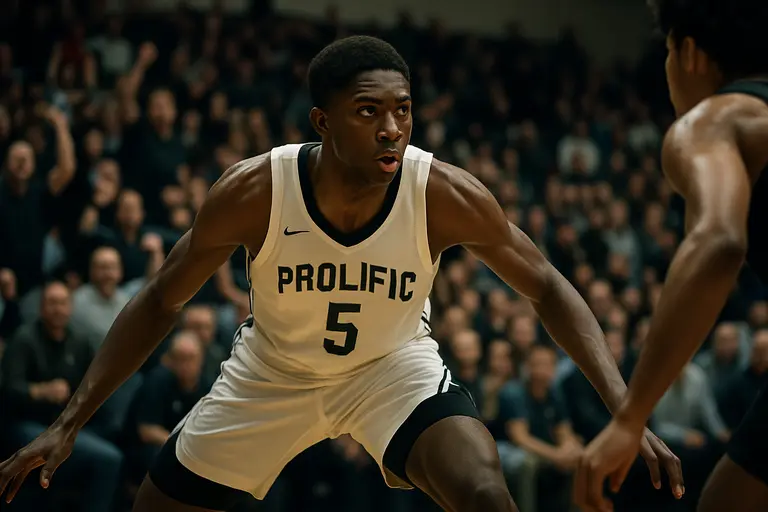
The offensive fit is easier to see. The defensive fit will decide how quickly Dybantsa can stay on the floor in high-leverage possessions. The research points to concerns about his defensive processing: not athletic tools, but how quickly he organizes rotations and handles multiple-position responsibilities at NBA speed. That is a fair distinction. A long, aggressive athlete can still be late tagging the roller, slow to peel back in transition, or caught between two assignments on the weak side.
Washington can help by keeping his early defensive assignments clear. If Dybantsa is asked to guard the opponent’s best wing every night while also serving as a major scorer, the learning curve steepens. If Davis and Ayton provide back-line cover and Coulibaly or George take some of the tougher perimeter work, Dybantsa can grow without every mistake turning into a layup.
Depth As Protection, Not A Shortcut
Better depth protects a young cornerstone, but it does not develop him automatically. Dybantsa still has to improve his recognition. Sarr still has to clarify his best frontcourt role. Carrington, George, Coulibaly, Riley, and Johnson still need enough minutes to show whether they fit around the primary core. Washington’s task is to avoid confusing activity with progress.
- Best-case early role: Dybantsa scores through cuts, transition, straight-line attacks, and selective creation while Young organizes the base offense.
- Main lineup risk: Too many developing shooters on the floor can shrink driving lanes and invite packed-paint defenses.
- Development priority: Defensive recognition must catch up to athletic ability for Dybantsa to become a stable two-way cornerstone.
For readers tracking sports coverage across the same publishing network, Ambikapur City offers insights into sports articles on a related platform.
AJ Dybantsa’s Place In Wizards Roster Depth
The Cornerstone Without The Immediate Burden
AJ Dybantsa’s place in Wizards Roster Depth should be framed around balance. He is the franchise cornerstone because of his scoring profile, physical tools, and draft status. He is not required to be Washington’s only offensive answer on October 21, 2026. That is the benefit of pairing him with Young and Davis rather than building a roster that leaves him to learn through constant double teams and late-clock bailouts.
The Wizards still have uncertainty. The shooting mix is not fully proven. The wing rotation is crowded. The defense has to move from athletic promise to connected execution. Davis’s option for 2027-28 means the long-term frontcourt picture is not fixed. Ayton’s presence gives size, but role clarity still has to be earned through real games. Those are meaningful questions, not minor details.
Still, Washington enters the 2026-27 schedule with a more coherent development setup than it had during the three sub-20-win seasons before it. Wizards Roster Depth now gives the coaching staff choices: protect Dybantsa with veterans, test him with other young wings, or stagger him into bench units where his scoring can scale up. The quality of those choices will determine how quickly the No. 1 pick moves from promising centerpiece to dependable franchise engine.
