

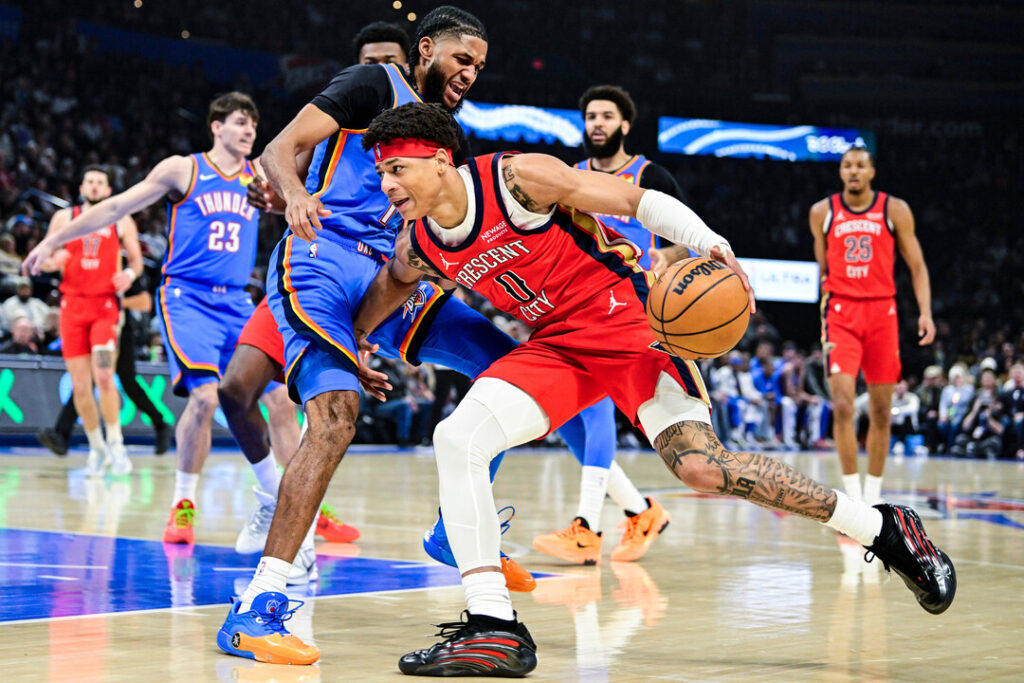
The Oklahoma City Thunder leaned on discipline, defense, and late-game composure to secure a 104–95 home victory over the New Orleans Pelicans on January 27, 2026. What began as a slow-paced, physical contest gradually tilted in Oklahoma City’s favor as the Thunder found just enough offensive rhythm to separate themselves down the stretch.
In a game defined by missed shots, physical play, and long scoring droughts, Oklahoma City did what good teams must do at home: stay patient, control the glass, and execute when it mattered most.
A Physical Start Sets the Tone
From the opening tip, it was clear this wouldn’t be a free-flowing offensive showcase. Both teams struggled to find early rhythm, trading defensive stops and contested shots throughout the first quarter. The Thunder managed to carve out a slim lead behind their activity on the boards and willingness to attack the rim rather than settle for jumpers.
New Orleans attempted to counter with size and physicality, but Oklahoma City’s defensive rotations limited clean looks. The Thunder closed the opening quarter ahead 17–14, signaling that points would come at a premium.
Thunder Gain Control Before Halftime
The second quarter followed a similar pattern, but Oklahoma City began to assert more control. Shai Gilgeous-Alexander consistently drew defenders into the paint, opening lanes for kick-outs and free-throw opportunities. While the Thunder still struggled from the field overall, they capitalized at the foul line and generated second-chance points.
By halftime, Oklahoma City held a modest but meaningful lead. The score reflected the nature of the game tight, physical, and dependent on effort plays rather than flashy offense.
Shai Gilgeous-Alexander Leads with Precision
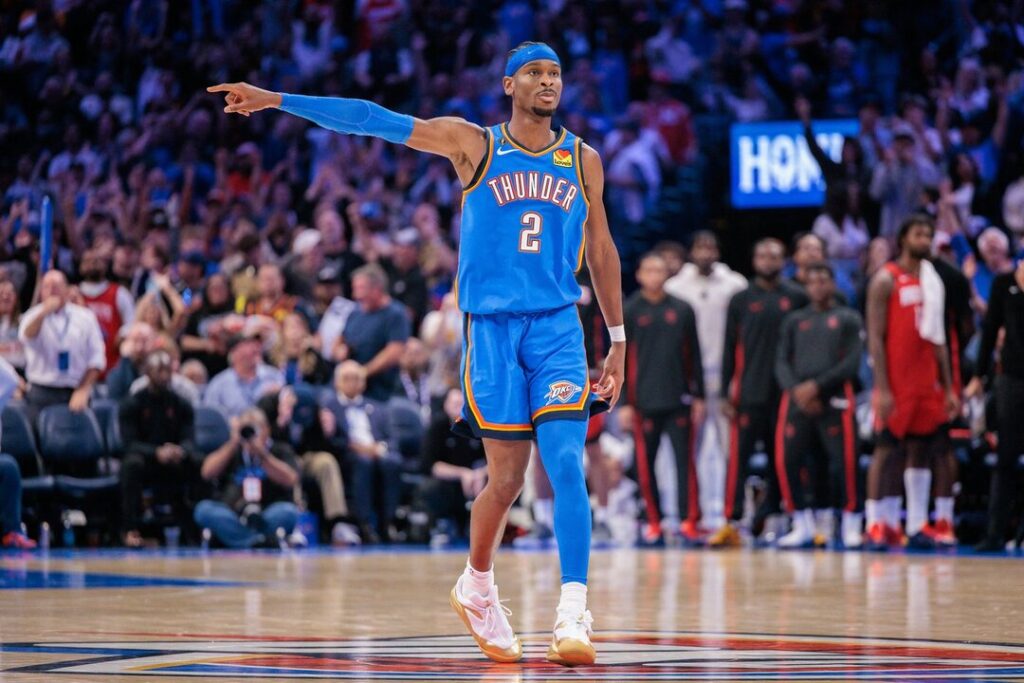
Shai Gilgeous-Alexander once again proved why he is the engine of the Thunder offense. The All-Star guard finished with 29 points, blending aggressive drives with calm execution at the line. His ability to draw contact and convert free throws was crucial in a game where both teams shot poorly from the field.
Beyond scoring, Gilgeous-Alexander controlled the pace, ensuring Oklahoma City didn’t rush possessions during key stretches. When the Pelicans attempted to build momentum, SGA responded with timely baskets that kept the Thunder in control.
Chet Holmgren Anchors Both Ends
Chet Holmgren delivered one of the most complete performances of the night, recording 20 points, 14 rebounds, and five blocks. His presence around the rim altered shots and discouraged the Pelicans from attacking the paint consistently.
Offensively, Holmgren provided balance, finishing efficiently near the basket and cleaning up misses. His rebounding was particularly important in neutralizing New Orleans’ size advantage and preventing extended possessions.
Holmgren’s impact went beyond the box score, as his defensive positioning and timing helped Oklahoma City maintain structure during New Orleans’ late pushes.
Bench Contributions Make the Difference
While the stars carried the load, the Thunder’s bench played a key role in sustaining energy. Isaiah Joe delivered a spark with 17 points, stretching the floor and knocking down timely shots when Oklahoma City’s offense stalled.
Jaylin Williams contributed on the glass and provided physical defense inside, helping the Thunder match the Pelicans’ toughness. These contributions allowed Oklahoma City to maintain consistency even when starters rotated out.
Pelicans Show Fight but Fall Short
Despite the loss, the Pelicans had moments where they threatened to swing the game. Zion Williamson led New Orleans with 21 points and 11 rebounds, using his strength to score inside and battle for position.
Saddiq Bey added 16 points and 13 rebounds, providing energy and effort that kept New Orleans within reach for much of the second half. However, the Pelicans’ shooting struggles ultimately proved too much to overcome. They finished the game shooting just 34.3% from the field and 25% from three-point range, numbers that made any sustained comeback difficult.
Turnovers and missed opportunities in transition further limited New Orleans’ ability to close the gap late.
Key Numbers That Defined the Game
The statistical profile of the matchup reflected its gritty nature:
- Oklahoma City shot 40.2% from the field but excelled at the free-throw line, converting 21 of 23 attempts
- Both teams finished with 62 rebounds and 25 assists, underscoring how evenly matched the contest was
- The Thunder’s ability to convert points at the line proved decisive in a game with limited shooting efficiency
In a matchup where margins were thin, those extra free throws made a significant difference.
Late-Game Execution Seals the Win
As the fourth quarter unfolded, the Pelicans attempted to pressure the ball and speed up the tempo. Oklahoma City responded with patience, working the clock and forcing New Orleans into difficult shots.
Gilgeous-Alexander’s free throws and Holmgren’s interior defense ensured the Thunder never relinquished control. While tensions flared briefly in the final moments, Oklahoma City stayed composed and closed out the win in front of the home crowd.
What the Win Means Going Forward
This victory helped Oklahoma City steady itself and avoid a potential slide in the standings. More importantly, it showcased the Thunder’s ability to win games when shots aren’t falling a crucial trait for long-term success.
For the Pelicans, the loss highlighted areas that need refinement, particularly offensive consistency and perimeter shooting. While the effort level was there, execution ultimately decided the outcome.
Final Takeaway
The Thunder’s 104–95 win over the Pelicans wasn’t pretty, but it was effective. Through disciplined defense, strong performances from Shai Gilgeous-Alexander and Chet Holmgren, and timely bench support, Oklahoma City did exactly what was required to protect home court.
In the grind of the NBA season, wins like this often matter just as much as dominant performances and on January 27, 2026, the Thunder proved they could grind one out when it counted.
