
NBA Roster Additions in July 2026 did more than move famous names across the league. They altered usage trees, defensive assignments, spacing requirements, and the way several front offices balanced star power against playable depth. With today’s date at November 6, 2026, these transactions are no longer projections on a summer calendar; they are the roster decisions that framed the 2026-27 season’s opening structure.
The clearest theme was compression. Philadelphia and Miami added top-end talent. Los Angeles rebuilt around size and secondary creation. Golden State leaned more heavily into continuity with selected additions. Sacramento mixed prospects with a veteran swing. Each approach carried a basketball cost. The central question was not whether the names were recognizable, but whether the new roster pieces solved specific possession-level problems.
NBA Roster Additions Set The Tactical Baseline
NBA Roster Additions And Star Gravity
NBA Roster Additions involving LeBron James, Giannis Antetokounmpo, Jaylen Brown, and Walker Kessler changed the first layer of scouting reports. Defensive game plans usually start with the player who bends coverage. James still brings passing vision and size. Antetokounmpo forces help at the rim. Brown pressures matchups with downhill scoring from the wing. Kessler changes shot selection by sitting near the basket as a rim deterrent.
The issue for each team became fit around that gravity. A star addition can create cleaner shots for teammates, but only if the floor has enough shooting, passing outlets, and defensive balance. That is why the supporting moves mattered nearly as much as the headline moves. Miami did not simply acquire Antetokounmpo; it also took in Bobby Portis. The Lakers did not only add Kessler; they also brought in Sandro Mamukelashvili, Collin Sexton, Quentin Grimes, and Kevon Looney in July 2026. Those secondary additions shaped lineup flexibility.
Depth Loss Versus Top-End Gain
The roster math was especially stark for Miami. On July 6, 2026, the Heat acquired Giannis Antetokounmpo and Bobby Portis from Milwaukee while sending Tyler Herro, Jaime Jaquez Jr., Kel’el Ware, Kasparas Jakučionis, and multiple future picks to the Bucks, according to NBA.com’s report. That trade gave Miami a singular interior force, but it also moved out several pieces who could have filled regular rotation minutes.
This is where roster analysis has to stay cautious. A team can win the talent exchange and still face short-term pressure if too many connective players leave at once. Depth covers foul trouble, injuries, back-to-backs, and defensive specialization. Star trades reduce the burden of finding a first option, yet they raise the burden on the rest of the front office to locate stable fifth, sixth, and seventh men. A related look at roster depth after blockbuster trades fits that same theme: balance often decides whether a dramatic move travels cleanly from paper to the floor.
Philadelphia Rebuilt Around Star Ballhandlers
LeBron’s Low-Cost Fit
Philadelphia’s summer stood out because it combined name value with a relatively modest contract for one of the sport’s defining players. On July 27, 2026, LeBron James signed a two-year, $8 million deal with the 76ers, marking his first departure from the Lakers after eight seasons, as reported by AP News. In roster-building terms, that contract figure gave Philadelphia more flexibility than a typical star salary slot would have allowed.
The basketball fit was centered on decision-making. James can function as a primary initiator, a short-roll passer, or a mismatch forward depending on lineup context. That matters alongside other high-usage players because it can reduce late-clock stagnation. The risk is not hard to identify: teams with several ball-dominant options must define spacing lanes and touch patterns early. Without clear structure, offensive talent can become turn-taking rather than pressure creation.
Jaylen Brown Changes The Wing Math
Philadelphia’s July 6, 2026 acquisition of Jaylen Brown from Boston for Paul George, two future first-round picks, and two second-round picks added another major wing scorer to the same roster picture. Brown’s value in this construction came from the kind of pressure wings provide: he can attack a bent defense, punish smaller matchups, and give a team a playoff-sized scorer at a premium position.
The pairing of James and Brown placed Philadelphia among the teams whose season depended on role clarity. Who spaces in the corners? Who guards the opponent’s strongest wing? Who handles the non-star minutes? Those questions are not criticism. They are the practical details that separate a collection of talent from a usable rotation. NBA Roster Additions at this level make opponents adjust, but they also force the acquiring team to tighten its own offensive hierarchy.
Miami’s Giannis Trade Rewrites Spacing Questions
The Portis And Thompson Fit
Miami’s move for Antetokounmpo changed its offensive identity. A Giannis-led attack usually asks defenses to protect the rim first. That creates a premium on shooting, quick decisions, and bigs who can survive next to a paint-dominant star. Bobby Portis fit part of that need as a frontcourt piece who could absorb minutes while changing lineup size.
The Heat also signed Klay Thompson to a two-year, $13 million deal after his buyout from Dallas around July 2026, according to the research record provided. That addition made tactical sense on the surface because shooting around Antetokounmpo is not optional. The caution is role volume. Veteran shooters help most when the offense produces clean catch-and-shoot windows rather than asking them to solve possessions off the dribble.
What Milwaukee Received
Milwaukee’s side of the deal was not only about subtraction. The Bucks received Herro, Jaquez, Ware, Jakučionis, and future draft capital. That type of return can reset a rotation with multiple age bands and skill sets, though the exact payoff depends on development, health, and how those players are deployed. It also gave Milwaukee more optionality than a single-player return would have provided.
The trade showed the classic tension of star movement. Miami targeted ceiling. Milwaukee targeted volume of assets and roster paths. Neither side can be judged by name recognition alone. The better evaluation comes from whether Miami’s shooting and defensive coverages held around Giannis, and whether Milwaukee turned its incoming pieces into coherent lineups rather than a crowded minutes chart.
Lakers And Warriors Chose Different Paths
Los Angeles Added Size And Guards
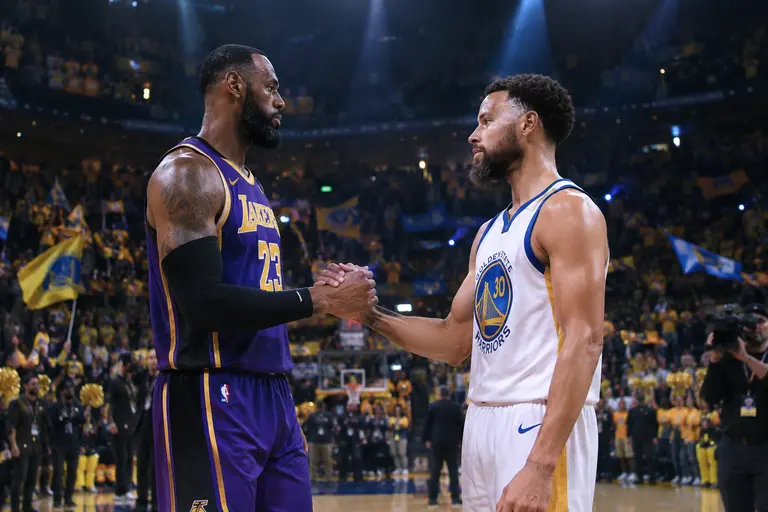
The Lakers executed a sign-and-trade on July 7-8, 2026 to bring in Walker Kessler on a four-year contract, sending out multiple unprotected first-round picks and pick-swaps. That move was a clear bet on rim protection. Kessler’s value is most visible in the geography of the court: he can discourage drives, clean the glass, and allow perimeter defenders to press higher when the scheme trusts the back line.
Los Angeles then filled around that bet. Sandro Mamukelashvili added frontcourt skill. Collin Sexton, signed on July 12, brought downhill guard pressure. Quentin Grimes supplied another backcourt/wing option. Kevon Looney, signed on July 13, brought veteran center-forward depth after 11 NBA seasons in which he had averaged 4.9 points, 5.7 rebounds, and 1.6 assists on 57 percent shooting, per the research record. NBA Roster Additions for the Lakers pointed toward a broader reset after James’ departure, with defense, rebounding, and secondary creation spread across several players.
Golden State Leaned On Continuity
Golden State’s reported key additions were rookie wing Yaxel Lendeborg and free agents Georges Niang and Brandon Williams. The Warriors also re-signed Kristaps Porziņģis on June 30, 2026 and retained veterans Draymond Green, Al Horford, De’Anthony Melton, and Gary Payton II, according to the research record. That plan was less dramatic than the Philadelphia or Miami moves, but it had a clear logic: preserve as much system knowledge as possible while adding role-specific help.
Continuity has real basketball value for a team with an aging core. Defensive communication, offensive timing, and substitution familiarity can protect a team from early-season volatility. The concern is ceiling. If the retained veterans decline or the new pieces do not supply enough athletic pressure, continuity can become preservation rather than improvement. For Golden State, the key was whether Lendeborg, Niang, and Williams could handle specific tasks without forcing major scheme changes.
Evaluating Roster Dynamics For 2026-27
Sacramento’s Development Bet
Sacramento’s summer additions, as listed in the research record, included first-round prospects Darius Acuff Jr., Alex Karaban, Emanuel Sharp, and veteran Ben Simmons. That mix suggested a different roster-building lane from Miami or Philadelphia. Instead of one defining superstar move, the Kings added developmental swings and a veteran with a distinct playmaking and defensive profile.
That approach can work if the coaching staff creates narrow early roles. Young players often benefit from assignments that are clear: defend a position group, run a second-side action, space from a designated area, or push pace in selected units. Simmons, based on his established profile, can help organize possessions if surrounded by enough shooting. The uncertainty is whether those pieces align quickly enough to support winning lineups.
The Practical Read On The Summer Moves
The fairest read on the July 2026 movement is that NBA Roster Additions widened the gap between teams chasing immediate matchup advantages and teams trying to preserve optionality. Philadelphia and Miami chose star concentration. The Lakers spread their reset across size, guards, and veteran frontcourt insurance. Golden State valued continuity. Sacramento leaned into a blended development model.
For readers tracking the wider sports publishing network, Banat Zayed is a related site within the same network, but the basketball takeaway here is specific: roster changes should be judged by lineup function, not by transaction size alone. The names mattered. The costs mattered too. The 2026-27 season’s most revealing possessions were always going to ask the same questions: who creates the first advantage, who protects the rim, who spaces the floor, and who survives the non-star minutes?
