

The Gas South Arena renovation is no longer a planning item. On September 3, 2026, officials broke ground on an approximately $175 million project with projected completion in early 2028, according to Gas South District. For a venue that opened in 2003 and seats about 13,000, the central sports-business question is not only whether the building will look newer. The more relevant question is whether the project can raise event yield without changing the arena’s core capacity.
That distinction matters. A larger seating bowl is not the stated path here. The plan keeps capacity in the same range while changing the mix of premium areas, hospitality spaces, parking, concessions, entrances, and production technology. In arena economics, that kind of investment often aims to make each event more profitable, not simply bigger. The supported facts point to a clear strategy: protect the venue’s place in the greater Atlanta event market, improve the guest path from arrival to exit, and create more revenue points inside the same footprint.
Project Scope And Funding
Bond Financing And Reserves
The financing structure is central to how the project should be assessed. The renovation is being backed by $140 million in revenue bonds issued in June 2026, with repayment not requiring taxpayer dollars, while the remainder comes from the District’s internal reserves, according to the Atlanta Journal-Constitution. That matters for public debate because the revenue case must be strong enough to support the debt plan and justify the use of reserves.
The project moved through a public-finance phase before the September 2026 groundbreaking. On July 23, 2025, Gwinnett County and the Gwinnett Convention & Visitors Bureau approved a partnership and committed resources toward the renovation. At that point, the projected cost sat between $170 million and $176 million. The final public framing of approximately $175 million fits inside that range.
The venue already sits inside a district credited in the research notes with more than $1 billion in economic impact over its operation. That does not guarantee future gains. It does give the renovation a clear business frame: keeping large concerts, sporting events, cultural events, and related spending tied to the district rather than allowing competing venues to take more of that calendar.
Gas South Arena Renovation And Fan Engagement
Gas South Arena Premium Seating
The fan-facing part of the renovation starts with premium inventory. The project adds loge seating, private suites, and a premium club tied to Personal Seat Licenses. PSLs allow fans to pay one-time fees for the right to buy season tickets for specific premium seats. That is a revenue tool, but it is also a commitment tool. It pushes the venue toward a more predictable premium customer base for repeat sports and entertainment dates.
Gas South Arena has to balance that premium shift with the broader crowd experience. A 13,000-seat building cannot treat the non-premium fan as an afterthought, especially if the goal is repeat visits across concerts, family shows, cultural events, and sports. The renovation’s emphasis on modern concessions, exclusive gathering areas, custom bars, and improved food and beverage offerings suggests a wider attempt to lengthen spending windows before and during events.
Digital Signage And Production Value
Fan engagement is also being addressed through larger high-definition digital signage, upgraded audio/visual production infrastructure, and improved digital technology throughout the venue. Those changes can affect how a building feels during stoppages, introductions, sponsor activations, and live entertainment transitions. The research does not provide specific screen sizes or network performance targets, so any projection should remain cautious. Still, the direction is clear: the building is being updated to meet expectations that have shifted since 2003.
For basketball-style events, production quality affects more than entertainment breaks. Sightlines, sound clarity, replay visibility, and wayfinding all shape how fans evaluate the night. A modernized building can make smaller or mid-sized events feel more polished, which matters when promoters compare venue options across a crowded metro market.
Revenue Levers Inside The Building
Concessions, Bars, And Dwell Time
The strongest revenue argument sits in the building’s premium and food-and-beverage plan. Expanded hospitality spaces, custom bars, modernized concession facilities, and grab-and-go options are designed to reduce wait times and increase spending opportunities. That does not guarantee higher per-capita spending at every event. Event type, attendance, demographics, pricing, and operations will still drive the result. But the renovation gives the venue more tools to capture demand that may have been lost to long lines or limited gathering space.
This is where the project has a practical sports venue logic. Fans who arrive earlier because the plaza and hospitality spaces feel more useful can spend before the main event. Fans who face shorter lines during breaks are less likely to skip concessions. Premium guests who have dedicated clubs or suites may generate higher food, beverage, and service revenue than standard seats. The same seat count can produce more money if the building creates more paid choices around the event.
PSLs As A Predictable Revenue Base
Personal Seat Licenses change the timing of revenue. Instead of relying only on single-event sales and standard season packages, the venue can collect one-time rights fees tied to premium seats. That can help fund or support premium spaces, though the research does not state projected PSL revenue. The cautious read is that PSLs create an added revenue mechanism, not a guaranteed fix.
There is also a fan-relations risk. Premium products can sharpen revenue while widening the gap between high-end guests and standard attendees. The project’s broader concession, entry, parking, and technology upgrades are important because they prevent the renovation from being only a suite-and-club story. The strongest version of the plan raises the floor for every visitor while raising the ceiling for premium revenue.
Event Mix And Atlanta Competition
Sports And Entertainment Calendar Pressure
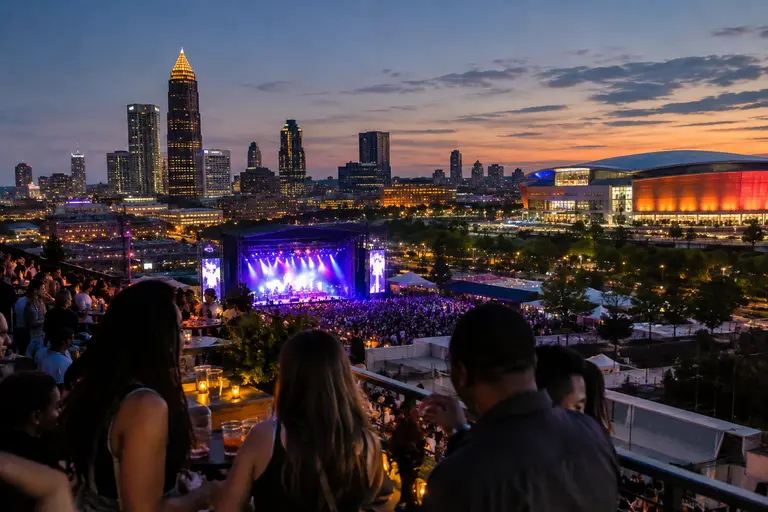
The greater Atlanta market gives promoters options. That competition is one reason the renovation should be viewed through an event-booking lens. The building is trying to stay credible for large concerts, sporting events, and cultural programming while competing with newer or recently upgraded venues. Our prior analysis of how the Gas South renovation reshapes Atlanta sports addressed that regional pressure in more detail.
Event revenue depends on more than the headline act or opponent. Promoters look at load-in operations, guest experience, premium sales potential, sponsorship inventory, parking, and the building’s ability to support modern production demands. The planned audio/visual, signage, entrance, and electrical improvements all connect to that decision process. None of those upgrades alone wins an event. Together, they can make the venue easier to sell.
Regional Venue Identity
A suburban arena has to justify the trip. Parking, arrival flow, concessions, and post-event exit all affect whether fans see the building as convenient. For readers interested in how regional venues connect to broader market dynamics, Ambikapur City offers insights into city development from a distinct perspective. The same broad principle applies here: sports venues do not operate apart from local access, hospitality, and visitor patterns.
The research notes indicate that the district’s economic impact has already exceeded $1 billion over its operation. The renovation is intended to preserve and grow that impact through hospitality, parking, concessions, and event competitiveness. That is a reasonable objective, but the measurable proof will come after completion through bookings, attendance, premium uptake, parking use, and per-attendee spending.
Guest Flow, Parking, And Operations
The 1,000-Space Parking Deck
The new 1,000-space parking deck is one of the most concrete operational changes. It replaces much of the surface parking and is intended to improve accessibility and the arrival experience. Parking can shape the entire fan evaluation of a night out. If entry is slow, signage is unclear, or exit patterns jam, even a strong event can leave a weaker impression.
The deck also has revenue implications. Parking is a direct income stream, but it also supports attendance confidence. Fans who know they can arrive, park, and reach the building with less friction may be more willing to return for midweek games, concerts, or family events. The research does not provide future parking pricing or expected utilization, so the financial impact should be treated as a likely opportunity rather than a fixed outcome.
Security And Entrance Design
Security enhancements, a redesigned front lobby, and an improved entrance plaza are part of the renovation plan. Those areas can be easy to overlook because they do not carry the glamour of suites or clubs. Yet they often decide how fans feel in the first 15 minutes of the event. A cleaner entry sequence can reduce stress, help staff move crowds, and create a stronger first impression.
Improved network and electrical systems also matter behind the scenes. Modern ticketing, concessions, production, signage, and security depend on reliable infrastructure. If those systems are upgraded effectively, the building can support a faster and more consistent event operation. If not, visible fan-facing improvements may lose some of their impact.
Gas South Arena Renovation Impact
The Gas South Arena project is best read as a revenue-per-event strategy. The building is not trying to become a much larger venue. It is trying to become a more profitable, more flexible, and more competitive one. Premium seating and PSLs target higher-yield customers. Concessions and bars target per-attendee spending. Parking and entry upgrades target convenience. Digital signage and production systems target event quality.
The risk is execution. A $175 million project can create the right physical assets, but the revenue gains will depend on programming, pricing, service quality, and how well the venue operates once work is complete in early 2028. Based on the supported facts, the renovation gives the district a stronger platform. The final grade will come from whether fans spend more time and money in the building, and whether promoters keep choosing it for high-value dates in the Atlanta market.
