
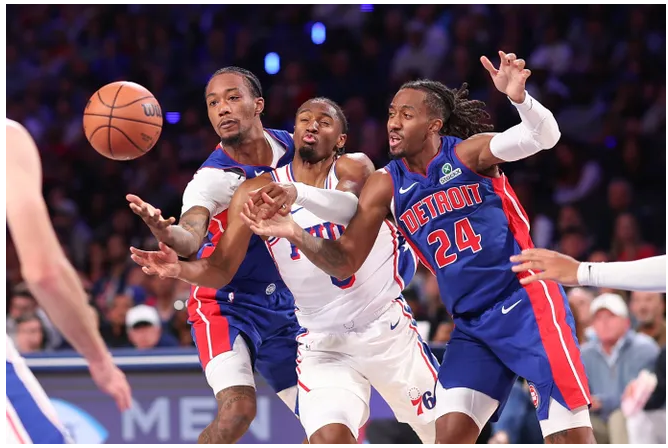
The Eastern Conference rivalry between the Philadelphia 76ers and the Detroit Pistons offers a fascinating case study in contrasting roster construction. The 76ers aggressively pushed their chips into the middle of the table, assembling a star-studded lineup featuring Tyrese Maxey, Jaylen Brown, and LeBron James. The Pistons opted for a more organic growth model, trusting Cade Cunningham to orchestrate an offense surrounded by floor spacers and athletic big men. The two franchises recently clashed on October 25, 2026, at the Xfinity Mobile Arena, providing a clear blueprint of their tactical advantages and structural flaws.
Detroit secured a convincing 106-93 victory in that matchup, shocking the home crowd and exposing some early-season chemistry issues for the newly formed Philadelphia core. As these teams prepare for their next encounter at Little Caesars Arena on November 4, we analyze the betting markets, dissect the previous box score, and project how the coaching staffs will adjust their game plans.
Evaluating The Opening Betting Markets
Oddsmakers initially positioned Philadelphia as the heavy favorite in the Eastern Conference hierarchy based purely on their accumulated talent. However, the recent 13-point home loss to Detroit forced a significant market correction. The betting lines for the upcoming November 4 contest at Little Caesars Arena project a tightly contested battle, with projection models giving the 76ers a narrow 54.2 percent implied probability of winning.
The total points line requires careful consideration. The October 25 game produced a combined 199 points, falling well below the typical modern NBA scoring average. Detroit shot 43.7 percent from the field, while Philadelphia struggled immensely, converting just 40.0 percent of their attempts. Bettors must evaluate whether that low-scoring output represents an anomaly or a repeatable trend born from slow, isolation-heavy offensive schemes. For a deeper understanding of how oddsmakers adjust these numbers following a blowout, review our guide on NBA spread betting strategies.
The Detroit Pistons Offensive Execution
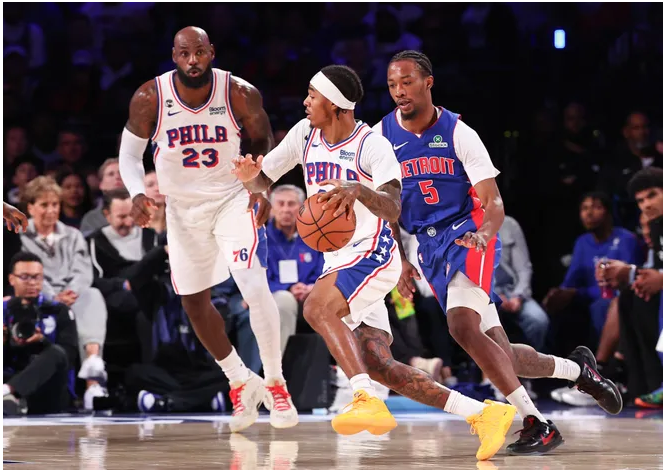
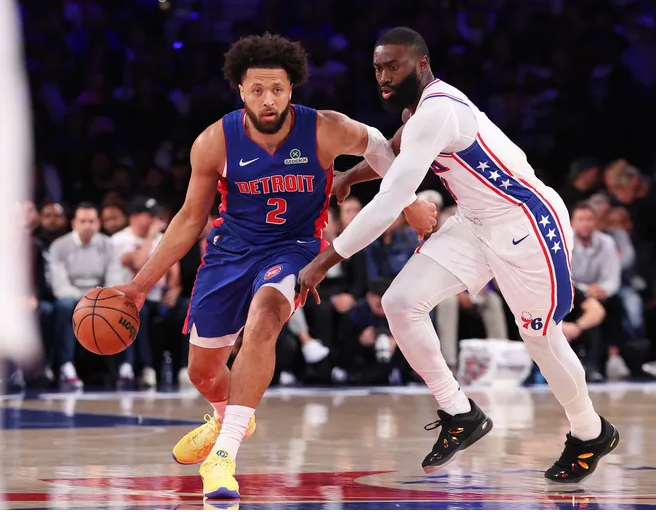
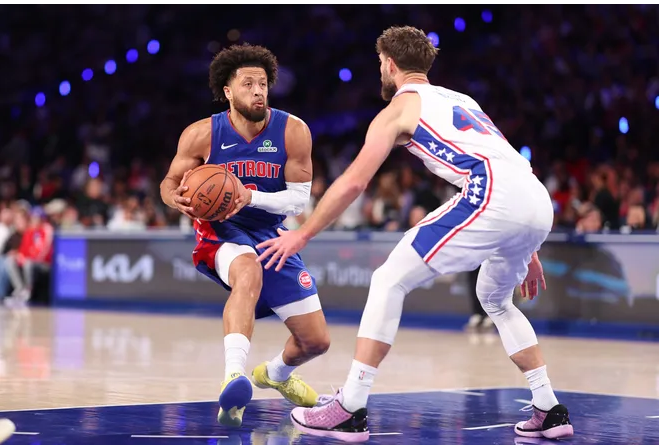
Cade Cunningham serves as the undisputed engine of the Detroit Pistons. During the recent victory in Philadelphia, Cunningham dominated the game rhythm, recording 26 points, eight rebounds, and eight assists in 33 minutes of action. He consistently broke down the initial line of defense, forcing the 76ers into difficult rotation scenarios. His size advantage over traditional point guards allows him to shoot cleanly over contests or physically back down smaller defenders in the mid-post.
The Detroit front office surrounded Cunningham with the exact personnel needed to maximize his driving gravity. Duncan Robinson operates as the primary floor spacer, punishing any defense that dares to collapse into the paint. Robinson erupted for 21 points in the October 25 matchup, hitting five of his nine three-point attempts. When Robinson connects from deep range, the entire opposing defensive shell stretches to its breaking point.
The Pistons also rely on Daniss Jenkins to provide secondary scoring and playmaking. Jenkins added 18 points and six assists, shooting an efficient 6-of-11 from the field. The combination of Cunningham’s steady orchestration, Robinson’s perimeter shooting, and Jenkins’ aggressive slashing makes the Detroit offense incredibly difficult to contain for a full 48 minutes.
The Philadelphia 76ers Roster Dynamics
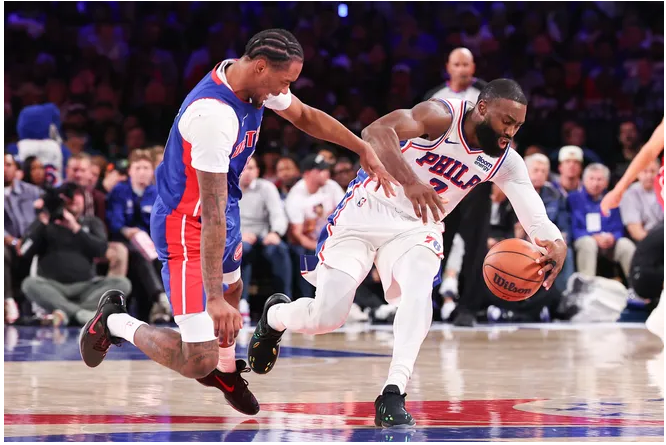
The Philadelphia 76ers feature an unprecedented collection of individual talent. Tyrese Maxey commands the offense with blinding speed and deep shooting range. He poured in a game-high 29 points on 24 shot attempts in the recent loss to Detroit. Maxey attacks closeouts with ferocity, often reaching the rim before the help defense can rotate.
The front office paired Maxey with two of the most physically imposing wings in the sport. Jaylen Brown and LeBron James provide unmatched transition finishing and half-court shot creation. However, integrating three primary scorers requires time and sacrifice. Against Detroit, the Philadelphia offense looked stagnant and overly reliant on isolation sets. James scored 18 points on 8-of-15 shooting but posted a glaring -22 plus-minus rating in his 33 minutes. Brown struggled to find his rhythm, shooting a dismal 5-of-20 from the floor for 16 points and registering a -19 plus-minus.
The glaring issue for Philadelphia centers around the availability of Joel Embiid. The franchise center missed the October 25 contest, leaving a massive void in both rim protection and half-court scoring. Without Embiid commanding double-teams on the low block, the Detroit defense easily stayed attached to the Philadelphia perimeter shooters. The 76ers desperately need their anchor back on the floor to balance their offensive attack and solidify their defensive rebounding.
Frontcourt Battles And Rebounding Margins
The interior collision dictates the physical tone of this matchup. With Embiid sidelined, Detroit capitalized on their size advantage. John Collins dominated the glass, pulling down a game-high 11 rebounds while adding 16 points on 7-of-15 shooting. Collins provides vertical spacing as a lob threat and possesses the strength to secure contested defensive rebounds in traffic.
Paul Reed, playing against his former team, contributed solid minutes for the Pistons, grabbing eight rebounds and blocking two shots in 23 minutes. The Detroit frontcourt established deep post position and secured 15 offensive rebounds as a team, leading to critical second-chance points.
Philadelphia countered with Adem Bona and Dean Wade in the frontcourt. Bona offered impressive rim protection, rejecting three shots and pulling down 13 rebounds, including five on the offensive end. Wade struggled to contain the heavier Detroit forwards and provided limited offensive production, scoring seven points on 2-of-4 shooting. The 76ers must execute flawless team-rebounding fundamentals if Embiid remains out of the lineup. Allowing a team with Cade Cunningham to generate extra possessions typically results in a lopsided defeat.
Tactical Matchups On The Perimeter
The defensive assignment on Cade Cunningham carries immense weight. Philadelphia will likely task Jaylen Brown with the primary responsibility of slowing down the Detroit floor general. Brown possesses the lateral quickness and physical strength to fight through screens and contest Cunningham’s pull-up jumpers. If Brown can contain the penetration without requiring a double-team, the entire Detroit offensive structure stalls.
Conversely, the Pistons face a difficult decision regarding Tyrese Maxey. Detroit used a combination of Kevin Huerter and Ronald Holland II to pressure the ball during their recent victory. Huerter offers steady defensive positioning, while Holland brings elite length and athleticism. The Pistons must force Maxey into taking contested mid-range shots, denying him clean angles to the basket. Maxey missed 13 field goals in the previous matchup, proving that disciplined team defense can mitigate his explosive speed.
Pace control serves as the defining variable. Philadelphia wants to turn the game into a fast-paced track meet, allowing Maxey, Brown, and James to attack unsettled defenses in transition. Detroit prefers a more methodical half-court game, relying on Cunningham to dissect the defense and find open shooters like Robinson. The team that successfully enforces their preferred tempo usually covers the spread. To track advanced pace metrics and historical tracking data, bettors often consult the official NBA statistical database.
Betting Odds And Final Game Outlook
The upcoming clash at Little Caesars Arena offers a prime opportunity for the Philadelphia 76ers to correct their early-season mistakes. The team shot a putrid 7-of-27 from three-point range in their previous meeting. Positive regression suggests they will hit those open looks at a much higher clip in the rematch. The raw talent of Maxey, Brown, and James will eventually translate into cohesive offensive execution.
The Detroit Pistons proved they belong in the conversation among the top teams in the Eastern Conference. Their ability to generate 52 points in the paint and block 11 shots defensively against Philadelphia highlights a balanced, physical roster capable of winning tight games. Cunningham looks fully comfortable operating as a franchise centerpiece, and the supporting cast understands their specific roles.
Expect a highly physical, competitive game that pushes into the final minutes. The result heavily depends on the injury report. If Joel Embiid returns to the floor, the 76ers gain a massive structural advantage inside. If he remains out, Detroit holds the necessary size to dominate the rebounding margins once again. Assuming a relatively healthy roster for both sides, Philadelphia should make the necessary tactical adjustments to edge out a narrow road victory, covering the tight spread and pushing the total points slightly higher than their previous defensive struggle.
