

Eastern Conference matchups between the Detroit Pistons and the Philadelphia 76ers showcase two distinct visions of modern professional basketball. Detroit approaches games with an emphasis on deliberate half-court structure, physical interior screening, and disciplined ball movement orchestrated by Cade Cunningham. Philadelphia counters with high-velocity transition opportunities, downhill rim attacks, and rapid perimeter shooting anchored by Tyrese Maxey. Analysis across tactical basketball archives on NBA Playbook reveals how clashes between these two franchises test opposing roster designs, with possession control and turnover prevention serving as the true barometers of victory.
Recent regular season head-to-head encounters show Detroit shifting the balance of power in this long-running series. After several seasons characterized by defensive miscommunications and stalled late-clock possessions, the Pistons have found success by controlling the boards, establishing secondary interior scoring, and forcing Philadelphia to score against set defenses. Philadelphia relies on rapid ball swings, dribble handoffs, and drawing fouls on perimeter drives to disrupt defensive momentum. These contrasting team identities turn every matchup between the clubs into an intense chess match over floor balance, transition efficiency, and shot selection.
Contrasting Guard Initiation: Cunningham Deceleration Versus Maxey Speed
The primary tactical engine for each roster rests in the backcourt. Cade Cunningham orchestrates Detroit’s offense through deceleration, physical shielding, and patience, rarely allowing aggressive on-ball pressure to speed up his reads. Operating out of middle pick-and-roll sets, Cunningham uses his broad shoulders to seal trailing perimeter defenders on his hip. He drags opposing rim protectors toward the free-throw line before releasing soft floater attempts or spraying kick-out passes to corner spot-up shooters. When opposing defensive schemes bring late nail help, Cunningham diagnoses open passing windows with precision, keeping Detroit’s half-court turnover rate manageable.
Philadelphia runs its offense at a much faster pace through Tyrese Maxey. Maxey challenges backcourt defenders with elite open-court acceleration, turning simple defensive rebounds into instant transition scoring chances. In half-court situations, Maxey attacks off secondary handoffs and drag screens, forcing opposing big men into difficult lateral movements before they can set their feet. Official tracking metrics compiled by NBA Advanced Stats provide valuable insights into Philadelphia’s offensive efficiency, particularly when Maxey attacks the paint within the opening eight seconds of the shot clock. These statistical trends also offer useful context for fans researching real money sports betting Alabama options, where understanding player performance, offensive tempo, and matchup dynamics can help inform basketball betting decisions. Keeping Maxey out of the paint requires physical, disciplined point-of-attack defense that avoids reaching.
The difference in pacing dictates how each team sets up its half-court possessions. Detroit prefers to run clock, using multiple screening actions to tire out perimeter defenders and test secondary rotations. Cunningham will reset an action with twelve seconds remaining if the initial roll action fails to generate an advantage. Philadelphia wants quick-hitting sequences. If the primary pick-and-roll does not produce an immediate crease, Maxey whips the ball across the floor to initiate a secondary drive before the defense can recover its positioning.
| Strategic Category | Detroit Pistons Scheme | Philadelphia 76ers Scheme |
| Half-Court Tempo | Patient pick-and-roll reads; elbow post entries; structured resets | Early drag screens; quick pistol actions; downhill rim attacks |
| Perimeter Spacing | Weak-side relocation along the wings; corner baseline spot-ups | Deep corner floor spacing designed to clear interior driving lanes |
| Rebounding Assignment | Five-man box-out emphasis; strong weak-side crashing on long misses | Guards leak out in transition; bigs battle for direct defensive rebounds |
| Defensive Coverage | Deep drop coverage paired with physical screen pursuit over the top | Switching across perimeter spots; aggressive nail help against drives |
Interior Positioning, Rebound Margins, and Second-Chance Possessions
Rebounding differential serves as a major deciding factor in this series. Detroit emphasizes collective glass presence, committing multiple players to box-out duties rather than rushing prematurely into offensive transition. By keeping opponents off the offensive glass, the Pistons eliminate put-back baskets and limit Philadelphia’s trips to the charity stripe. Winning the rebounding margin by double digits allows Detroit to compensate for cold perimeter shooting stretches by generating extra field goal attempts and controlling the game rhythm.
Philadelphia approaches the interior from a spacing perspective, attempting to draw Detroit’s shot blockers away from the rim. When the 76ers station five players along the three-point arc, Detroit’s interior defenders must decide whether to leave their post assignments to challenge outside looks. If the Pistons sag too far into the lane to protect against rim penetrations, Philadelphia generates rhythm three-pointers. When Detroit over-commits to outside shooters, driving seams open up for secondary cutters to finish at the rim without meeting secondary resistance.
The battle for second-chance equity extends beyond the starting centers. Detroit sends its wings and forwards crashing from the corners when outside shots go up. Long caroms off three-point attempts frequently turn into scramble situations where Detroit’s size creates put-back opportunities. Philadelphia must account for these backside crashers, as conceding offensive rebounds drains defensive energy and leads to demoralizing kick-out three-pointers.
Supporting Wing Contributions and Secondary Scoring Depth
Secondary contributors play an important role when lead ball-handlers face trapping coverages. Detroit relies on perimeter threats like Duncan Robinson to maintain spacing gravity. Robinson’s off-ball movement along baseline screens bends defensive assignments, creating confusion that opens up driving paths for Cunningham. Daniss Jenkins and Tobias Harris provide veteran mid-range scoring, giving Detroit steady shot creation late in possessions when primary options are taken away by disciplined defensive switching.
Philadelphia counters with athletic wings capable of getting out on the break. Kelly Oubre Jr. and Quentin Grimes run the lanes hard, converting transition passes into dunks or open spot-up threes. When Maxey draws multiple defenders in the middle of the floor, these perimeter wings must make decisive, quick decisions. Hesitation allows Detroit’s long defenders to recover, stalling the possession and forcing contested mid-range shots against an expiring clock.
Bench rotations introduce additional strategic wrinkles. When reserves enter the floor, Detroit leans on ball-movement continuity, running motion sets that keep all five players involved. Philadelphia leans more heavily on secondary isolations and pick-and-roll play initiated by backup guards. Whichever second unit maintains offensive efficiency without surrendering transition runs provides its team with a substantial buffer heading into the closing quarter.
Defensive Adjustments and Fourth-Quarter Execution
Closing stretches between Detroit and Philadelphia regularly come down to defensive adaptability. Detroit aims to funnel opposing drivers toward congested interior traffic, daring Philadelphia to win games with contested perimeter looks from secondary options. Avoiding cheap reach-in fouls remains essential for Detroit, as free-throw opportunities let Philadelphia set its full-court defense and stop the clock without burning possession time.
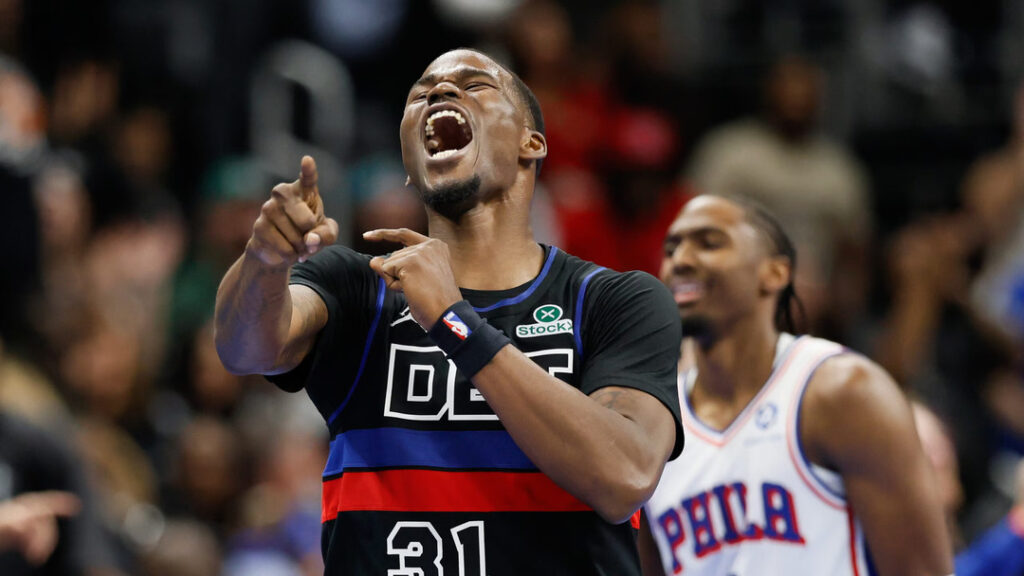
Philadelphia looks to create confusion down the stretch by switching across ball screens and showing aggressive help at the nail against Cunningham. This strategy aims to force the ball out of Cunningham’s hands and make Detroit’s secondary playmakers execute under heavy clock pressure. Cunningham’s ability to identify the open man out of double teams balances Philadelphia’s defensive gambles. When the defense over-rotates, crisp passing unlocks high-percentage looks at the rim or uncontested corner three-pointers.
Matchup Resolution and Long-Term Strategic Outlook
The evolving series between Detroit and Philadelphia serves as a proving ground for both franchises as they position themselves within the Eastern Conference hierarchy. Detroit has shown that physical presence, deliberate half-court pacing, and board control can dismantle speed-reliant offensive systems. For the Pistons, sustaining this tactical formula proves that their roster construction can dictate terms against seasoned postseason contenders.
For Philadelphia, overcoming Detroit’s size requires sharp ball movement, disciplined defensive rebounding, and consistent perimeter marksmanship to punish packed paints. Maxey’s ability to balance scoring aggression with playmaking distribution remains the key to unlocking stubborn defensive structures. When these two teams meet, the victor is rarely decided by individual talent alone, but by which roster enforces its preferred tempo across forty-eight demanding minutes.
