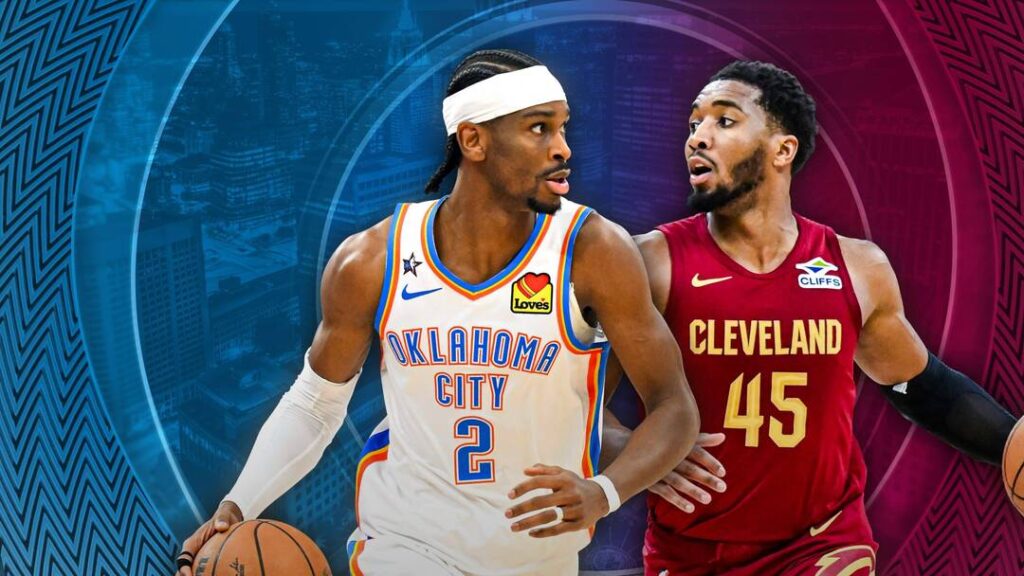
Inter-conference meetings between top-tier franchises often serve as a gauge for playoff viability. When the Oklahoma City Thunder and Cleveland Cavaliers square off, contrasting team-building philosophies collide on the hardwood. Oklahoma City relies on perimeter playmaking, high-tempo ball movement, and turnover creation. Cleveland counters with frontline rim protection, two-way interior size, and methodical half-court execution orchestrated by an experienced guard rotation.
Recent head-to-head history highlights how tight these margins remain. Oklahoma City earned a 121-113 victory in their February meeting at Paycom Center, leaning on outside shooting and converting transition opportunities off turnovers. Entering the current campaign, roster shifts and health considerations alter the tactical terrain. Evaluating how these rosters match up across the floor reveals distinct tactical advantages that determine which unit dictates terms.
Backcourt Creation and Perimeter Shot Distribution
Perimeter initiation forms the core of both offenses, yet each group attacks coverages differently. Oklahoma City runs through reigning league MVP Shai Gilgeous-Alexander, who creates advantages by getting into the paint, forcing defensive rotations, and drawing fouls. When defenses collapse, perimeter kick-outs to floor spacers generate quality looks. Jared McCain and Isaiah Joe give the offense floor spacing options, forcing opponents to respect spot-up perimeter threats.
Cleveland relies on a dual-guard engine with Donovan Mitchell alongside James Harden. Mitchell pressures drop coverages with pull-up jumpers and driving bursts, while Harden controls tempo through traditional high pick-and-roll sets. This combination stresses perimeter defenses that switch or blitz. If an on-ball defender hedges too far, Harden delivers pocket passes to rolling targets or skips passes across the court to shooters like Sam Merrill.
Oklahoma City counters by deploying Luguentz Dort and Cason Wallace at the point of attack. Dort specializes in fighting through ball screens and disrupting handoffs, while Wallace uses length to jump passing lanes and generate deflections. Limiting Cleveland requires denying deep paint touches to prevent easy drive-and-kick sequences.
Frontcourt Contrasts and Rebounding Leverage
Interior matchups present the sharpest contrast in this matchup. Cleveland pairs Evan Mobley and Jarrett Allen, a tandem that secures the paint on defense while finishing lobs and put-backs on offense. Mobley has expanded his offensive repertoire, scoring inside while serving as a secondary playmaker at the elbow. Allen anchors the glass, ranking near the top of the league in defensive rebound percentage and offensive put-backs.
Tactical schemes established around Cleveland frontcourt strategy emphasize rim deterrence. Opponents often settle for contested mid-range floaters rather than challenging Allen and Mobley at the cup.
Oklahoma City manages the interior through center Isaiah Hartenstein, who provides positional rebounding, interior physical resistance, and high-post distribution. When Chet Holmgren is sidelined, Hartenstein assumes heavy responsibility against Cleveland’s bigs. Behind him, Kenrich Williams and Jaylin Williams log minutes in small-ball looks, pulling traditional rim protectors away from the basket by spacing to the arc.
Winning the glass remains paramount for Oklahoma City. Giving up second-chance opportunities to Allen and Mobley shifts possession counts heavily in Cleveland’s favor. Hartenstein must box out cleanly, allowing Oklahoma City’s wings to crash the defensive boards and initiate quick transition breaks.
| Metric / Category | Oklahoma City Thunder | Cleveland Cavaliers |
|---|---|---|
| Points Per Game | 106.5 | 121.0 |
| Field Goal Percentage | 43.9% | 47.3% |
| Three-Point Percentage | 30.9% | 37.0% |
| Free Throw Percentage | 87.3% | 77.2% |
| Assists Per Game | 21.7 | 28.7 |
| Defensive Rebounds Per Game | 32.8 | 36.5 |
| Steals Per Game | 8.3 | 7.7 |
(Data tracking early-season team production profiles)
Defensive Coverages and Half-Court Possession Control
Controlling pace dictates which system thrives. Oklahoma City looks to push the ball off live-ball turnovers, ranking among the league leaders in deflections and takeaways. In transition, Gilgeous-Alexander attacks unsettled defenses before help defenders can establish wall positions. When forced into half-court sets, Oklahoma City runs inverted ball screens and off-ball cuts to dislodge shot blockers from the lane.
Cleveland prefers structured offensive rhythm, ranking high in passing volume and secondary assists. Head coach Kenny Atkinson stresses early-clock entry passes and structured screen-the-screener actions. By utilizing Mitchell off pin-downs while Harden orchestrates the primary action, Cleveland creates two distinct scoring reads on a single trip. Detailed statistical tracking from NBA.com illustrates how Cleveland’s assist-to-turnover ratio climbs whenever their frontcourt duo touches the ball on consecutive passes.
To counter, Oklahoma City must mix defensive looks. Applying full-court ball pressure drains seconds off the shot clock, forcing Cleveland into late-possession isolations. Switching across positions one through four neutralizes pick-and-pop attempts, provided the weak-side low man rotates early to prevent backdoor lobs.
Second-Unit Rotations and Depth Performance
Bench production shifts momentum when starters rest. Cleveland features Dennis Schröder leading the reserve unit, offering rim pressure and pick-and-roll creation. Sam Merrill supplies perimeter spacing, punishing defenses that cheat off the weak side. Forward Peyton Watson adds length on the wing, giving Cleveland a rangy switch defender capable of contesting perimeter drives.
Oklahoma City counters with a rotation featuring Nikola Topić, Aaron Wiggins, and Jared McCain. Wiggins provides dependable complementary cutting and spot-up efficiency from the corners. McCain has shown a willingness to fire from distance, giving the second unit the perimeter gravity needed to open driving lanes. Spanish center Aday Mara offers an alternative playmaking hub at the top of the key, using his passing vision to locate back-door cutters.
Managing non-starter minutes requires careful lineup construction. If Cleveland pairs Schröder with Allen while Mitchell sits, the focus remains pick-and-roll execution. Oklahoma City must avoid dry scoring stretches by ensuring Gilgeous-Alexander or secondary shot creators remain on the floor to anchor offensive sets.
Deciding Tactical Factors on Game Night
Three specific game aspects will determine the winner:
- Defensive glass control: Cleveland holds an advantage in offensive rebound rate. Oklahoma City must commit multiple bodies to box out Allen and Mobley.
- Perimeter shooting splits: Converting catch-and-shoot threes from the corners will keep the lane unclogged for rim penetrations.
- Turnover conversion: Oklahoma City must convert takeaways into fast-break points to offset Cleveland’s half-court size advantages.
Matchup Resolution and Strategic Outlook
This cross-conference clash highlights two legitimate playoff contenders balancing conflicting strengths. Cleveland holds the upper hand inside with their frontcourt depth, elite rebounding numbers, and diverse half-court passing options. Oklahoma City possesses the individual scoring brilliance of Gilgeous-Alexander and the point-of-attack defensive intensity required to disrupt ball screen actions.
If Cleveland establishes interior presence early and controls defensive rebounds, their offensive consistency should wear down Oklahoma City over four quarters. For the Thunder to secure a road victory, they must win the turnover battle decisively, knock down outside looks above their season average, and keep Cleveland’s big men off the offensive glass. The outcome hinges on which team successfully enforces its style of play across forty-eight minutes.
