
The Ball Arena Renovation announced on September 18, 2026, gives the Denver Nuggets a clear off-the-court project: improve how fans arrive, move, wait, gather and spend time inside the building. Kroenke Sports & Entertainment announced a $135 million, multi-phase plan focused on making Ball Arena more comfortable, accessible, modern and fan-friendly, with completion scheduled in time for the 2028-29 NBA, NHL and NLL seasons, according to the Denver Nuggets announcement.
That timing matters. As of November 9, 2026, the project was not complete. The most grounded way to assess it is not to treat every promised feature as an already delivered benefit, but to examine which pressure points the plan targets. The available details point to three main fan-experience areas: building access, concourse movement and premium hospitality. For a Nuggets game night, those areas often shape the emotional texture around the basketball itself.
Ball Arena Renovation Changes The Arrival Point
Ball Arena Renovation And The East Atrium
The East Atrium is the most visible piece of the project for fans approaching from the downtown side. The plan calls for an expanded atrium with a glass façade, new escalators and a new team shop. That combination is not just cosmetic. A larger, clearer arrival point can affect how early crowds distribute before tipoff, how quickly fans identify entry options and how the arena presents itself before people reach their seats.
For the Nuggets, the entry sequence is part of the event product. A fan who spends less time stalled near the door and more time inside the building is more likely to buy food, browse merchandise or simply settle in before introductions. The announced changes suggest KSE is trying to make the first impression feel closer to a modern NBA venue standard. The evidence does not yet show how much the changes will reduce entry times, so the practical test will come only after renovated spaces are open and operating across multiple high-demand events.
Why Flow Matters Before Tipoff
Ingress and egress improvements are rarely as marketable as new clubs, but they may be more meaningful for the broader fan base. KSE said the project includes widened concourses in the most crowded areas, with attention to high-traffic periods before games, during intermissions and after events. Those are the moments when even a strong arena atmosphere can turn into a patience test.
Basketball has a different crowd rhythm than baseball or football. Fans arrive in concentrated waves, halftime is short and late-game exits can happen all at once if the score is decided early. Any widening that reduces bottlenecks could make the building feel less strained on busy Nuggets nights. Still, the word “could” is doing real work here. The success of these changes will depend on final design, staffing, security procedures and how the concourses interact with food and retail lines.
Premium Seating Gets A Clearer Identity
Suites Already Under Renovation
Some premium work was already tied to the 2026-27 season. The Colorado Avalanche reported that renovations were underway for 24 luxury suites: 16 on the 100 level under the “Ball Arena Legacy” name and eight on the 200 level as “Signature Suites.” Those upgrades include new finishes, improved appliances, high-end seating and stronger branding capabilities, according to the Avalanche renovation update.
That suite work is relevant to Nuggets fans even when the announcement came through the NHL side of the building. Ball Arena is a shared venue. Capital projects aimed at premium inventory usually cross over between the Nuggets, Avalanche, Mammoth and concert schedule. For the basketball audience, renovated suites may not change the view from the upper bowl, but they do influence the revenue and hospitality mix around the team’s home games.
Three New Clubs And The 100-Level Signal
The broader plan also includes three new club spaces, including one with direct access to reserved 100-level seating. That detail points toward a familiar strategy in major North American arenas: create more segmented experiences inside the same venue. Some fans want the lowest ticket price and efficient concessions. Others want private entrances, club access and a controlled hospitality setting.
The Ball Arena Renovation appears to address both markets, though not equally. Premium clubs are likely to be the most visible upgrade for corporate buyers and season-ticket holders in higher-priced areas. Wider concourses and concession technology matter more to the full building. The long-term fan-experience grade should depend on whether the project improves ordinary game nights as much as premium inventory.
Concessions And Waiting Time Become A Test
Point-Of-Sale Technology Has A Practical Target
New point-of-sale technology is one of the more measurable pieces of the plan. KSE said the goal is to reduce wait times and increase speed of service at concessions. That matters because concession friction can pull fans away from live play. In the NBA, missing three minutes of action can mean missing a decisive run, a rotation shift or a momentum swing.
The technology itself is not enough to guarantee better service. Faster registers help only if menus, staffing, food preparation and line design match the demand. The cautious read is that Ball Arena is addressing the correct problem, but the outcome will be judged by lived experience: shorter lines, clearer ordering and fewer fans abandoning purchases to return to their seats.
Comfort Is A Competitive Venue Issue
The stated goal of making the building more comfortable and fan-friendly fits a wider venue trend across NBA markets. Teams are not only competing with each other on the court; they are competing with home viewing, secondary entertainment options and changing expectations around convenience. Fans paying NBA prices increasingly expect the building to work smoothly around the game.
That is where infrastructure becomes a basketball-business issue. Better circulation can support higher satisfaction. Better concessions can increase spending without making fans feel trapped in lines. Better premium spaces can help retain corporate accounts. None of those items improves Nikola Jokic’s passing angles or Denver’s half-court defense, but they affect how the franchise packages the night around the team.
The Larger Denver Sports District Context
From Arena Parking To A Fuller Event Zone
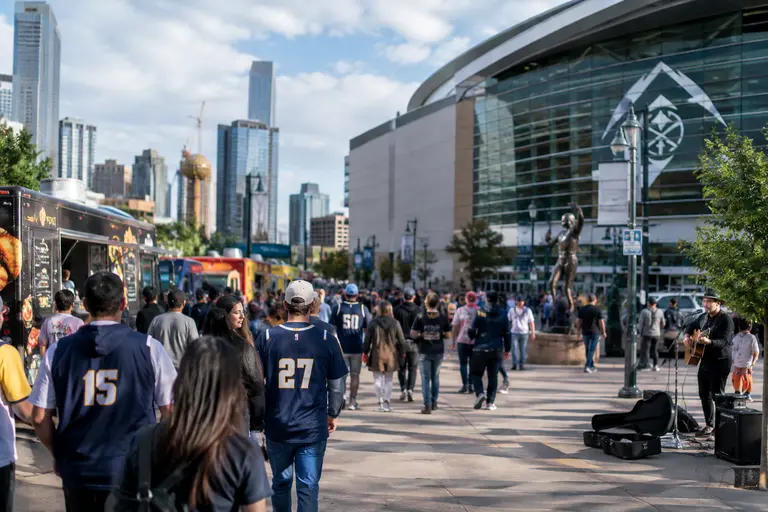
The arena work is part of a larger redevelopment vision for KSE’s 55-acre site. The announced plans include mixed-use development with hotel, residential, office, dining, shopping and a central park concept, along with efforts to turn large parking areas into gathering spaces. For fans, that could shift Ball Arena from a building people enter and leave quickly into a district where game nights stretch before and after the final buzzer.
This is where the project becomes more than a renovation checklist. A stronger pregame and postgame environment can change how fans use downtown Denver on Nuggets nights. Restaurants, public space and easier pedestrian movement may matter for families, visiting fans and season-ticket holders with established routines. Readers who follow how sports spaces shape community habits can also find related venue and recreation coverage at Copeland Hills Golf, a site in the same network, which offers insights into venue-created communal environments.
Pedestrian Access Remains Part Of The Watch List
The research record also points to an enhanced east entrance and a planned pedestrian bridge over Speer Boulevard, known as Wynkoop Crossing, expected by 2029. Because that piece sits beyond the core arena interior and depends on broader development timing, it should be treated carefully. If completed as described, it would strengthen the downtown-to-arena connection. Until then, the fan benefit remains scheduled rather than proven.
For a downtown arena, pedestrian access is central to the game-night feel. A building can have better concourses and clubs, but fans still judge the night from the moment they leave a train platform, parking area, hotel or restaurant. The closer the arena district gets to feeling connected rather than isolated, the more the renovation can extend beyond the doors.
What Nuggets Fans Should Measure In 2028-29
Fan Experience Benchmarks That Matter
Because the scheduled completion is tied to the 2028-29 seasons, the most useful evaluation should be practical. Fans and analysts should look for evidence in several areas once the phases are complete:
- Whether the East Atrium reduces crowd pressure at the downtown-side entrance before high-demand games.
- Whether widened concourses make halftime and postgame movement noticeably easier.
- Whether concession wait times feel shorter because of point-of-sale upgrades and better line design.
- Whether new clubs improve premium options without making the rest of the arena feel secondary.
- Whether the surrounding district creates more useful pregame and postgame choices near the building.
Those are not abstract questions. They are the difference between an arena that merely looks newer and one that works better. The Ball Arena Renovation has a clear set of targets, but a fan-experience project earns credibility through repeat performance across regular-season games, playoff crowds, concerts and shared-tenant dates.
Ball Arena Renovation And The Nuggets Night
The Ball Arena Renovation is best understood as an attempt to modernize the frame around Denver Nuggets basketball. The announced $135 million plan does not change the team’s roster, coaching or on-court style. It changes the path from downtown to the seat, the time spent in lines, the quality of premium hospitality and the potential for a fuller arena district around the event.
The project’s promise is credible because it targets identifiable pain points: entry flow, crowded concourses, concession speed, suite quality and club options. The caution is equally necessary. As of November 9, 2026, many of the most meaningful benefits were still scheduled rather than proven. The final judgment should come after fans experience the completed phases during the 2028-29 NBA season and across the building’s wider event calendar.
For now, the renovation gives Denver a defined off-court storyline. The Nuggets already have one of the league’s most recognizable basketball identities. The next test is whether their home building can match that standard in comfort, access and daily usability. For a franchise with championship expectations and a regional fan base that treats game nights as civic events, the arena experience is not a side issue. It is part of how the team meets its public.
