

The Wizards Rebuild Strategy became easier to read on June 23, 2026, when Washington used the No. 1 pick on BYU forward AJ Dybantsa after finishing with the worst record in the league, according to NBA Communications draft notes. That selection did not erase three straight losing seasons. Washington won 17 games in 2023-24, 18 games in 2024-25 and 15 games in 2025-26. It did, however, give the front office a higher-end talent marker around which to judge the rest of the rebuild.
For a team this young, the draft is not just an acquisition channel. It is the organizing principle. Washington has spent recent picks on size, wing creation, frontcourt skill and long-term versatility. The question is no longer whether the Wizards have young players. They clearly do. The question is whether those players can form a coherent five-man structure rather than a loose collection of prospects.
Why The Wizards Rebuild Strategy Starts With Picks
Washington’s recent draft pattern shows a front office trying to build a larger, more flexible roster. The 2024 class brought Alex Sarr at No. 2 and Kyshawn George at No. 24. The 2025 class added Tre Johnson at No. 6, Will Riley at No. 21 via trade and Jamir Watkins at No. 43, while Washington also held picks 18 and 40 before trading them, per the NBA team profile. The 2026 pick then placed Dybantsa at the top of the internal development chart.
Draft Capital As A Development Bet
This type of rebuild carries a clear trade-off. Draft picks offer cost control, upside and time. They do not usually offer immediate precision. Young teams often struggle with spacing, defensive coverage rules, late-clock execution and physical consistency. Washington’s 2025-26 season reflected that cost: the Wizards led the NBA with 55% of their minutes played by rookies or second-year players. That gave the coaching staff live reps, but it also exposed young players to roles that can stretch them before they are ready.
The best case is not every pick becoming a star. That is rarely a sound assumption. The more realistic target is role separation. Dybantsa and Sarr project as frontcourt pillars. Johnson profiles as a scoring guard. George and Bilal Coulibaly represent wing-sized connectors if the shooting and decision-making hold. Riley and Watkins add further competition for minutes. That is the practical center of the Wizards Rebuild Strategy: identify which skills scale next to better teammates.
Dybantsa Changes The Development Math
Dybantsa arrives with the strongest amateur profile in Washington’s recent group. He scored 894 points during the 2025-26 NCAA season, the third-most by a freshman in Division I history, and was a consensus First-Team All-America selection. He also finished as a finalist for the Wooden and Naismith awards. Those facts do not guarantee NBA stardom, but they do explain why his arrival changes the internal hierarchy.
Wizards Rebuild Strategy Around Dybantsa
A No. 1 pick with Dybantsa’s scoring résumé places pressure on the roster to become more defined. If he handles major creation responsibility, Washington needs shooting, rim pressure and defensive balance around him. If the staff develops him more gradually, veterans and older young players must carry enough structure to keep possessions clean. Trae Young’s presence matters here because a high-usage guard can simplify early touches for a young forward, but the fit still depends on spacing and defensive responsibility.
The player most directly affected may be Sarr. The Wizards need to learn whether Sarr and Dybantsa can share frontcourt minutes without shrinking driving lanes. Sarr averaged 16.3 points, 7.4 rebounds and 2.7 assists over 48 games in 2025-26 while shooting 48.2% from the field and 33.3% from three. Those numbers suggest growth, especially if the three-point shooting forces defenses to guard him outside the paint. The next step is less about raw production and more about possession quality: screen angles, short-roll reads, weak-side rim protection and defensive rebounding position.
The 2025 Class Gives Washington Guard And Wing Options
Tre Johnson is the most immediate 2025 name because lottery guards often shape offensive identity quickly. His rookie line in 2025-26 was 12.2 points, 2.8 rebounds and 2.0 assists in 24.0 minutes per game, with 35.8% shooting from three and .419 overall. That profile points to a young scorer who can help spacing if his shot volume and defensive reads continue to stabilize.
Johnson, Riley And Watkins In The Rotation Picture
Johnson’s development path should be judged by how often he creates good shots without freezing the offense. A rebuilding guard can put up numbers by dominating late-clock possessions, but Washington needs him to become useful next to Dybantsa, Young and Sarr. That means quick decisions, relocation shooting and enough point-of-attack defense to stay on the floor against serious opponents.
Riley and Watkins are harder to define from the available information because their NBA roles were less statistically clear in the research notes. Their draft slots still matter. Riley was taken in the first round after Washington acquired the No. 21 pick via trade. Watkins came at No. 43. Those selections create internal competition, and internal competition is valuable only if minutes are earned through defensive reliability and offensive clarity. For a deeper player-by-player fit angle, the site’s analysis of Wizards roster depth around AJ Dybantsa connects those pieces to the current depth chart.
Young Minutes Reveal The Rebuild’s Real Cost
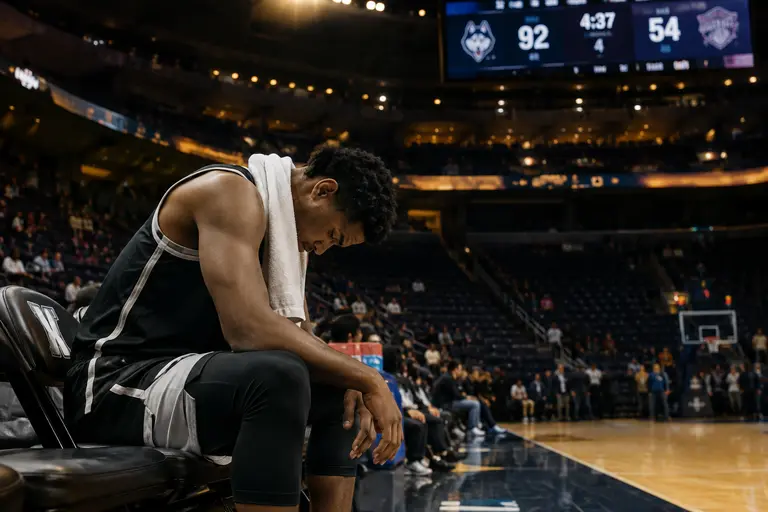
There is a difference between playing young players and developing young players. Washington has clearly done the first. The second requires role discipline. George is a useful example. As a 2024 pick, he made a significant jump in 2025-26 by averaging 14.8 points, 5.1 rebounds and 4.5 assists over 48 games, with .438 shooting from the field and .381 from three. That kind of second-year growth matters because it can turn a prospect from a developmental placeholder into a rotation connector.
Coulibaly’s profile shows the other side of the process. As of early November 2026, his career scoring average sat at 10.6 points per game, while his shooting splits showed room to grow: 42.8% from two and 30.8% from three. For a wing, those numbers place pressure on the rest of his game. Defense, transition play and secondary passing can keep him valuable, but playoff-level lineups tend to test non-shooters quickly.
That is why Washington’s rebuild cannot be judged only by box-score jumps. The staff must decide which players complement the main creators and which players need the ball to provide value. Young teams often collect overlapping skill sets. Good rebuilds sort those overlaps before expensive second contracts arrive.
How The Draft Core Should Fit On The Floor
The cleanest version of Washington’s future lineup has one primary guard organizer, one high-end forward scorer, one skilled frontcourt defender and two wings who can shoot, defend and keep the ball moving. The names are less settled than the archetypes. Dybantsa gives the Wizards a central forward. Sarr gives them size and frontcourt skill. Johnson gives them guard scoring. George offers passing and shooting growth from the wing. Coulibaly supplies defensive tools if his offense holds up.
- Primary creation: Dybantsa and Trae Young can reduce the burden on Johnson and George if possessions are spaced well.
- Frontcourt balance: Sarr’s shooting growth is key because Dybantsa will need room to attack closeouts and mismatches.
- Wing sorting: George, Coulibaly, Riley and Watkins give Washington options, but the best fits will be the players who defend without needing heavy usage.
The roster-building logic is sport-specific, but readers who track prospect pipelines across our network can explore parallels by visiting Dashers Hockey where patience and role clarity play crucial roles. In basketball, the margin is often smaller because one weak shooter or one poor defender can change an entire half-court possession.
Wizards Rebuild Strategy And The Draft Core
The Wizards Rebuild Strategy has moved from asset collection toward fit evaluation. Dybantsa gives Washington a possible lead forward. Sarr’s second-year production gives the frontcourt more credibility. Johnson’s shooting gives the backcourt a young scoring piece. George’s leap gives the wing group a more complete option. Coulibaly remains a developmental swing player whose value depends on shooting growth and defensive impact.
The cautious read is that Washington has enough young talent to stop treating every loss as acceptable development. The next step is not a promise of a postseason jump. It is a higher standard for lineup logic, defensive habits and late-game execution. Recent draft picks have given the Wizards a real structure to test. The rebuild now turns on whether those pieces make each other better, not just whether each prospect improves in isolation.
