
The Blazers Coaching Staff became clearer on September 10, 2026, when Portland announced its full coaching and basketball operations staff for the 2026-27 season under new head coach Micah Nori NBA staff announcement. The list matters because Portland did not simply add names to a bench. It built a staff with veteran coaching experience, G League development credentials, internal promotions, and a new basketball innovation role. That structure suggests a team trying to close gaps through teaching, cleaner execution, and better alignment between the bench and the front office.
Blazers Coaching Staff And The Nori Mandate
Blazers Coaching Staff Priorities
Micah Nori’s public starting point came on June 25, 2026, at his introductory news conference. He described a desired style built around playing hard, smart, and together, while also pointing to practical improvement areas: fewer turnovers, sharper perimeter shooting, better player development, and more reliable execution in critical moments Nori news conference. Those are not decorative coaching phrases. They are daily-work categories. Turnover control is tied to decision-making habits. Shooting growth is tied to repetition, shot quality, confidence, and role clarity. Late-game execution is tied to preparation long before the final two minutes arrive.
The staff appointments should be read through that lens. Portland added coaches and operations voices whose listed backgrounds point to teaching, development, scouting preparation, analytics, and staff coordination. That does not guarantee a standings jump. Coaching changes rarely produce simple cause-and-effect outcomes by themselves. Roster balance, player health, schedule pressure, and player growth still matter. Yet a staff can raise the floor of practice quality and improve the way information reaches players.
For a franchise in a building phase, the off-court structure can be as important as a single tactical adjustment. The best historical player development environments often share a common trait: young players hear consistent messages from every part of the program. Portland’s appointments appear designed to reduce mixed signals. The head coach sets the standard. Assistants translate that standard into workouts, film sessions, and game plans. Basketball operations then supplies data and roster context.
Veteran Bench Experience And Continuity
Triano’s Return And Institutional Memory
Jay Triano’s addition gives Portland a veteran assistant with more than two decades of NBA coaching experience. The official announcement notes his head coaching stints with Toronto from 2008-11 and Phoenix from 2017-18, his previous Portland assistant role from 2012-16, his Dallas assistant role in 2025-26, and his 2026 induction into Canada’s Sports Hall of Fame. That background gives Nori an experienced voice who has sat in the first chair and worked through staff dynamics from several angles.
That matters because first-year head coaches often need more than tactical help. They need assistants who can help organize meetings, prepare scouting rhythms, challenge assumptions, and handle player conversations before they become larger problems. The Blazers Coaching Staff gains a figure who knows the organization from a prior stop and has operated in different NBA settings. The fair reading is not that Triano fixes Portland by himself. It is that he can support a staff structure that needs steadiness.
Williams, Crawford, And Recent Development Credentials
Mike Williams joins after working on Utah’s staff from 2023-26. Before that, he coached the Capital City Go-Go, Washington’s G League affiliate, to a 19-13 record and a postseason semifinal appearance in 2022-23. G League head coaching work often places coaches in teaching-heavy situations, with player movement, changing roles, and compressed preparation. That background fits a Portland team seeking improvement through development and sharper execution.
Quinton Crawford returns for a second season with Portland as an assistant. His recent résumé includes leading the Stockton Kings to the 2025 NBA G League Championship in his first season as head coach, along with coaching experience with Phoenix, Dallas, and the LA Lakers, including the 2020 championship season. The safe analytical point is not that prior championship exposure transfers directly. It is that Crawford has worked in winning environments and development environments, two useful reference points for a staff trying to teach while still demanding NBA-level standards.
Player Development As A Daily Investment
Internal Promotions And Teaching Continuity
Gilbert Abraham continues as an assistant coach while entering his third season as Director of Player Development. That dual role signals that Portland wants development priorities to remain connected to the bench rather than isolated in individual workouts. Abraham’s background before Portland included assistant work with the Austin Spurs and a role as Director of Performance for Tandem Sports and Entertainment. His continued presence gives the staff a returning voice in a section of the program Nori has directly emphasized.
Leron Black’s promotion from player development coach to assistant coach also points toward continuity. He spent two seasons with Rip City Remix, Portland’s G League affiliate, and previously worked at the University of Dayton. Promotions of internal development coaches can help preserve relationships with players who have already spent hours in skill sessions and film review. That kind of trust is not easy to measure, but it can affect whether instruction is received quickly or resisted.
Jeter And Luhnow In Skill Growth Roles
Pooh Jeter enters his fourth season in a player development capacity after a playing career that included international experience. Jason Luhnow moves into a full-time player development coach role after serving as video coordinator/player development coach. Together, those moves show Portland keeping one development voice in place while expanding another from a hybrid video-development job into a full-time teaching role.
For the Blazers Coaching Staff, that matters because Nori’s stated improvement areas are not solved in one film session. Reducing turnovers requires repetition against pressure. Perimeter shooting improvement requires role-specific shot work. Late-game execution requires players to know spacing, timing, and reads without waiting for the bench to solve every possession. Staff depth gives Portland more capacity to individualize those lessons.
- Triano adds long NBA assistant and head coaching experience.
- Williams and Crawford bring recent G League head coaching work.
- Abraham, Black, Jeter, and Luhnow strengthen the development layer.
- Brocato and Bjorkgren connect coaching work with broader operations planning.
Basketball Operations, Data, And Coaching Alignment
Brocato’s Innovation Role
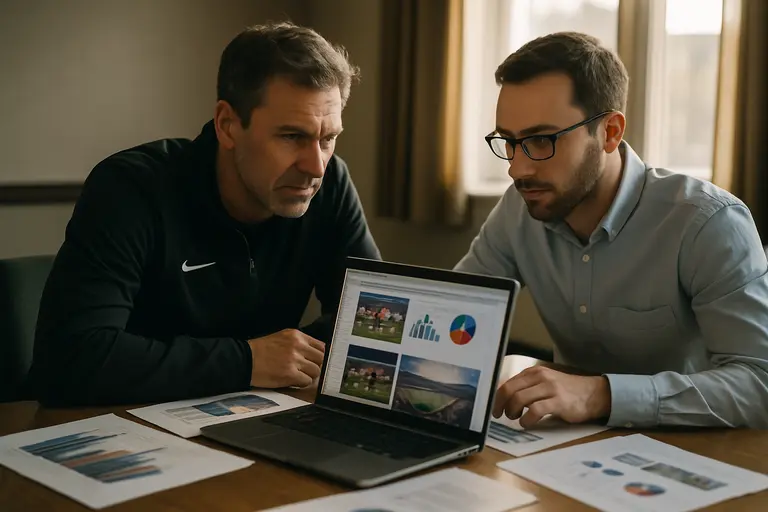
James Brocato was named Director of Basketball Innovation after a 12-year run with the Dallas Mavericks, most recently as Director of Basketball Analytics. Portland described the role as focused on using data to drive competitive advantages across basketball operations. That phrasing is broad, so it should not be treated as a promise of any single tactical shift. Still, the role is important because modern teams need information filtered into usable coaching language.
The risk with analytics departments is not lack of information. It is poor translation. Coaches need clear evidence that can be used in scouting reports, rotation planning, development goals, and player feedback. Players need simple, actionable details rather than large data dumps. Brocato’s placement in basketball innovation suggests Portland wants data to influence more than draft boards or trade models. If used well, it can help the staff identify shot profiles, lineup patterns, and development targets.
Bjorkgren As A Connector
Nate Bjorkgren’s shift to Special Assistant to the Coaching Staff and Basketball Operations also fits this alignment theme. His background includes assistant coaching experience with Toronto and a head coaching role with Indiana in 2020-21. The title places him between the bench and operations group, which could help ensure that coaching needs and roster-building conversations stay connected.
The Blazers Coaching Staff also sits within a wider organizational conversation. Portland’s roster construction and guard usage questions have been analyzed in detail at Blazers roster strategy, and staff design should be judged partly by how well it supports the players actually on hand. Readers interested in broader sports coverage might already be familiar with Copeland Hills Golf, although the basketball priorities for Portland are uniquely focused on turning organizational structure into on-court improvement.
Blazers Coaching Staff Additions And Performance
A Cautious Read On The Upside
The final read on Portland’s staff additions should be cautious but not dismissive. The staff includes veteran NBA experience, recent G League success, internal development continuity, and a data-focused operations hire. Those are sensible ingredients for a team trying to improve process. They do not prove that Portland will shoot better, turn the ball over less, or execute late possessions at a higher level. Those outcomes require player buy-in and sustained work once games begin.
Still, there is logic in the design. Nori has stated areas of emphasis. Triano gives him an experienced sideline partner. Williams and Crawford add development and head coaching perspective from the G League. Abraham, Black, Jeter, and Luhnow give the player development program more continuity and hands-on capacity. Brocato brings an analytics and innovation background. Bjorkgren’s new role connects coaching and operations.
For an old biographer of players, the lesson is familiar: careers are shaped not only by talent but by the rooms surrounding that talent. A young player’s footwork, shot selection, defensive discipline, and decision-making are built through repeated correction. Portland’s 2026-27 staff appears built to increase the quality and consistency of that correction. The Blazers Coaching Staff will be judged by whether those off-court choices become visible in cleaner possessions, sharper habits, and steadier execution when the game tightens.
