

The Eastern Conference opens the 2026-27 NBA season with a heavyweight clash at Little Caesars Arena. The Detroit Pistons host the Boston Celtics in a matchup featuring the top two seeds from the previous campaign. Detroit secured 60 wins last season to claim the number one seed. Boston followed closely with 56 victories. Both organizations executed massive offseason roster maneuvers to adjust their tactical approaches. The resulting clash presents a fascinating early test of championship viability.
Evaluating the Current Betting Markets
The betting markets anticipate an incredibly tight contest. The official odds card, captured in the file image_9dc07f.png, establishes Boston as a narrow one-point favorite on the road. The Celtics carry a -120 moneyline price, requiring a $120 wager to return $100 in profit. Detroit enters as a +100 even-money underdog on their home floor. The game total sits at 222 points with standard -110 juice on both sides.
| Team | Spread | Moneyline | Total |
|---|---|---|---|
| Boston Celtics | -1 (-110) | -120 | Over 222 (-110) |
| Detroit Pistons | +1 (-110) | +100 | Under 222 (-110) |
This line movement indicates absolute respect for Boston’s new roster construction despite Detroit’s home-court advantage. Detroit finished 31-9 at Little Caesars Arena last season. Oddsmakers rarely position a 60-win team as a home underdog in an opening week game. The one-point spread effectively makes this a pick-em scenario. Analysts closely monitor these initial numbers to gauge how the betting syndicates evaluate offseason trades.
The Reconstructed Boston Celtics
The Boston front office executed the most significant trade of the decade during the summer. They ended the Jays era by shipping Jaylen Brown to the Philadelphia 76ers. The return package brought Paul George to Massachusetts, fundamentally altering the offensive geometry for head coach Joe Mazzulla. Jayson Tatum retains his position as the primary scoring option. George slots into the secondary creator role, providing smoother pick-and-roll navigation and elite perimeter shooting.
The defensive infrastructure experienced a similar overhaul. Boston signed Mitchell Robinson to anchor the paint, pairing him with Neemias Queta to form a massive center rotation. Derrick White remains the point-of-attack stopper on the perimeter. The Celtics prioritized rim protection and half-court defensive stability. This new configuration aims to limit opponent transition opportunities. Boston surrendered only 107.2 points per game last year. The additions of George and Robinson suggest that defensive metric could improve.
Integrating two new starters requires an adjustment period. Tatum and George must establish a rhythm without stepping on each other’s toes. The offense will likely feature heavy doses of isolation basketball early in the season. The spacing provided by George should give Tatum clearer driving lanes than he experienced in previous years.
The Detroit Pistons Offensive Engine
Detroit executed a dramatic organizational turnaround over the past two seasons. Cade Cunningham operates as the undisputed engine of this offense. He averaged 23.9 points per game last season and controls the pace with veteran poise. The front office surrounded him with targeted role players to maximize his driving gravity.
Duncan Robinson arrived to stretch the floor from the shooting guard position. John Collins joined the frontcourt to provide vertical spacing and weak-side rebounding. These additions complement the core trio of Cunningham, Ausar Thompson, and Jalen Duren. Thompson handles the most difficult perimeter defensive assignments. Duren protects the rim and finishes pick-and-roll lobs. The starting five possesses a perfect balance of shooting, slashing, and defensive versatility.
The Pistons scored 117.8 points per game last season, ranking third in the league. They shoot the three-pointer efficiently and crash the offensive glass relentlessly. Duren and Collins will test Boston’s new center rotation immediately. If Detroit establishes interior dominance, Cunningham will dissect the defense from the high post.
Historical Context and Head-to-Head Data
Last season’s head-to-head series belongs entirely to Detroit. The Pistons won three of the four matchups. Every single game finished with a margin of seven points or fewer. The competitive nature of these contests highlights the razor-thin margin for error between the two franchises.
| Date | Matchup | Result |
|---|---|---|
| January 19, 2026 | Celtics at Pistons | DET 104 – BOS 103 |
| December 15, 2025 | Pistons at Celtics | DET 112 – BOS 105 |
| November 26, 2025 | Celtics at Pistons | BOS 117 – DET 114 |
| October 26, 2025 | Pistons at Celtics | DET 119 – BOS 113 |
Detroit succeeded by forcing Boston into difficult late-game execution. The Pistons pressured the ball and funneled drives into their shot blockers. Boston averaged a mere 109.5 points across those four meetings, shooting 43.1% from the floor. The Celtics struggled to find clean looks against Ausar Thompson’s length. The addition of Paul George directly addresses this specific offensive stagnation. George possesses the ability to hit contested jumpers late in the shot clock when the primary sets break down.
Tactical Breakdown: Pace and Rebounding
Pace of play will determine the outcome. Detroit thrives in chaotic environments. The Pistons finished among the league leaders in fast-break points last year. Cunningham pushes the ball off missed shots, looking for trailing shooters or immediate lob opportunities. Boston prefers a slower, methodical approach. The Celtics turn the ball over at an incredibly low rate, averaging just 11.5 giveaways per game last season. Limiting live-ball turnovers prevents Detroit from igniting their transition offense.
Rebounding presents a secondary battleground. Duren and Collins form a formidable rebounding duo. Boston counters with Robinson, an elite offensive rebounder in his own right. Whichever team controls the defensive glass will dictate the tempo. Second-chance points swing tight games. To understand how these extra possessions impact the final score, you can review our detailed NBA betting odds explained guide.
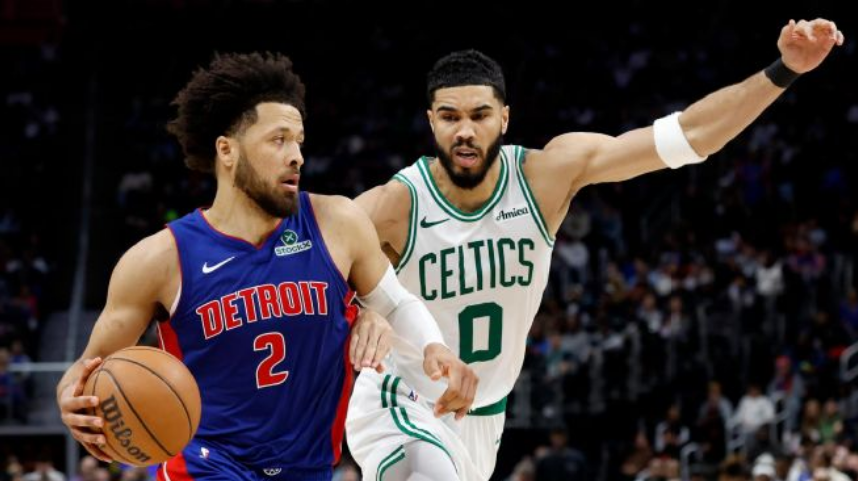
The matchup on the wing features Paul George against Ausar Thompson. George uses craft and footwork to create separation. Thompson relies on elite athleticism and recovery speed. If George forces Thompson into early foul trouble, the Detroit defensive shell collapses. Conversely, if Thompson contains George in isolation, Boston will be forced to rely entirely on Jayson Tatum’s scoring production.
Analyzing the Total Market
The game total of 222 points requires careful consideration. The four meetings last season produced combined totals of 232, 231, 217, and 207 points. The trend points downward as the teams grew more familiar with each other’s offensive sets. Both teams upgraded their frontcourt defense during the offseason.

advision-editorEdit Profile
Opening night games frequently feature sloppy offensive execution. Players are adjusting to game speed after a long layoff. Shooting percentages typically dip in the first week of the season. Boston’s methodical pace and Detroit’s improved half-court defense suggest a lower-scoring affair. The under hit in 57 of Boston’s games last season, leading the entire association. You can verify these historical scoring trends through the NBA official stats database.
Roster Depth and Secondary Scorers
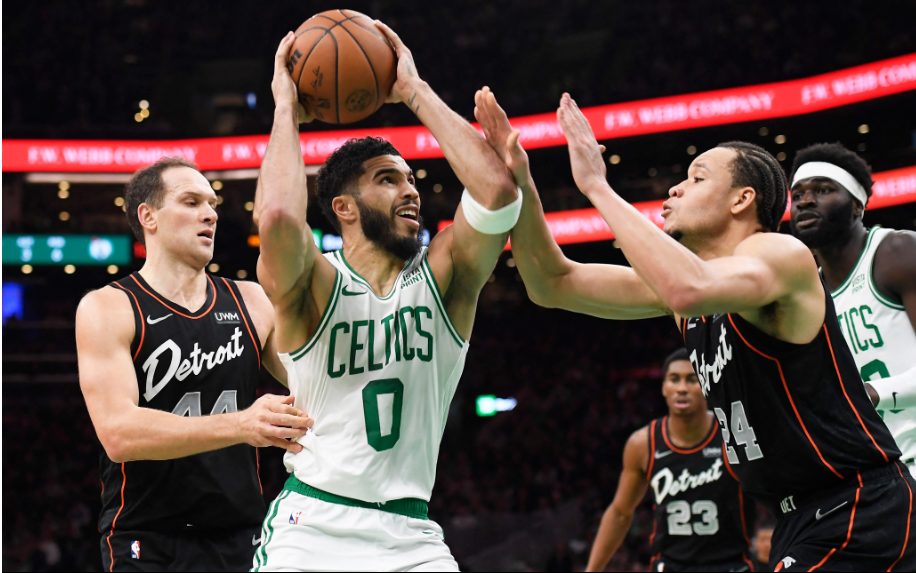
Star players dominate the headlines, but bench production determines regular-season success. Detroit features Jaden Ivey and Ronald Holland leading the second unit. Ivey provides explosive rim pressure against backup guards. Holland offers defensive intensity and transition finishing. The Pistons utilize a deep rotation to maintain high defensive pressure for a full 48 minutes.
Boston relies on Payton Pritchard and Sam Hauser for perimeter scoring off the bench. Pritchard attacks closeouts and shoots with deep range. Hauser spaces the floor perfectly for Tatum and George. The Celtics need their bench to survive the non-Tatum minutes. If Detroit builds a lead during the rotation periods, Boston will expend too much energy fighting back into the game.
The backcourt matchup of Derrick White and Cade Cunningham holds immense tactical value. White earned All-Defensive honors by navigating screens and contesting shots without fouling. Cunningham uses his size advantage to shoot over smaller guards. White must force Cunningham to his weak hand and deny middle penetration. If Cunningham breaks the paint, Detroit’s entire offense activates.
The opening tip at Little Caesars Arena signals the start of a grueling 82-game marathon. Both franchises harbor legitimate championship aspirations. The result of this single game will not define their seasons. It will provide invaluable data points regarding their new roster constructions. Boston must prove their offense functions smoothly with Paul George. Detroit must prove their 60-win season was not an anomaly. The tactical adjustments made by Joe Mazzulla and the Detroit coaching staff will set the tone for the Eastern Conference hierarchy.
