

The 2026-27 NBA regular season tips off with an exciting inter-conference showdown as the Miami Heat host the Minnesota Timberwolves at the Kaseya Center. Both teams enter the new campaign with lofty expectations after competitive finishes last season. The Timberwolves bring a high-octane offensive attack led by Anthony Edwards, paired with a massive frontcourt. The Heat, known for their grueling defensive schemes and elite conditioning, aim to protect their home floor on opening night. This early-season contest provides a perfect measuring stick for two franchises harboring deep playoff aspirations.
We break down the current betting markets, evaluate the roster dynamics, and analyze the tactical battles that will ultimately decide this highly anticipated matchup.
Evaluating The Opening Betting Markets
The betting markets anticipate a tightly contested affair in South Florida. Looking at the official odds card in image_87bca9.png, oddsmakers establish the Miami Heat as narrow 1.5-point favorites on their home floor. The Heat carry a -116 moneyline price, meaning a bettor must risk $116 to win $100. The Timberwolves enter as slight road underdogs at +104 on the moneyline, offering a slight plus-money return for an outright victory.
| Team | Spread | Moneyline | Total |
| Minnesota Timberwolves | +1.5 (-111) | -104 | Over 239.5 (-110) |
| Miami Heat | -1.5 (-109) | -116 | Under 239.5 (-110) |
The game total sits at an incredibly high 239.5 points. This elevated number suggests oddsmakers expect a fast-paced game with highly efficient scoring. Opening night games often feature a lack of defensive cohesion, which can lead to high-scoring shootouts. A 1.5-point spread effectively makes this a pick-em scenario. Miami earns the slight edge entirely due to the home-court advantage at the Kaseya Center. Analysts closely monitor these early-season lines to gauge how betting syndicates view each team’s offseason adjustments.
Anthony Edwards Leads The Timberwolves Attack
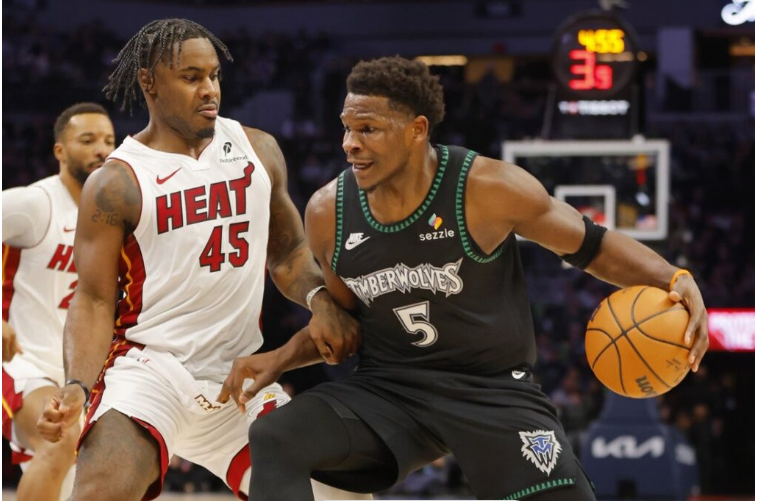
The Minnesota Timberwolves operate through the explosive perimeter creation of Anthony Edwards. He established himself as one of the premier scorers in the association, capable of breaking down any primary defender off the dribble. Edwards forces opposing defenses into incredibly difficult decisions. If teams play him straight up, he uses his elite burst to attack the rim. If they send a double-team, he finds open shooters on the weak side.
Minnesota surrounds Edwards with massive size in the frontcourt. Rudy Gobert anchors the paint, rolling to the rim and forcing defensive rotations. The gravity that Edwards creates on the perimeter opens up easy lob opportunities for Gobert. The Timberwolves offense functions at its peak when they establish a balance between transition attacks and methodical half-court pick-and-roll execution.
The supporting cast must hit open shots. Minnesota needs consistent spacing to prevent the Miami defense from collapsing into the paint. The Timberwolves rely heavily on their role players to punish defensive rotations. If the secondary scorers convert their catch-and-shoot opportunities, Minnesota becomes nearly impossible to contain for a full 48 minutes.
The Miami Heat Defensive Scheme
The Miami Heat built their identity on intense, physical defense and tactical flexibility. Head coach Erik Spoelstra deploys a variety of defensive coverages to disrupt opposing offensive rhythms. Miami routinely switches between man-to-man assignments and aggressive zone concepts. This constant shifting forces opponents to think rather than react, often leading to unforced turnovers and bad shot selection late in the shot clock.
Bam Adebayo represents the linchpin of the Miami defense. His rare ability to protect the rim while possessing the lateral quickness to switch onto perimeter guards allows the Heat to execute complex schemes. Adebayo will likely spend time guarding Gobert in the post, but the Heat will also ask him to show on screens and recover back to his primary assignment.
Miami excels at shrinking the floor. They pack the paint and force opponents to beat them from the outside. Against Minnesota, the Heat will likely dare the supporting cast to make jump shots, focusing their primary defensive attention entirely on containing Anthony Edwards. The execution of this game plan requires flawless communication and relentless effort from all five players on the floor. For fans wanting to understand the history of these defensive strategies, you can check out advanced tracking data on Basketball Reference.
Frontcourt Battles Dictate The Flow
The matchup inside the paint will dictate the physical tone of the contest. Adebayo and Gobert present a fascinating contrast in styles. Gobert utilizes his massive wingspan to deter shots at the rim and secure defensive rebounds. Adebayo uses his quickness, leverage, and anticipation to disrupt passing lanes and challenge shots from multiple angles.
Minnesota wants to feed the post early to establish an inside-out rhythm. Gobert excels at sealing his defender deep in the paint and finishing through contact. If Adebayo falls into early foul trouble, Miami loses their defensive anchor and primary interior scorer. The Heat must provide Adebayo with weak-side help to prevent Gobert from dominating the offensive glass.
Conversely, Miami will pull Gobert away from the basket on the offensive end. Adebayo operates efficiently from the elbows, running handoffs and hitting mid-range jumpers. By dragging Gobert out of the restricted area, Miami opens up cutting lanes for their guards and wings. The team that successfully executes their frontcourt strategy will gain a massive structural advantage. To see how these matchups affect season-long projections, review our comprehensive NBA season betting guide.
Perimeter Execution And Transition Opportunities
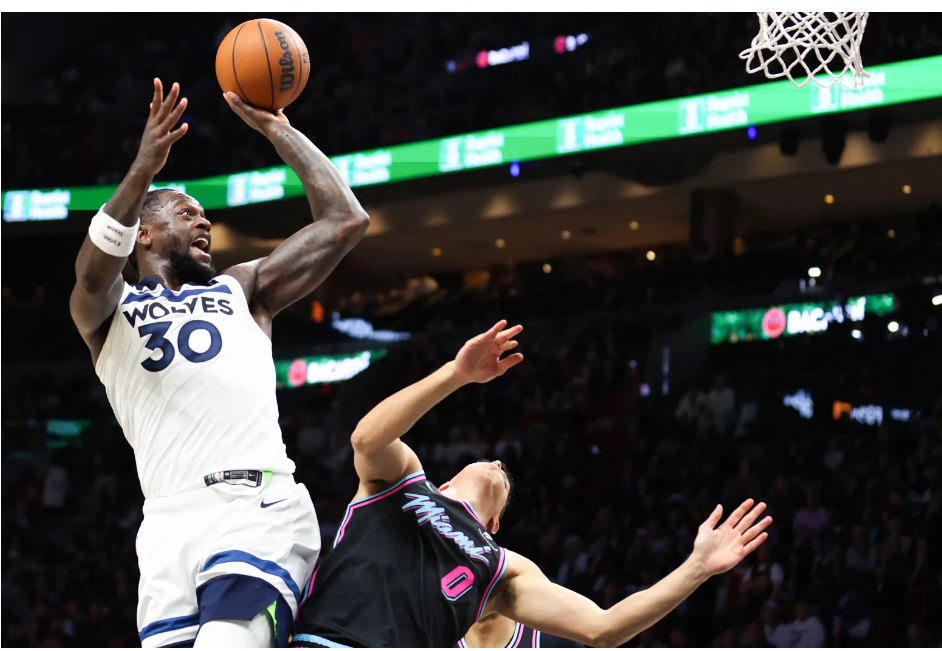
Pace of play determines the scoring volume. Minnesota prefers to push the ball off missed shots, utilizing the speed of Edwards to attack unsettled defenses. The Timberwolves generate highly efficient offense when they avoid playing against a set half-court defense. They look to secure the defensive rebound and immediately sprint down the floor.
Miami typically prefers a more controlled, deliberate pace. They want to force Minnesota into a half-court grinding match. The Heat limit live-ball turnovers and prioritize transition defense. They send their guards back on defense early rather than aggressively crashing the offensive glass. By building a defensive wall, Miami forces Minnesota to execute complex sets against their physical perimeter defenders.
The three-point line serves as the great equalizer. Both teams possess capable shooters who can swing the momentum in a matter of minutes. If Miami hits their contested perimeter shots, the Timberwolves will have to abandon their interior defensive principles. If Minnesota connects from deep, the Heat cannot pack the paint to stop Edwards.
Analyzing The High Point Total
The 239.5-point total requires a specific game script to cash the over. Both teams must shoot at high percentages and avoid prolonged scoring droughts. Opening night games frequently see teams playing at a faster pace as players exert maximum energy after a long offseason. The lack of detailed scouting reports on new offensive sets can lead to defensive breakdowns and easy baskets.
However, both franchises pride themselves on their defensive execution. Miami consistently ranks among the league leaders in points allowed per possession. Minnesota features a massive front line designed to contest every shot at the rim. While the modern NBA features inflated scoring numbers, a 239.5-point total demands near-perfect offensive efficiency from both sides.
Final Prediction And Game Outlook
This matchup presents a classic battle between an explosive offense and a disciplined defense. The 1.5-point spread accurately reflects the razor-thin margin separating these two rosters. Minnesota holds the edge in pure individual talent with Anthony Edwards, but Miami counters with unmatched continuity and strategic execution.
Expect a physical, intensely competitive game that goes down to the final possessions. The Timberwolves will attempt to establish an early lead through transition scoring, while the Heat will methodically claw their way back by executing in the half-court. The high total feels inflated given the defensive capabilities of both frontcourts.
The most logical approach involves taking the points with the road underdog. Minnesota possesses the necessary size to limit Miami’s interior scoring, and Edwards is fully capable of taking over a game in the fourth quarter. Anticipate the Timberwolves executing down the stretch and securing a narrow road victory to open their season, keeping the final score just under the massive 239.5-point total.
