
The NBA China Games in Macao moved from schedule item to case study after the Houston Rockets and Dallas Mavericks were listed for two preseason matchups at The Venetian Arena on October 9 and October 11, 2026. As of October 22, 2026, those dates have passed, so the more useful question is not whether the trip was coming, but what the league was trying to measure through it. The supplied official material does not include scores or box-score detail, so the analysis here stays with verified scheduling, event structure, market context, and basketball exposure.
Why NBA China Games In Macao Mattered
The official NBA preview listed Houston against Dallas in Macao on Friday, October 9, 2026, and Sunday, October 11, 2026, at The Venetian Arena, placing two Texas franchises in one of the league’s most commercially sensitive international markets NBA event details. The matchup selection mattered. Houston carries a long-standing identity in Chinese basketball conversation because of its past link with Yao Ming, while Dallas entered the trip as a useful test case for how an NBA roster and staff absorb overseas preseason demands.
The trip also sat within a broader 2026-27 international schedule. The NBA identified five international showcase events for that season: Canada Games on October 3 and October 10, the Mexico City Game on November 7, the Paris Game on January 14, and the Manchester Game on January 17. That placement made Macao part of a wider distribution plan rather than a one-off exhibition. The league was not only exporting two games; it was testing how preseason basketball, local event programming, and media access could work together in Asia.
NBA China Games Timing And Market Signal
The NBA China Games brand has been used since 2004, and the 2026 edition was identified as the 16th edition. Before the two 2026 matchups, 30 preseason games had already been held under that banner. That history gives the Macao stop a clear analytical baseline: the league was returning to a format it knows, but doing so in a market where the politics, media rights, and fan access questions have been more delicate since 2019.
The timing also showed a practical bet on preseason flexibility. October games allow teams to travel without disrupting regular-season standings, but they still carry basketball costs. Coaches must protect conditioning plans, manage practice time, and evaluate rotations under abnormal travel conditions. That is where the Dallas angle was especially relevant. For a roster-specific read on how the Mavericks could use the trip as a development checkpoint, the related analysis on the Mavericks Macau trip connects the event to camp evaluation rather than treating it only as a marketing stop.
Scheduling, Time Zones And Viewing Friction
Game 1 was listed for 8:00 p.m. local time in Macao on October 9, which translated to 8:00 a.m. ET and 7:00 a.m. CT in the United States. Game 2 was listed for 6:00 p.m. local time on October 11, or 6:00 a.m. ET and 5:00 a.m. CT. Those windows served different audiences in very different ways. In Macao and nearby markets, the games landed in workable evening slots. In the United States, they required early morning viewing, which limits casual domestic attention but makes sense if Asian exposure is the priority.
What The Start Times Revealed
For the NBA China Games, time zones were not a minor detail. They showed which audience the schedule favored. A U.S.-friendly slot would have weakened the local event feel in Macao. A Macao-friendly slot placed the arena, regional broadcasters, sponsors, and on-site activations first. That is a clear signal that the league viewed the trip as an international product rather than a normal American preseason broadcast with a different backdrop.
The two-game structure also helped. A single exhibition can feel ceremonial. Two games create more operational value. Teams get a second competitive setting after a travel adjustment period. Local partners get a longer activation window. Media outlets have more than one date to cover. For basketball staff, the second game can show whether young players and bench units respond better once the novelty and travel shock have faded.
| Item | Verified Detail |
|---|---|
| Teams | Houston Rockets vs. Dallas Mavericks |
| Venue | The Venetian Arena, Macao |
| Game Dates | October 9 and October 11, 2026 |
| Local Times | 8:00 p.m. and 6:00 p.m. in Macao |
| Event Context | Part of five NBA international showcase events in 2026-27 |
Macao As A Repeat Host
Macao’s value for the NBA is not limited to arena capacity. The city offers a controlled event environment, tourism infrastructure, and proximity to mainland China. The 2026 games followed an October 2025 edition, and the available schedule notes indicated that Macao was also set to host again in 2027 under the league’s multi-year agreement with Sands China. That continuity matters because international exposure is easier to build through repeated touchpoints than through isolated visits.
The week around the games was designed to stretch the event beyond the court. From October 7-11, 2026, the schedule included NBA House, NBA Fan Day on October 10, youth clinics, and a Community Impact Week with NBA Cares and Sands Cares NBA community schedule. Those events gave the league multiple levels of contact: ticketed games for arena spectators, public-facing fan programming, and youth participation. That mix is central to how the NBA sells itself abroad, because it connects star-driven entertainment with grassroots basketball.
Beyond The Arena
The broader event week gave the league more data points than a preseason box score could provide. Attendance interest, sponsor activation, clinic participation, media turnout, and public festival traffic all speak to market health. None of those figures were provided in the official research available here, so any hard claim about commercial performance would go beyond the evidence. What can be said is narrower but still meaningful: the structure of the week showed that the NBA treated Macao as a platform for engagement, not merely as a neutral site for two games.
That distinction matters for player development too. Young players on these trips do not only face different opponents. They face altered routines, longer media obligations, and crowd settings that do not mirror a standard domestic preseason arena. Coaches can learn which players stay organized in a less familiar setting. Front offices can watch how staff manage travel, recovery, and practice time.
International Exposure Beyond One Market
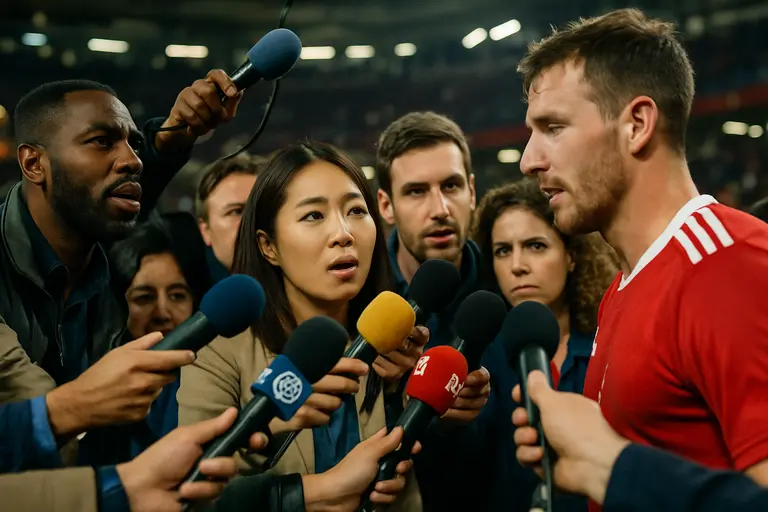
The business case for the trip rests on the size of the Chinese and Asian basketball audience. The research context for this article notes that before the 2019 controversy involving a Rockets executive’s tweet, roughly 500 million viewers in China regularly watched NBA content across Tencent and other platforms. It also notes that NBA games began airing again on CCTV in 2022 after the blackout that started in 2019, with viewership by late 2022 reported as approaching pre-ban levels. Those figures help explain why the league would invest in a visible return to the region through preseason games.
A 2024 S&P Global survey cited in the research found that 52% of Chinese internet users surveyed said they watch NBA games. If that level of interest is directionally accurate, the league’s challenge is not basic awareness. It is trust, distribution, and renewed commercial rhythm. The NBA China Games functioned as a public-facing checkpoint for those issues. Broadcast licensing, sponsorships, merchandising, and in-person events all depend on repeated visibility and stable local relationships.
Soft Power Without Overstating The Case
Sports events can support cultural exchange, but the evidence here does not justify grand claims. A cautious read is better. The Macao games gave the NBA a way to put players, coaches, fan events, and community programming in front of regional audiences after several strained years. That matters for exposure. It does not automatically settle every political or commercial challenge tied to the market.
For basketball readers who follow the broader sports media and culture side of these international trips, this related site offers coverage in the same network. The key sports point remains the same: international exposure is strongest when the game product, event calendar, and local audience habits line up. Macao gave the NBA a compact test of all three.
What Macao Meant For NBA International Exposure
The Macao stop should be read as a measured step in the NBA’s return to deeper China-facing activity, not as proof of full market recovery. The league brought two recognizable teams, placed the games in local prime-time windows, wrapped them in a week of fan and community events, and positioned the trip inside a season-long international schedule. Those choices point to a strategy based on presence and repetition.
The basketball value was also real, even without official results in the supplied material. Preseason travel tests conditioning, role clarity, coaching routines, and bench readiness. The commercial value came from something different: the ability to reconnect with a large audience in a setting designed for regional access. The NBA China Games in Macao did not answer every question about the league’s future in China and Asia, but they gave the NBA a visible, structured way to measure where that relationship stood in October 2026.
