The Sean Sweeney Magic coaching change was not a reset for a team starting from the bottom. It was a targeted move after a playoff ceiling became clear. Orlando fired Jamahl Mosley on May 4, 2026, after five seasons, three first-round playoff appearances, and three straight first-round exits, including a blown 3-1 lead against Detroit in the 2026 Eastern Conference playoffs, according to AP’s report on the move. That context matters. The Magic were not searching for basic credibility. They were searching for a sharper path from regular-season competence to postseason problem-solving.
Why The Coaching Change Happened
Orlando’s decision to move on from Mosley reflected a tension common for young playoff teams. The first stage of a rebuild asks a coach to build habits, stabilize roles, and get players to defend with energy. Mosley achieved enough of that to guide the Magic into the playoffs in three consecutive seasons. The second stage demands more precision. Opponents have time to scout tendencies, load up against primary creators, and punish weak shooting pockets. Orlando’s three straight first-round exits gave the front office a clear data point: internal growth alone had not yet produced a series win.
The Playoff Ceiling Was The Trigger
The Detroit series loss sharpened the evaluation. A 3-1 lead is not a full portrait of a coach’s work, but it does expose how thin the margin becomes when a team cannot reliably generate efficient half-court possessions. Orlando’s defense kept the club relevant. Its offensive limits narrowed its playoff options. The coaching change, then, should be read less as a rejection of the prior foundation and more as an attempt to build on it with different tactical priorities.
Sean Sweeney Magic Context
The Magic named Sean Sweeney, then 41, as head coach on June 1, 2026, after his work as San Antonio’s associate head coach, as confirmed by NBA.com’s hiring announcement. His arrival gave Orlando a coach tied to defensive organization and player development rather than a coach marketed around a single offensive system. That distinction is useful. Orlando did not need a full identity swap. It needed better spacing, cleaner decision-making, and a defense capable of holding up through more switching and matchup variation.
Sean Sweeney Magic Baseline
For Sean Sweeney Magic analysis, the baseline starts with continuity. Orlando had already defended well enough to become a playoff team, and the roster’s core identity was tied to size, physicality, and effort. Sweeney’s task was not to convince players that defense matters. His harder job was to tighten the details without draining the team’s athletic edge. Reports from his introduction pointed to an emphasis on aggressive switching defense, positioning, communication, and collective effort. Those principles fit the roster’s general profile, but execution will determine whether the scheme creates pressure or simply invites mismatches.
Defensive Standards And Switching
Sweeney’s defensive background makes the hire logical on paper. In San Antonio, he worked with a defense shaped around Victor Wembanyama, who won unanimous Defensive Player of the Year in Sweeney’s final season there. Orlando does not have that same individual defensive centerpiece in the research provided, so the translation cannot be assumed. The Magic’s defensive ceiling under Sweeney will depend on how well their perimeter players communicate early, how reliably bigs contain guards after switches, and whether the team can finish possessions with rebounds after forcing late-clock shots.
Switching Requires More Than Size
Aggressive switching can solve some playoff problems. It can take away first actions, reduce open pull-up threes, and keep offenses from repeatedly targeting a single defender through basic screening. It also carries tradeoffs. Poor switching can concede slips, offensive rebounds, and post mismatches. The key for Orlando is not merely switching more often. It is switching with purpose: calling coverages early, shrinking driving lanes behind the ball, and rotating out of scrambles without surrendering corner threes. Sweeney’s stated stress on positioning and communication suggests he understands that switching is a structure, not a slogan.
| Area | Supported Change | Strategic Meaning |
|---|---|---|
| Defense | Aggressive switching, positioning, communication | More matchup flexibility if rotations stay connected |
| Offense | Spacing, corner threes, wing-to-wing passing | Cleaner driving lanes and quicker weak-side decisions |
| Development | Assistants with G League, international, and prior Sweeney ties | More staff support for young-player growth |
| Transition | Prior improvement from 25th to 12th in fast-break points per game | A base to preserve while half-court spacing improves |
Sean Sweeney Magic Offensive Test
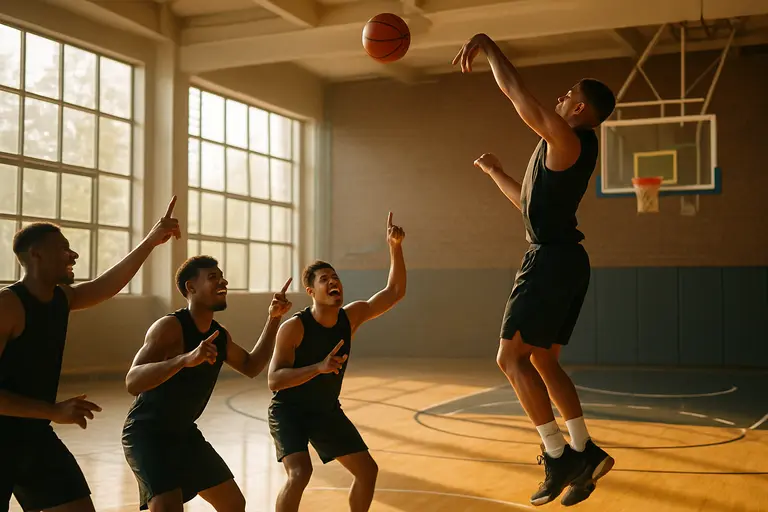
Orlando’s bigger strategic question sits on offense. Under Mosley, the Magic’s offensive rating never ranked better than 18th in any of his five seasons, according to the research provided. In 2025-26, Orlando ranked 27th in three-point percentage and 22nd in three-point attempts. Those numbers are not a small stylistic concern. They shape every playoff possession. If defenders can sit in the paint, driving lanes shrink. If weak-side shooters are not feared, help defenders recover with less urgency. If the ball sticks, physical playoff defenses can load up before the second action begins.
Spacing Is The First Correction
Through training camp in late September 2026, Sweeney emphasized spacing and floor positioning. The reported work included catch-and-shoot corner threes, wing-to-wing passes, and 4-out/1-in versus 5-out concepts. That is the central Sean Sweeney Magic question: can a coach improve shot quality and rhythm without pretending the roster has already become an elite shooting group? A 5-out alignment can stretch help defenders, but it only works if players pass on time, cut with intent, and punish defenses for overhelping. A 4-out/1-in alignment can preserve interior pressure while giving ballhandlers clearer reads. The best version of Orlando may use both, depending on matchups.
The transition data offers a more encouraging starting point. The Magic improved from 25th to 12th in fast-break points per game, moving from about 13.8 to about 15.7, and also rose from 26th to 12th in transition possessions per game. That improvement should not be discarded. Sweeney’s offensive challenge is to connect early offense with better half-court spacing. If Orlando runs after stops, flows into organized spacing, and attacks before defenses get fully set, the team can reduce the burden on late-clock shot creation.
Development Staff And Rotation Habits
Sweeney’s staff choices also point toward the kind of coach Orlando hired. The research identifies Mfon Udofia, D.J. Bakker, and Riley Crean as assistants with development backgrounds tied to G League work, international experience, or prior work with Sweeney. That does not guarantee a player-development jump, but it does suggest the Magic wanted a staff designed to teach habits daily. For a young playoff team, that matters as much as a new playbook. A related breakdown of Sweeney’s youth-development challenge tracks how spacing standards and role clarity could shape Orlando’s next step.
Player Development Must Be Specific
Development cannot stay abstract. For Orlando, it likely means clearer shot profiles, faster processing on the second side, better corner relocation, and more dependable defensive communication. A young player who defends multiple positions but cannot space the floor becomes easier to scheme against in May. A shooter who cannot hold up defensively becomes a target. Sweeney’s staff has to narrow those gaps player by player. Readers interested in broader sports coverage can find complementary insights at Banat Zayed within our network, though Orlando’s focus remains primarily an NBA strategy story.
Sean Sweeney Magic Fit
The Sean Sweeney Magic fit is best judged by whether Orlando’s strengths survive while its weaknesses shrink. The Magic did not hire a coach to make them less physical or less defensive-minded. They hired one to add offensive order, better spacing, and postseason counters to a team that had already reached the playoffs. That is a narrower, more demanding job than it may appear.
As of October 22, 2026, the 2026-27 NBA season was underway, so the evaluation had moved from press-conference language to possession-by-possession evidence. The early checklist is clear: fewer cramped half-court possessions, more credible corner spacing, sharper wing-to-wing passing, and a switching defense that communicates before contact rather than after breakdowns. If those habits hold against playoff-level scouting, Orlando’s coaching change will look like a strategic refinement. If the shooting and late-clock creation remain stuck, the same postseason questions will return, even with a new voice on the sideline.
