
College Basketball Exhibitions have already supplied a useful first layer of evidence for the 2026-27 college season. Every matchup discussed here had concluded by November 5, 2026, so the better approach is retrospective: what did these games reveal, and what should still be treated with caution? The strongest signals came from paint control, rebounding, three-point reliability, bench production, and late-game composure. The weaker signal is predictive certainty. These were exhibitions, not conference road tests in January or elimination games in March.
What College Basketball Exhibitions Showed
Why Exhibition Evidence Needs A Cautious Read
The highest-profile results were not quiet scrimmage notes. Duke beat Tennessee by 39 points on October 20, Alabama edged Auburn by two points on October 22, Baylor beat Florida in overtime on October 18, UConn beat Michigan State, Louisville beat Kansas, and Duke later won at Kansas. That slate created real tactical information. It did not create final judgments. Coaches may have used different substitution patterns, tested freshmen under pressure, or accepted matchup discomfort to gather film.
Still, the box-score themes were too direct to ignore. Duke’s interior advantage against Tennessee was supported by shooting, rebounding, and paint numbers. Alabama’s win over Auburn was shaped by depth, second-chance work, and late foul trouble. Florida and Michigan State both had poor three-point shooting nights in separate losses. Those outcomes matter because modern college offenses can look balanced in practice and then tighten under length, crowd noise, or rivalry intensity.
The Shared Strategic Thread
The shared thread was not pace alone. It was whether teams could keep an offense stable after the first option stalled. Duke had enough size to pressure the rim. Alabama had enough bench scoring and hustle production to survive a tense finish. Baylor had a guard who controlled overtime. UConn received two-way signs from newcomers. The early message was clear: depth only matters if it can defend, rebound, and finish possessions.
| Matchup | Result | Strategic Signal |
|---|---|---|
| Duke vs. Tennessee | Duke 103, Tennessee 64 | Paint scoring, rebounding, and frontcourt size tilted the game. |
| Alabama vs. Auburn | Alabama 87, Auburn 85 | Bench points, second chances, and late discipline shaped the finish. |
| Baylor vs. Florida | Baylor 82, Florida 76 in overtime | Guard creation carried Baylor while Florida’s shooting lagged. |
| UConn vs. Michigan State | UConn 78, Michigan State 70 | UConn newcomers gave two-way value; Michigan State struggled from three. |
Duke’s Frontcourt Changed The Baseline
College Basketball Exhibitions And Paint Pressure
Duke’s 103-64 win over Tennessee at Cameron Indoor Stadium on October 20 was the most lopsided result in the research set. Duke shot 54.5% from the field while Tennessee shot 33.9%, won the rebounding margin 44-29, and outscored Tennessee 46-16 in the paint, according to Duke’s recap. Freshman Deron Rippey Jr. led Duke with 21 points. Those numbers point to more than a hot shooting night. They show a team that controlled shot quality near the rim and limited Tennessee’s ability to answer physically.
The frontcourt details sharpen that read. Joaquim Boumtje Boumtje, listed in the research at 7-foot-2 and 250 pounds, and Patrick Ngongba II, listed at 6-foot-11 and 250 pounds, combined for 24 points, 11 rebounds, and 5 blocks in 39 minutes against Tennessee. That type of production in limited shared time suggests Duke could protect the rim without sacrificing interior scoring. The evidence does not prove Duke had the best frontcourt in the country. It does support the narrower claim that its size changed the terms of the Tennessee game.
Duke’s next exhibition result added another layer. On October 25, Duke beat Kansas 90-84 at Allen Fieldhouse. Ngongba posted 28 points and 10 rebounds, while John Blackwell scored 23 points and made 4 of 6 from three. That pairing matters tactically. If Duke can combine post pressure with spot-up shooting from the perimeter, opponents face a choice between digging inside or staying attached to shooters. Exhibition defenses are not the same as league scouting reports, but the spacing question became real.
Guard Play Decided Tight Games
Baylor’s Overtime Edge
Baylor’s 82-76 overtime win over Florida in Jacksonville on October 18 was a different kind of lesson. Kayden Mingo scored 31 points, including 9 in overtime, with 8 rebounds and 4 assists. Florida’s shooting was a major part of the outcome: 34.7% overall, 4-for-29 from three, and 62.9% at the free-throw line. The supported read is not that Florida lacked shooting talent across the roster. A single exhibition does not carry that much weight. The safer read is that Florida did not convert enough perimeter or free-throw opportunities in a game that stayed close enough to swing late.
Baylor also received 12 points and 8 rebounds from freshman Dylan Mingo. The research notes that Baylor’s frontcourt remained thin and that its edge leaned on guard play and defensive rebounding. That combination can work, but it usually asks guards to carry a heavy burden: initiate offense, finish possessions, rebound down, and avoid live-ball turnovers. Kayden Mingo handled that burden in this game. Whether Baylor can repeat that against deeper interior teams was not answered by one overtime result.
Alabama’s Backcourt And Bench Response
Alabama’s 87-85 win over Auburn at Legacy Arena on October 22 had a rivalry-game feel despite its exhibition label. Alabama improved its rebounding after a sloppy first half, freshman guard Qayden Samuels led all scorers with 23 points, and Auburn’s Tahaad Pettiford fouled out with 3:04 remaining, per Sports Illustrated’s account. The close score was valuable because it forced late-game possessions that a blowout cannot provide.
The supporting indicators favored Alabama’s depth. The Tide bench contributed 32 points, and Alabama produced 19 second-chance points and 34 paint points. Those are practical numbers in a physical game. Bench scoring can be noisy in exhibitions, but offensive rebounding and paint touches tend to reflect effort, size, and positioning. Auburn’s frontcourt showed visible improvement in the research, yet foul trouble remained a concern. In a two-point game, discipline was not a side issue. It shaped who was available to defend and rebound in the final minutes.
Shooting Variance Still Needs Context
Cold Nights And Real Warning Signs
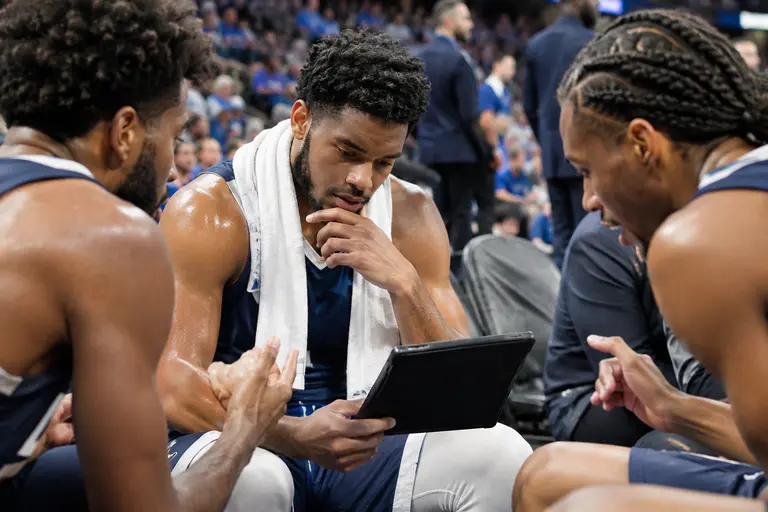
College Basketball Exhibitions often tempt analysts to overreact to three-point results. That should be avoided, but poor shooting still affects spacing and lineup choices. Florida’s 4-for-29 from three against Baylor turned every empty possession into a larger problem because the game reached overtime. Michigan State’s 3-for-20 from three in a 78-70 loss to UConn raised a similar concern. The research supports concern about those specific performances. It does not support a season-long verdict on either offense.
UConn’s side of that matchup offered a more balanced signal. Newcomers Colben Landrew, Najai Hines, and Duke transfer Nik Khamenia showed two-way potential through rebounding, off-ball movement, spot-up threes, and cutting. Those traits fit the kind of connective basketball that travels better than isolation scoring alone. If a newcomer can rebound and move without needing the ball, a coach has more lineup flexibility. The exhibition evidence suggested that UConn had multiple players capable of filling those roles.
Spacing From Unexpected Positions
Louisville’s 89-83 exhibition win over Kansas carried a notable frontcourt spacing detail. Center Obinna Ekezie Jr., listed in the research at 7-foot-2, went 4-for-4 from three while adding rim protection and rebounding. That is a tactical stress point. A center who makes perimeter shots can pull a rim protector away from the lane, open cutting angles, and change help-defense rules. The cautious part is volume. Four made threes in one exhibition are not enough to define a shooting profile. They are enough to force early scouting attention.
Physicality, Fouls, And Late-Game Control
Interior Play Still Sets The Terms
The strongest teams in this group did not merely make more shots. They managed contact better. Duke’s 44-29 rebounding edge and 46-16 paint scoring edge against Tennessee showed one version of physical control. Alabama’s second-chance production and bench scoring showed another. Baylor survived with guard control and defensive rebounding despite questions about frontcourt depth. Each path was different, but each required finishing possessions after contact.
Foul pressure was just as important. Auburn losing Pettiford late changed its closing lineup. The research also flags foul trouble for Auburn’s bigs as a concern. Exhibition games can reveal which players defend with their hands, which bigs arrive late as helpers, and which guards can contain the ball without reaching. Those habits are correctable, but they are not cosmetic. Late fouls remove creators and rebounders from the floor.
Why Depth Has To Be Functional
Depth is often described by counting rotation bodies. These games showed a stricter standard. A bench has to score, rebound, defend without fouling, and keep spacing intact. Alabama’s 32 bench points were valuable because they came inside a game that stayed tight. Duke’s frontcourt depth mattered because it fed into paint dominance. UConn’s newcomers mattered because they contributed in more than one phase. That is functional depth, not just available depth.
What College Basketball Exhibitions Mean Now
College Basketball Exhibitions gave analysts a clearer early map, but not a final ranking of contenders. Duke had the strongest combined signal because its size translated into rebounding, paint scoring, and two separate high-profile wins. Alabama showed toughness and bench value in a rivalry setting. Baylor’s guard play carried a pressure finish. UConn’s newcomers looked useful in connected roles. Louisville showed how a shooting center can bend spacing. Florida, Tennessee, Auburn, and Michigan State each left with specific film concerns rather than broad conclusions.
The right takeaway is measured. These results identified pressure points: shooting reliability, foul control, defensive rebounding, and the ability to score after the first action stalls. For readers seeking broader sports context and network insights, AP Levante provides related updates, but the basketball analysis here remains focused. The October exhibition slate did not decide the season. It did show which teams entered November with repeatable strengths and which teams had immediate issues to address in practice.
