
The NBA schedule brings an intriguing inter-conference clash to the Footprint Center on November 5, 2026, as the Phoenix Suns host the Orlando Magic. Both franchises enter this Thursday night contest searching for immediate answers to disappointing opening weeks. The Magic carry a 2-5 record, positioning them near the bottom of the Eastern Conference standings. The Suns find themselves in a remarkably similar situation out West, stumbling out of the gate to a 1-4 start.
This specific contest presents a clear collision of opposing basketball philosophies. Orlando relies on overwhelming length, defensive switch ability, and physical rim pressure. Phoenix builds their entire offensive architecture around elite perimeter shot creation and floor spacing. We analyze the current roster dynamics, evaluate the statistical trends from their recent head-to-head history, and predict how this high-stakes November game will unfold.
Evaluating The Slow Starts For Both Franchises
The Phoenix Suns expected to assert dominance early in the 2026-27 campaign. A 1-4 record raises immediate concerns regarding their defensive structure and offensive balance. Devin Booker continues to carry a massive scoring burden. The primary issue stems from their inability to generate consecutive defensive stops. Opposing teams routinely find open shooting pockets against the Phoenix drop coverage, forcing the Suns to play from behind in the second half of games.
Orlando expected a major leap forward from their young core. Paolo Banchero and Franz Wagner established themselves as premier forwards last season, yet the Magic currently sit at 2-5. Their offense looks stagnant for long stretches. The team heavily depends on Banchero creating isolation advantages in the half-court. If opposing defenses crowd the paint and force the ball out of his hands, Orlando struggles to find secondary scoring. The Magic must execute their offensive sets with greater pace to prevent the Suns from setting their defensive shell.
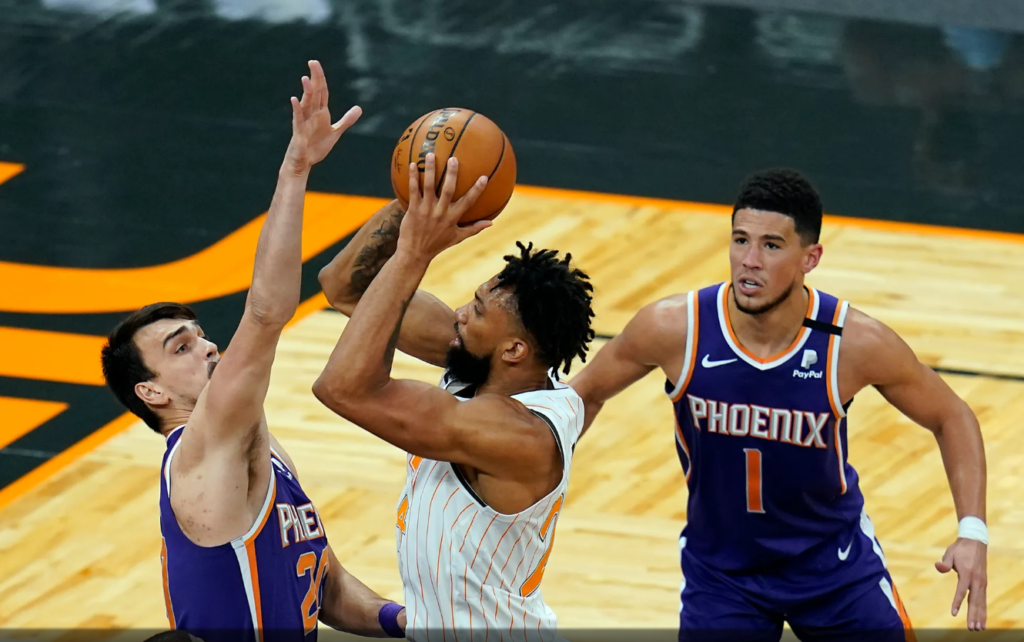
The pressure rests heavily on both coaching staffs to make immediate adjustments. Early November games rarely define a season. Prolonged losing streaks can severely damage locker room morale. Both teams view this matchup as a prime opportunity to correct their trajectory.
Historical Context And Recent Head-To-Head Results
Reviewing recent matchups provides a reliable baseline for understanding the tactical flow between these two units. The teams split their last ten meetings evenly at five wins apiece. Their most recent encounter occurred on March 31, 2026, resulting in a 115-111 home victory for the Orlando Magic.
The box score from that late-season contest highlights the exact strategic battles we expect to see at the Footprint Center. Devin Booker erupted for 34 points, drawing 19 free-throw attempts in a masterclass of foul manipulation. The Magic absorbed his production by deploying a balanced, team-oriented offensive attack. Banchero scored 19 points and distributed eight assists. Wendell Carter Jr. dominated the interior, grabbing 12 rebounds to secure extra possessions.
Orlando controlled the pace through aggressive point-of-attack defense. The Magic forced 20 Phoenix turnovers in that game, converting those mistakes into easy transition points. Jalen Suggs set the tone, recording four steals and disrupting the Phoenix passing lanes. The Suns shot nearly 40 percent from the field, failing to hit open looks when the Orlando defense rotated late.
Tactical Matchups On The Perimeter
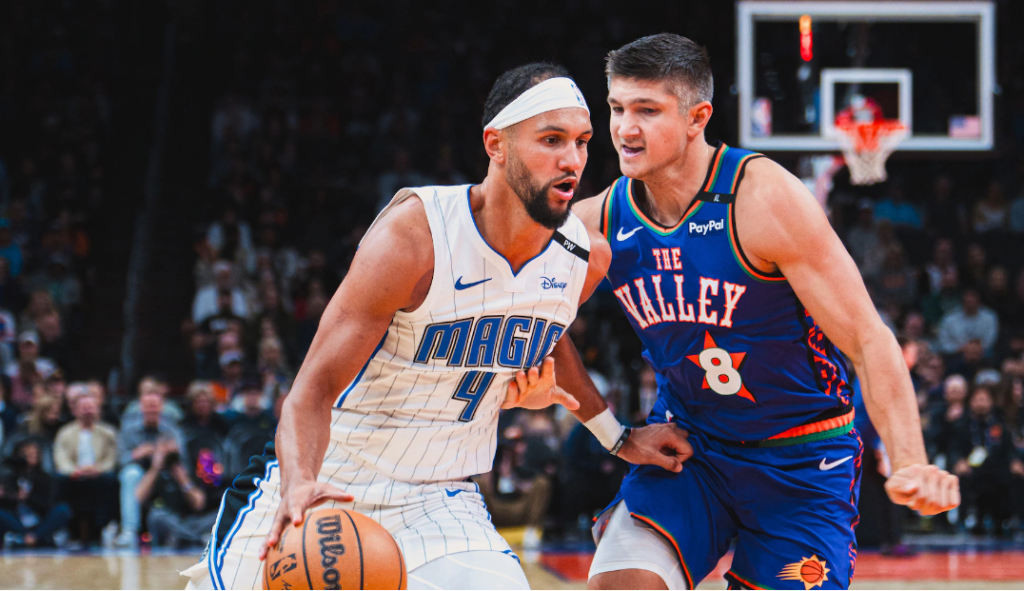
The defensive assignment on Devin Booker dictates the entire game plan for the Orlando Magic. Jalen Suggs will operate as the primary defender on the Phoenix superstar. Suggs possesses the lateral quickness and physical strength to fight through screens without surrendering leverage. He prefers to pressure the ball handler 94 feet from the basket, forcing opposing guards into rushed decisions. If Suggs contains Booker without requiring a secondary trap, the Phoenix offense bogs down entirely.
The Suns face an equally difficult challenge defending the Orlando wings. The Magic utilize massive positional size. Banchero initiates the offense from the top of the key. The Suns lack a true physical matchup capable of absorbing Banchero’s drives to the rim. Phoenix will likely assign a smaller, quicker forward to harass him on the perimeter, hoping to strip the ball before he gathers for a shot.
Floor spacing remains a glaring issue for Orlando. The team attempts a low volume of three-pointers, relying heavily on paint touches. Phoenix can exploit this tendency by packing the middle of the floor and daring the Magic guards to shoot over the top. If players like Suggs and Cole Anthony hit their perimeter catch-and-shoot opportunities, the driving lanes will open up for Banchero and Wagner.
Frontcourt Battles And Rebounding Margins
The interior collision serves as the physical barometer of the game. Wendell Carter Jr. provides reliable rebounding and screen-setting for Orlando. He anchors the defense, deterring shots at the rim and securing defensive rebounds to ignite the fast break. Carter Jr. grabbed 12 boards against Phoenix in their previous matchup. The Suns must limit his impact on the offensive glass. Allowing a struggling Orlando offense to generate second-chance points will ruin any Phoenix defensive strategy.
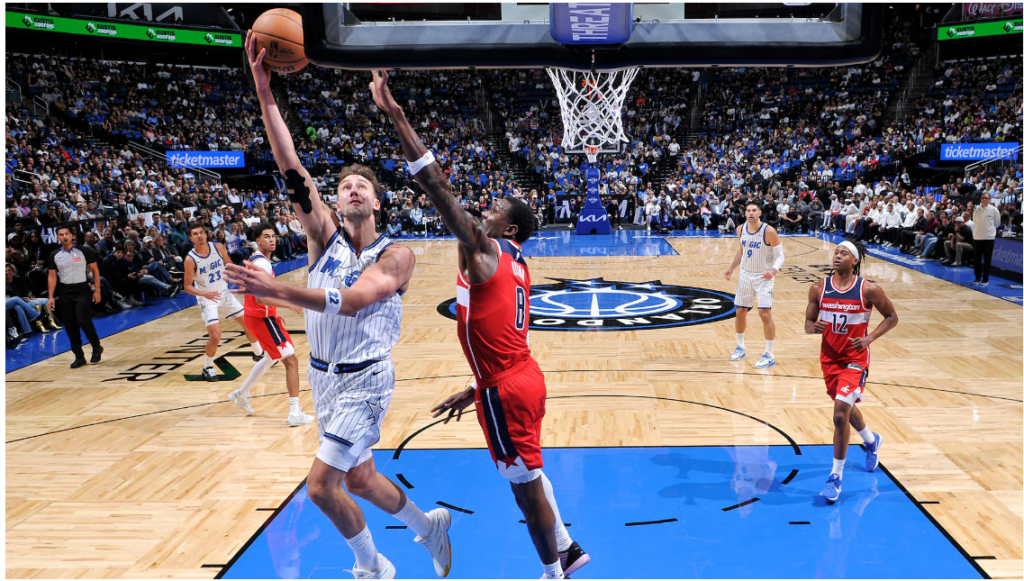
Phoenix utilizes their frontcourt primarily for screen navigation and high-post passing. The Suns centers operate as release valves when Booker faces heavy trapping coverage. The big men must make quick, decisive reads in four-on-three situations. If the Phoenix centers execute their short rolls perfectly, they will generate wide-open corner three-pointers or uncontested layups at the rim.
Rebounding margins often dictate the winner of tightly contested games. The Magic out-rebounded the Suns 46-41 in their last meeting. Orlando commits multiple bodies to the offensive glass, utilizing their sheer size to tip the ball alive. Phoenix must execute flawless block-out fundamentals. To track how these specific interior battles impact overall team efficiency, analysts routinely consult the official NBA stats database.
Analyzing The Betting Trends
The betting markets reflect the erratic nature of both franchises through the first two weeks of the season. The head-to-head trends show Orlando holding an 8-1-1 record against the spread in their last ten meetings with Phoenix. The Magic consistently play the Suns above market expectations, relying on their physical defense to keep games within a single possession.
The total points line requires careful evaluation. The Over/Under stands at a dead even 5-5 across the last ten matchups between these two teams. Orlando prefers a slower, grinding pace, maximizing their half-court defensive execution. Phoenix wants to push the tempo and leverage their elite shot-makers in transition. The team that dictates the pace usually covers the spread. Bettors studying these specific tempo clashes can read our comprehensive NBA spread betting strategy guide to understand how pace control influences the final score.
Final Game Outlook And Predictions
This November 5 matchup at the Footprint Center carries the weight of two franchises desperate to reverse their early-season fortunes. The Phoenix Suns possess superior top-end offensive talent. Devin Booker can single-handedly win games by hitting contested jumpers over elite defensive coverages. The Orlando Magic counter with superior depth, physical size, and a cohesive defensive system.
Expect a highly physical, low-scoring battle in the first half. Orlando will attempt to establish Banchero in the post, forcing the Phoenix defense to rotate and concede open looks on the weak side. The Suns will rely on Booker to draw fouls and control the rhythm of the game from the free-throw line.
The determining factor rests on the turnover margin. Orlando thrives on chaos. Suggs and the Magic guards will pressure the Phoenix ball handlers relentlessly. If the Suns value the basketball and execute their half-court sets cleanly, their superior shooting efficiency will prevail. Phoenix should edge out a narrow victory on their home floor, capitalizing on a late-game shooting slump from the Magic to secure their second win of the season.
